
Russian Navy Receives New Su-30SM2 Fighters with Supercharged Engines
Military Watch Magazine Editorial Staff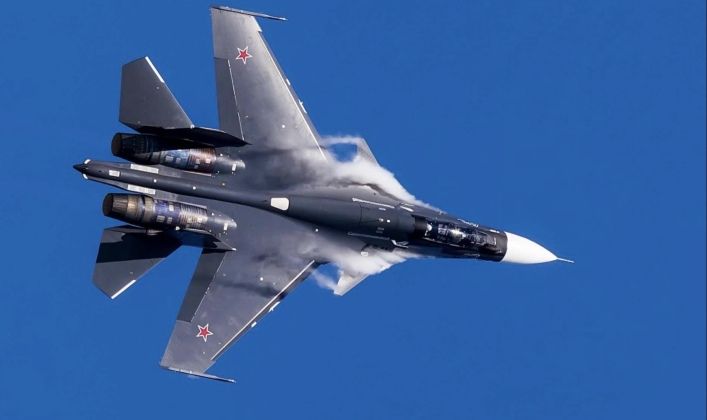
Su-30SM Fighter
The Russian Navy has received a new batch of Su-30SM2 ‘4+ generation’ fighters, following the aircraft’s first entry into service in 2022. The United Aircraft Corporation reported regarding the delivery that it had “manufactured and delivered a new batch of Su-30SM2 multirole fighters to the Defence Ministry of Russia under the defence procurement plan.” State arms export conglomerate Rostec confirmed that the fighters have undergone required ground and flight trials, and have already been flown to the bases from which they will carry out combat duties. A Russian Navy pilot was quoted commenting regarding the sale: "A naval aviation crew has accepted Su-30SM2 aircraft. Su-30SM2 supermanoeuvrable fighters are among the most advanced combat aircraft of the Russian Armed Forces. They protect the country’s frontiers along the entire border perimeter.”
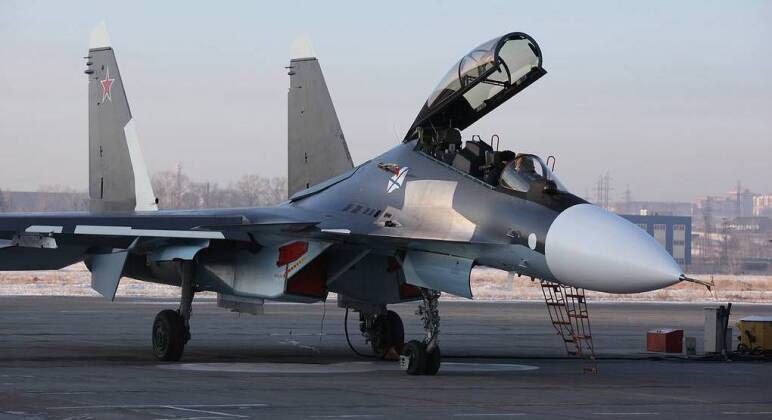
Commenting on plans to continue deliveries, United Aircraft Corporation CEO Vadim Badekha observed: "We do not stop at what we have achieved and, along with rhythmic equipment deliveries, we carry out work on further improving our aircraft, in particular, with account taken of the experience gained in the special military operation. In this process, we ramp up production rates.” The Su-30SM2 is one of four fighter types currently being produced for the Russian Armed Forces, alongside the similarly priced Su-34M strike fighter, the Su-35S air superiority fighter which is close to 60 percent more costly, and the Su-57 fifth generation fighter which costs well over twice as much to procure. The Su-30, Su-34 and Su-35 are all derivatives of the Soviet Su-27 air superiority fighter, with the upgrades and design changes made to develop the Su-30 being by far the most conservative of the three reflecting its much older design.
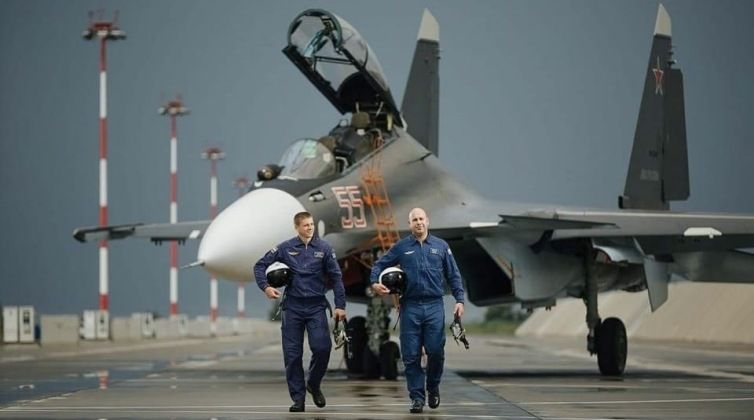
The Su-30SM’s design incorporated multiple features from Soviet fighter programs that were cancelled after the state’s disintegration. Loosely based on the Su-27PU heavy interceptor design, the aircraft used a particularly wide range of technologies from the cancelled Su-27M and Su-37 air superiority fighters, including use of the Su-37's N011M radar, which was one of the first ever electronically scanned array radars integrated onto a fighter, as well as the Su-27M’s controlled canards, AL-31FP engines and thrust vectoring nozzles. Following the service entry of the first ‘4+ generation’ Su-30 variant, the Su-30MKI, in 2002, and its close derivative the Su-30SM in 2012, the Su-30SM2 was brought into service ten years later with updated avionics and new AL-41F-1S engines. First been brought into service in 2014 on the Su-35S, the AL-41F-1S not only has significantly lower sustainment costs, but also provides significantly more power and facilitates a longer range due to its much greater fuel efficiency.
