
Russia Deploys World’s Longest Ranged Maritime Patrol Aircraft For Show of Force Near British Aircraft Carrier
Military Watch Magazine Editorial Staff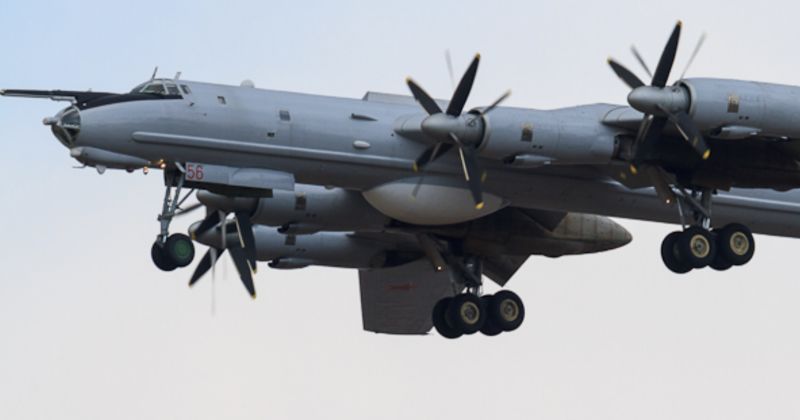
Russian Navy Tu-142 Anti Submarine Warfare Aircraft
Two British Armed Forces F-35B fifth generation fighters operating from the Royal Navy aircraft carrier HMS Prince of Wales intercepted and escorted a Russian Tu-142 anti-submarine warfare aircraft in the Norwegian Sea. According to the British Ministry of Defence, the Russian aircraft passed close to the aircraft carrier at low altitude and dropped a large number of sonobuoys in close proximity. The deployment of a Tu-142 near a NATO carrier group is significant because the aircraft’s primary mission is not conventional attack, but maritime intelligence gathering and anti-submarine warfare. The release of sonobuoys suggests that the aircraft was attempting to gather information on underwater activity around the carrier strike group, and in particular the location or operating patterns of escort submarines. With the entire British attack submarine currently under maintenance, however, it is highly possible that the carrier group was relying on escorts from another NATO member.
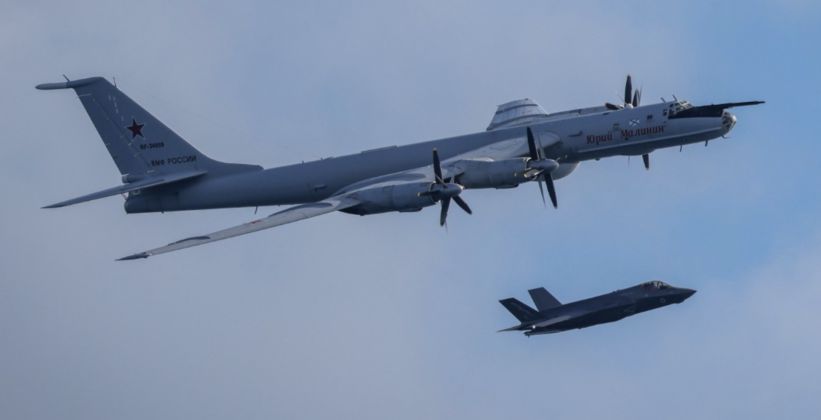
The Tu-142 was developed as a derivative of the Tu-95 strategic bomber, with the design modified for maritime operations. It integrates a long-range maritime search radar, electronic intelligence equipment, magnetic anomaly detector (MAD) systems for submarine detection, sonobuoy deployment systems, communications equipment for coordinating naval forces, internal weapons bays for anti-submarine torpedoes and depth charges. Its very long endurance allows it to patrol vast areas of ocean, making it particularly valuable for monitoring strategic maritime routes such as the North Atlantic and Arctic approaches. The aircraft have been updated to the Tu-142MZ/MR standard with the integration of improved navigation, communications, and sensor systems and new generations of sonobuoys and weaponry.
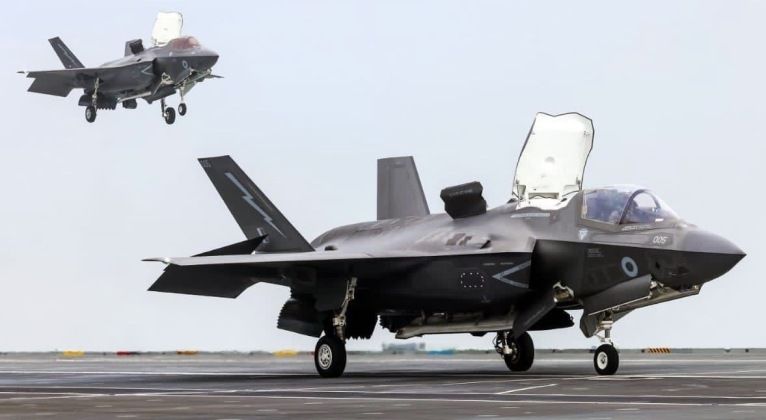
Russian and NATO aircraft have been involved in multiple recent engagements, many of which have involved F-35s. The Royal Norwegian Air Force was confirmed on June 29 have scrambled two F-35A fighters on June 22 to intercept and identify a formation of two Tu-160 strategic bombers escorted by two MiG-31BM interceptors over the Barents Sea. In mid-April Norwegian F-35s intercepted a Russian Il-38 maritime patrol aircraft, with the fighters proceeding identify and tracking the target in a sortie that lasted approximately two hours. Later that month Norwegian F-35s also intercepted Russian T-95MS strategic bombers, which were carrying out a flight over the international waters of the Barents and Norwegian Seas. In early March two Norwegian F-35s on QRA engaged a pair of Russian Tu-95MS strategic bombers and their Su-35 fighter escorts in international airspace over the Barents Sea.
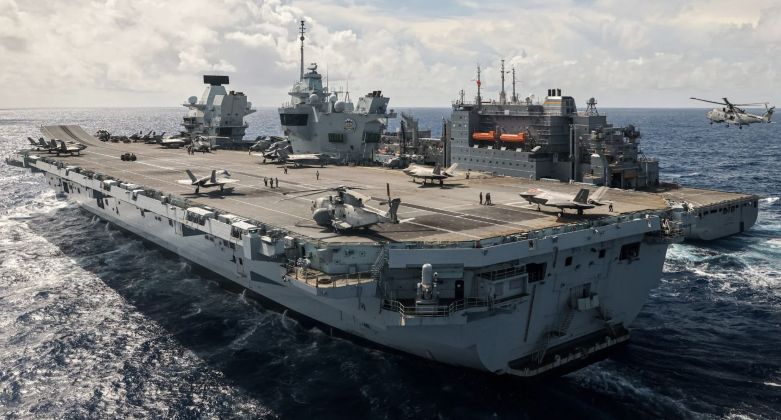
While the F-35 program has brought NATO aerial warfare capabilities forward considerably, the carrier HMS Prince of Wales and its sister ship HMS Queen Elizabeth have been beset by a long history of controversies. Issues have ranged from flooding to fighter crashes and a range of other issues that have seriously hampered their operational readiness. HMS Prince of Wales was in 2023 cannibalised for parts to keep HMS Queen Elizabeth operational. Navy reports have frequently highlighted issues such as insufficient training for carrier operations, which places personnel at risk. In November 2024 it was revealed by informed local defence sources that simulations had shown the carriers would not be survivable in a high intensity conflict, and in most war games would be sunk.
