
British F-35B Fighters Forward Deployed in Cyprus to Support Military Buildup Against Iran
Military Watch Magazine Editorial Staff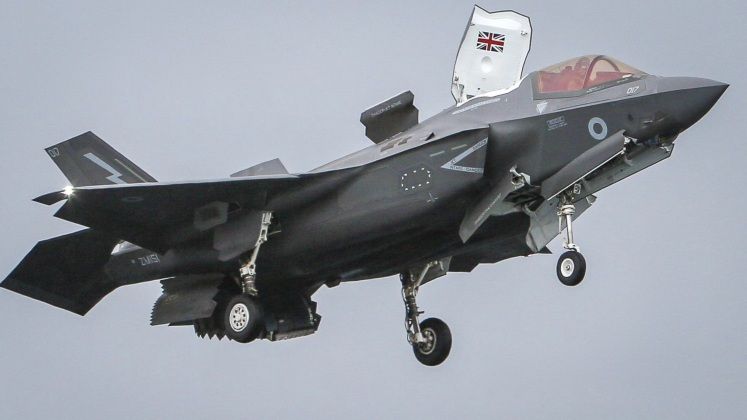
British Armed Forces F-35B
The British Royal Air Force has forward-deployed six F-35B fifth generation fighters to RAF Akrotiri on Cyprus, contributing to a major U.S.-led military buildup against Iran. The Air Force describes the Akrotiri base as a Permanent Joint Operating Base that functions as a forward mounting base for Middle East contingencies, signalling a posture built for rapid escalation management. The United Kingdom is the only F-35 operator to field only the F-35B variant, which while being by far the most expensive, is also significantly more restricted in its combat capabilities with an approximately 35 percent shorter range, and a much smaller weapons bay and more constrained flight performance. The aircraft nevertheless provide a significantly superior combat capability to the British Eurofighters previously deployed to Qatar in late January as part of the same military buildup.
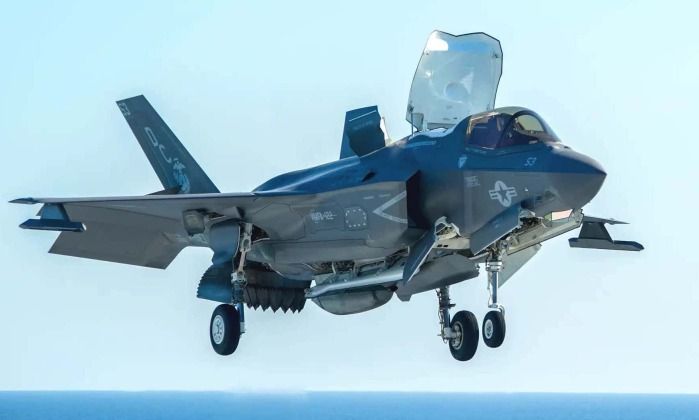
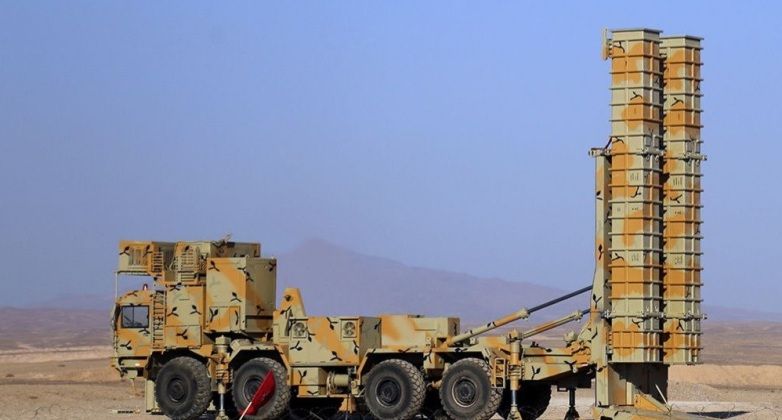
The F-35’s unique array of passive sensors make it an optimal fighter to engage Iran’s sizeable network of ground-based air defence systems, allowing the aircraft to collect significant electronic intelligence and distribute this to other assets across the theatre. Nevertheless, as was the case for Israeli Air Force F-35I fighters during engagements in June 2025, the F-35’s lack of Block 4 level software, or of compatibility with any air-to-ground missiles until this standard is reached, limits their ability to take part in kinetic attacks. An important advantage of the F-35B over other fighter types in the theatre is its short takeoff and vertical landing capabilities, which allow them to operate from makeshift forward airbases. This could be particularly useful in a war with Iran due to the expectation of major missile attacks on all major Western Bloc airbases in the theatre.
The United Kingdom has deployed fighters to take part in multiple recent operations in the Middle East, with Eurofighters having been deployed to RAF Akrotiri in late 2023 to provide support to the ongoing Israeli war effort against Palestinian militia groups in the Gaza Strip by conducting surveillance flights. The Royal Air Force had from December to mid-January 2024 flown over 50 surveillance flights over the territory from the facility, complementing supplies of armaments to support an ongoing Israeli invasion of Gaza. RAF Akrotiri was previously used as a staging ground for offensives against Libya in 2011, and from January 12, 2024 was been used for strikes against Yemeni Ansuruallah Coalition forces. Fighters based at the facility were the previous decade used to provide air support to anti-government insurgent groups in Syria.
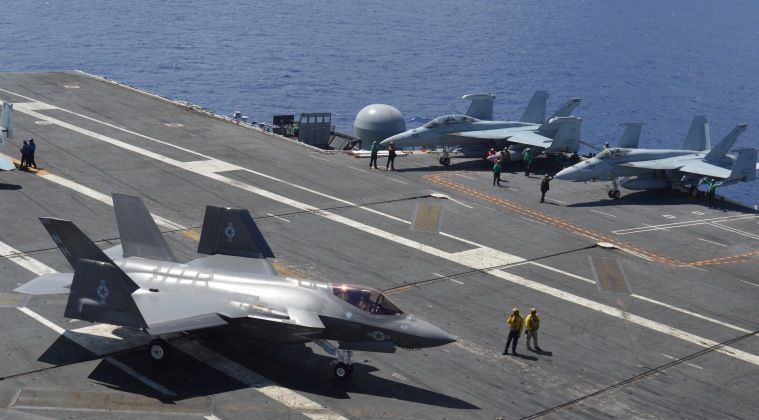
Although twelve British Royal Air Force Eurofighters were deployed to Qatar in January, their obsolescence for high intensity combat, and reliance on the Captor mechanically scanned array radar which is highly vulnerable to jamming, has meant that they will not be involved in potential attacks on Iran. The Eurofighters have instead been assigned air defence duties, in the expectation of large scale Iranian drone attacks on Western Bloc military facilities across the region. The United States’ own military buildup has included the deployment of eight destroyers, the supercarrier USS Abraham Lincoln, dozens of supply runs by C-17 and C-5 strategic transports, and deployments of EA-18G air defence suppression aircraft and F-15E long range strike fighters to Jordan. The Abraham Lincoln’s air wing includes a squadron of Marine Corps F-35C fighters, which have significantly greater combat potentials than British F-35Bs, and which saw combat on February 3 shooting down an Iranian Shahed 136 unmanned reconnaissance aircraft.
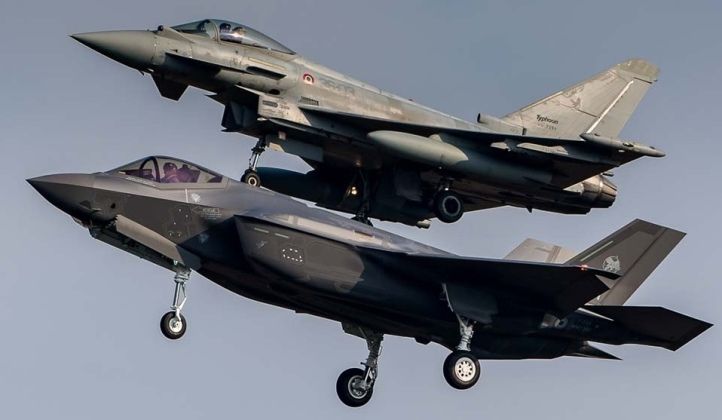
Although the British Ministry of Defence has faced considerable pressure from local industry to avoid purchases of the F-35A, a much less costly ground-based counterpart to the F-35B which has considerably less local industrial participation than the Eurofighter or the F-35B, a decision to acquire the aircraft was confirmed in 2025. The Ministry that year permanently shelved plans to purchase further Eurofighters, and is set to continue to withdraw them from service while ordering F-35A fighters. The new aircraft is expected to provide a significantly superior combat capability to both the F-35B and the Eurofighter, while having far lower procurement and sustainment costs than the F-35B. The F-35B was initially prioritised to equip the air wings of the country’s two Queen Elizabeth class carriers, although budget shortages, the aircraft’s immense costs and more limited combat capabilities, and prevailing issues with the two carriers, have led to deep cuts to planned acquisitions.
