
Eurofighter Program’s Slow Death Continues: Britain Rejects Further Purchases in Favour of F-35s
Military Watch Magazine Editorial Staff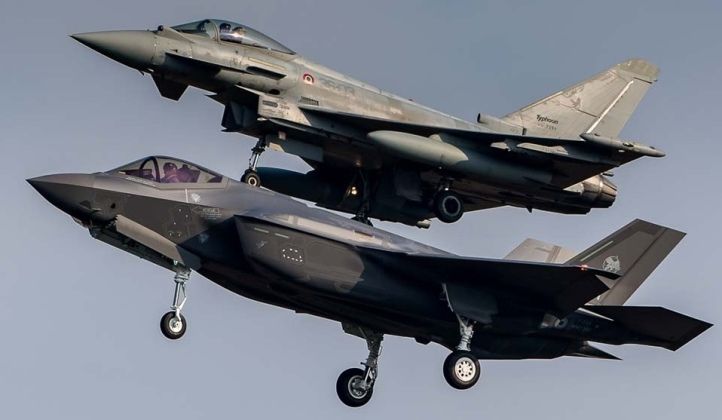
Eurofighter (back) and F-35
The British Armed Forces have reportedly decided in favour of focusing funding for the procurement of new fighter aircraft on F-35B fifth generation fighters, deciding against the possibility of acquiring additional ‘4+ generation’ Eurofighters. An unnamed British official spoke to local media outlet Jane’s, and stated regarding planned purchases: "We have a foot in both [the F-35 and Eurofighter] camps, and for the RAF I very much see that the F-35 is where we are looking at to add combat mass. We are committed to an onward buy [of the F-35], so that is where we are looking." The reference to a “foot in” both programs pertains to Britain’s prior acquisitions of both aircraft for its fleet, and its position as a top tier program partner in the development of both. While Britain and Germany led the Eurofighter program, the country was also the sole Tier One partner in the F-35 program - albeit in a still very junior role compared to the United States with only a small fraction of the investments and technological contributions.
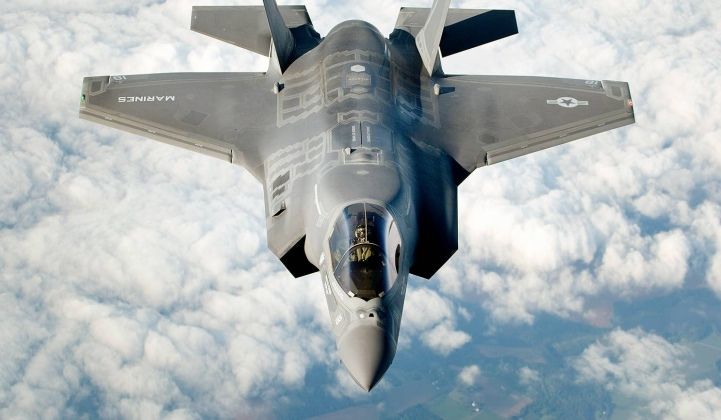
Britain’s rejection of further possible Eurofighter acquisitions follows multiple successive losses for the program, which has continued to lose consistently and overwhelmingly when bidding against the F-35 for major contracts. Major recent losses have included Belgium, Poland, Finland and Switzerland and the Czech Republic, which were all considered leading potential clients for the Eurofighter, its closely related French rival the Rafale, or the Swedish Gripen, but selected the F-35 due to its significantly superior fifth generation capabilities. This trend appears set to continue as countries across the Western world lean towards the F-35 over European rivals, while even Germany itself under the new Olaf Scholz administration has unprecedentedly also committed to F-35 purchases despite prior administrations being highly protective of the Eurofighter.
Although the U.S. Air Force has notably resumed acquisitions of fourth generation fighters, and is set to field over 100 of the new F-15EX jets, these much larger fighters offer significant performance advantages over both the Eurofighter and the F-35 including far higher speeds, longer ranges, much higher weapons carrying capacities, and the deployment of a much larger more powerful radar. The relatively light Eurofighter by contrast, which continues to be built on a relatively small scale due in large part to its lack of export successes, not only lacks significant advantages relative to the stealthy F-35, but is also very far from cost competitive against it. The lack of orders has left the future of the program in serious question, and raised the significant possibility that production could be terminated by the early 2030s far sooner than initially expected.
