
U.S. F-35 Fleet Mission Capable Rates Outstandingly Poor at 28.5 Percent Despite Years of Efforts to Improve Maintenance
Military Watch Magazine Editorial Staff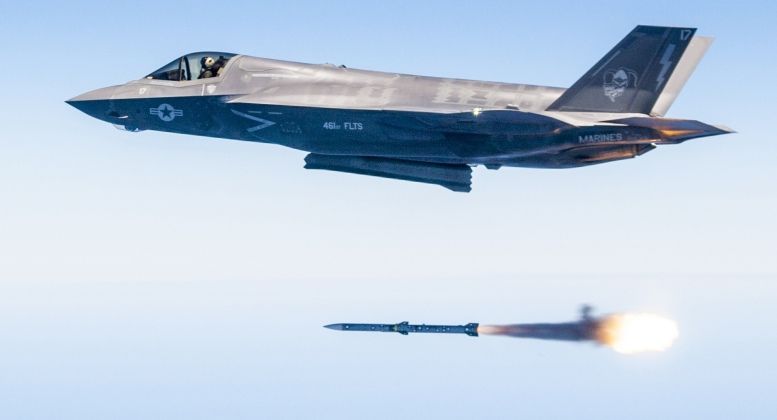
F-35 Launches AIM-120 Missile
A new Government Accountability Office report has provided insight into the state of the U.S. Armed Forces’ F-35 fifth generation fighter fleet, highlighting severe ongoing issues with the sustainment of the aircraft, resulting in full mission-capable rates of just 28.5 percent in Fiscal Year 2025. The Air Force’s full mission capable rates have generally been higher than the Navy and Marine Corps over the past five years, but are still trending downward overall. For general mission-capable rates—the percentage of time that a jet could carry out at least one of its tasked missions, the F-35As reached 38.6 percent in 2025. Full mission-capable rates are the share of time an F-35 could carry out all of its missions, and in the Air Force fell from 38.1 percent in 2021, to a new low of 24.6 percent in 2025.
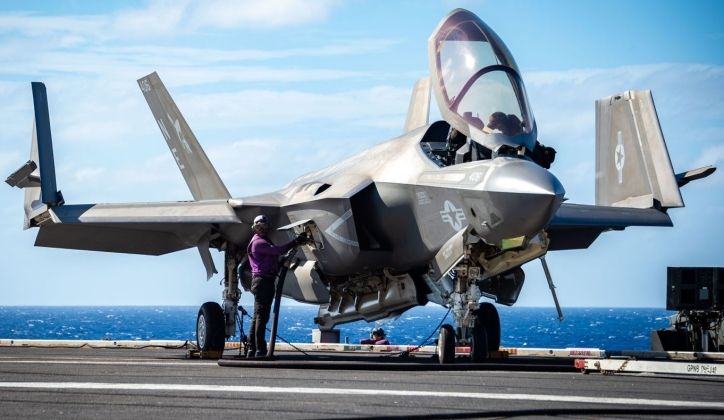
“Since 2020, the F-35 has not met the minimum performance goals desired by the U.S. military services by wide margins and performance has generally trended down for [full mission-capable] rates and [mission-capable] rates, particularly for the Air Force F-35A,” the Government Accountability Office report stated. According to Air Force officials, the 2025 decline was driven in part by the acceptance of new F-35s that were not yet able to carry out all their missions because of software problems. The F-35’s Technology Refresh 3 upgrades, which previously led to a yearlong suspension of deliveries, was lifted last year after once an interim software release was completed. Aircraft with TR-3 software were initially limited to flying only basic training flights, and still cannot fly in combat. Ongoing spare parts shortages and corrosion problems have also contributed to declining readiness, according to Air Force officials who spoke to auditors.
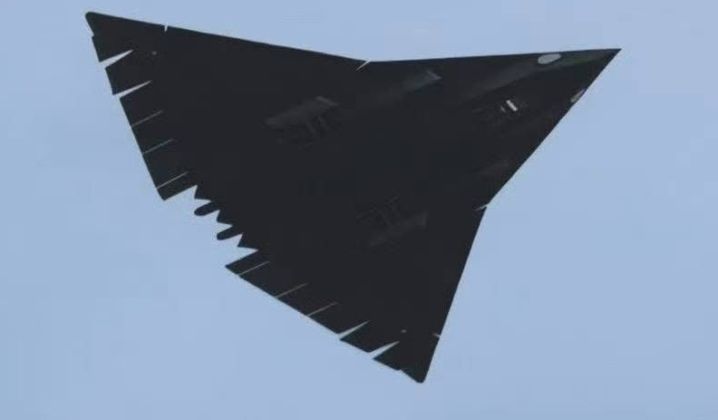
The Air Force now operates more than 500 F-35As, the majority of the total 800-plus F-35s belonging to the U.S. Armed Forces. The Air Force, Navy and Marine Corps officially plan to buy about 1,700 more by the mid-2040s, although the Air Force is expected to significantly reduce its orders to finance the F-47 sixth generation fighter program, while the diversion of funding from the Navy/s F/A-XX sixth generation program is expected to lead it to increase its own orders. The fighters have been employed in the European theatre to collect electronic intelligence on Russian forces, and have similarly been employed primarily in intelligence collection roles in the Middle East. The aircraft is the only fighter of its generation in production in the Western world, resulting in it being particularly heavily relied on to counter China’s own cutting edge J-20 and J-35 fifth generation fighters, and to a much lesser extent also Russia’s Su-57 fifth generation fleet.
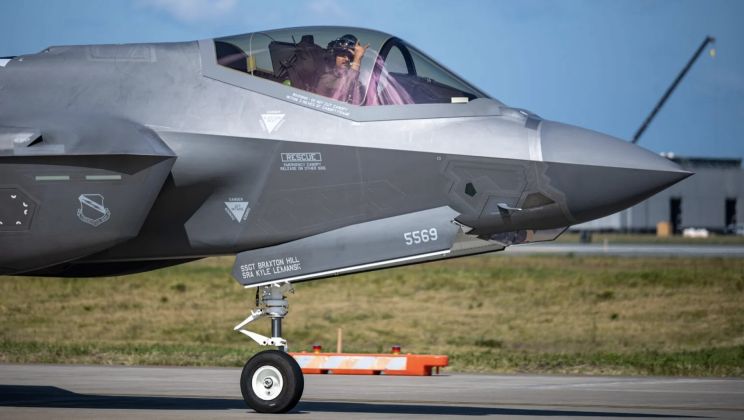
F-35’s low availability rates and high maintenance needs and sustainment costs have long been a leading issue with the procure, with the F-35A fielded by the Air Force having initially been intended to have comparable sustainment costs and maintenance needs to its direct fourth generation predecessor the F-16C/D. The design failed to meet these requirements, with the aircraft costing close to twice as much to sustain, while availability rates have remained very significantly lower despite the aircraft being decades newer. This has contributed to a decision to significantly reduce procurements, which were previously planned at 110 F-35A fighters per year, but have now been cut to just 24-40. Very significant delays modernising the fighters, including integrating Block 4 software, has been a further factor, with the aircraft currently being highly restricted in their combat capabilities and unable to employ any kind of air-to-ground missiles.
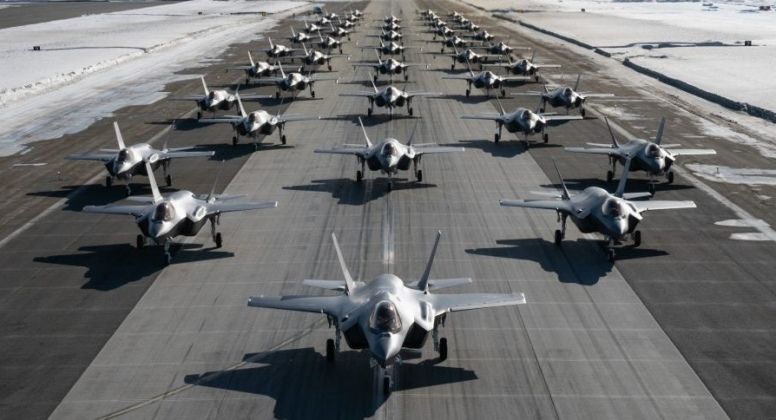
In December 2025 the Department of War’s Office of the Inspector General’s latest report revealed that availability rates remained at just 50 percent, highlighting that “the aircraft were not available to fly half of the time,” and that maintenance issues meant they didn’t meet “minimum military service requirements.” The report highlighted that the Pentagon “did not consistently hold Lockheed Martin accountable for poor performance related to F-35 sustainment,” for which the firm is responsible under existing contracts. Pentagon reports have repeatedly highlighted that the F-35 suffers from poor reliability, and that its high operational costs could make it unaffordable in the numbers initially expected to be purchased. Commenting on the F-35’s low availability rates in September 2023, Chairman of the House Armed Services subcommittee on tactical air and land forces Rob Wittman stated that Capitol Hill’s patience for Lockheed Martin’s handling of the issue was “at the very end of what would be reasonable.” Referring to recent findings on the aircraft’s availability rates as “deeply concerning,” he exclaimed: “It’s a new aircraft — why is it at 55%?,” which was the figure for fleet availability at the time.
