
Russian Tu-95 Nuclear Capable Bombers Intercepted By NATO Fighters Over Norwegian Sea
Military Watch Magazine Editorial Staff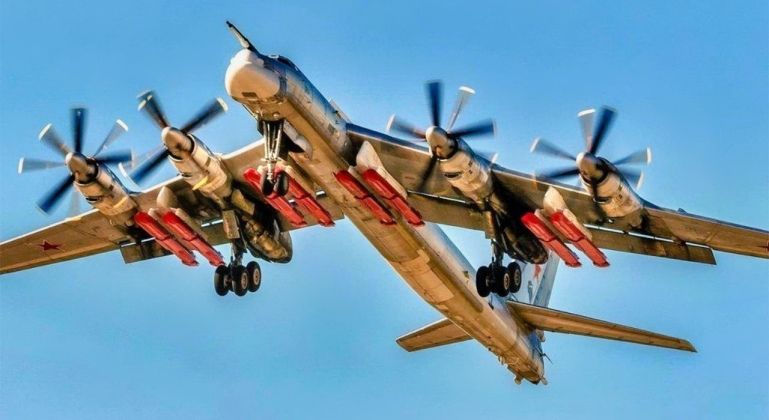
Russian Tu-95MSM Strategic Bomber with Eight Kh-101/2 Cruise Missiles
The Russian Aerospace Forces has deployed Tu-95MS bombers for a flight over the international waters of the Barents and Norwegian Seas, as the aircraft continue to be relied on heavily to serve as the air arm of the country’s nuclear triad. The Russian Defence Ministry reported on April 30: “Tu-95MS strategic missile-carrying bombers of the Russian Aerospace Forces’ long-range aviation performed a scheduled flight in the airspace over the neutral waters of the Barents and Norwegian Seas. The flight lasted over seven hours.” The Ministry elaborated regarding the bombers’ operation: “During the flight, the crews of the Tu-95MS strategic missile-carrying bombers practiced mid-air refuelling. The crews of Su-30SM aircraft of the Aerospace Forces provided fighter support for the flight.”
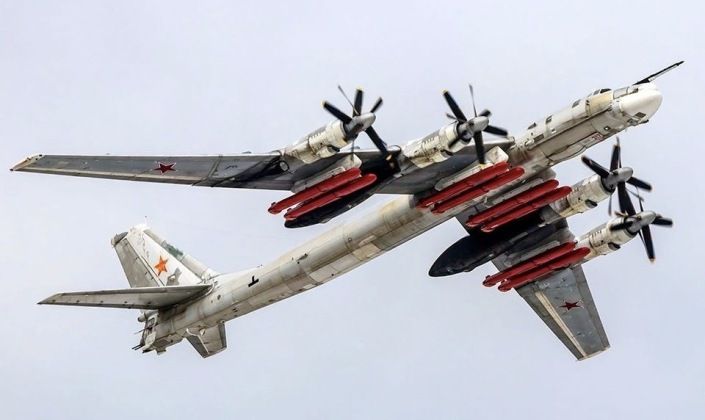
Tu-95s were escorted by fighter aircraft scrambled by NATO member states, with Norwegian F-35A fifth generation fighters reported to have been deployed. The Tu-95MS fleet began production in the mid-1980s, and has largely been updated to the Tu-95MSM standard which saw the aircraft integrate a new engine, namely the world's most powerful serial turboprop engine the NK-12MPM, as well as new propellers to facilitate an increased weapons carrying capacity and range. Upgrades also doubled the aircraft’s weapons payload and provided compatibility with the Kh-101/2 cruise missile, which serves as the aircraft’s primary armament. Wings were also strengthened to accommodate the new much larger missiles, while avionics including sensors and data displays were modernised comprehensively.
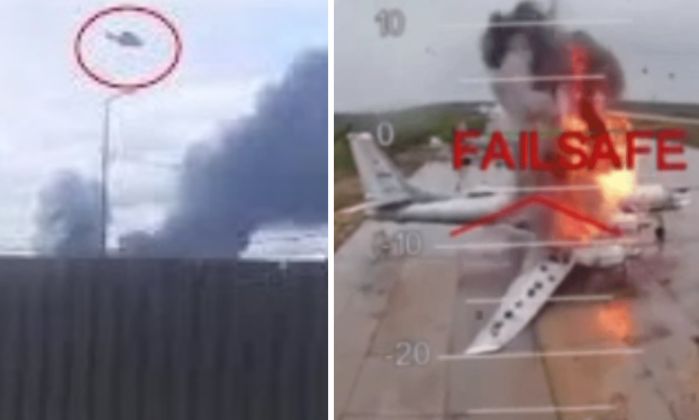
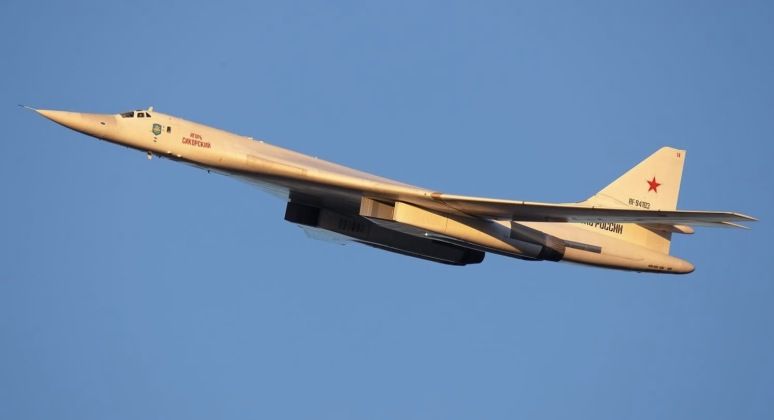
The Tu-95MS fleet suffered serious losses due to a large scale drone attack launched by Ukrainain forces against their airbases on June 1, forcing the Armed Forces to await the production of further Tu-160M bombers to replace them over several years. The Tu-160 was intended for production in parallel to the Tu-95MS to provide the Soviet Air Force with a high-low combination of next generation strategic aircraft, with the Tu-95MS not only being significantly less costly to procure, but also having much lower sustainment costs and maintenance needs, while being compatible with all the same weaponry as the Tu-160. These plans were terminated following the disintegration of the Soviet Union, however, after which a decision was announced in 2015 to resume Tu-160 production largely due to major delays developing the next generation PAK DA strategic bomber.
Recent modernisation of the Tu-95MSM has reportedly particularly focused on improving its ability to integrate with their air, naval, and ground assets for joint operations, allowing the aircraft to function seamlessly as part of a broader network. The bomber’s avionics have also been enhanced to include navigation, communication, and control systems, facilitating more accurate mission planning and execution. Superior electronic warfare capabilities and defensive systems have also been integrated. New variants of the Kh-101 have also continued to be developed, with improvements to avionics reportedly having further increased precision and improved mission success rates for the missile type.
