
Russia Holding Talks With Export Client For Tailor Made Twin Seat Su-57 Fighter
Military Watch Magazine Editorial Staff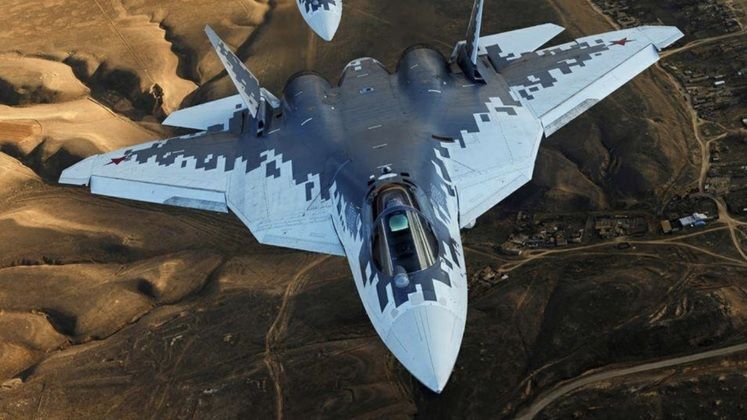
Russian Su-57 Next Generation Fighter
Russian sources have reported widespread foreign interest in the country's new Su-57 next generation fighter, an aircraft which entered serial production in 2019 and is expected to integrate a wide range of unique sixth generation technologies as the design continues to be rapidly improved. The fighter was designed as a successor to the Su-27 Flanker heavyweight air superiority fighter of the late Soviet era, and is expected to replace a large portion of the Su-27 and Su-30 fleets in the Russian Air Force and in those of many of its defence clients. The aircraft has also been highlighted as a potential replacement for some very different kinds of aircraft, including the MiG-29 medium weight multirole jet and the MiG-25 Foxbat heavy interceptor. Algeria is thought to currently be the only export client for the Su-57, and while the country had traditionally been secretive regarding its arms acquisitions there are multiple signs that an order for over a dozen fighters has been placed to replace the MiG-25 jets in its fleet. The Su-57’s popularity abroad is expected to increase considerably as Russia moves to enhance the design to a sixth generation level, with improvements ranging from integration of hypersonic ballistic missiles to installation of new Saturn 30 engines which look to be the most powerful integrated onto any fighter so far.
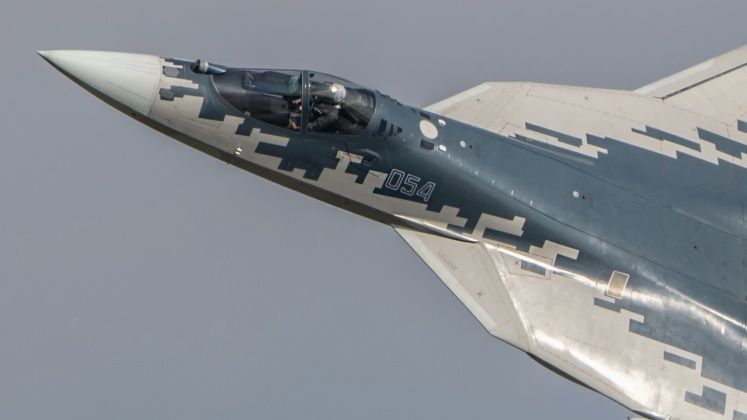
Russian sources have reported that at least one of the parties currently holding talks regarding a potential purchase of the Su-57 have inquired into the possibility of a tailor made twin seat variant, with the aircraft currently being produced exclusively as single seat models. First Deputy Chairman of the Board of the Russian Military-Industrial Commission Andrey Yelchaninov notably stated on December 15th: "Negotiations are underway with potential buyers. Various delivery options are being considered: a separate aircraft and an aircraft with a full range of weapons, with an after-sales service system. In addition, at the request of the customer, the appearance of the aircraft can be finalised.” He further indicated that a twin seat version of the next generation fighter was of interest to at least one possible export client, and that the Russian Armed Forces could themselves acquire such variants with the Defence Ministry currently considering the option. India is notably a leading potential client for the Su-57, and is strongly expected to place orders either for individual ‘off the shelf’ units or as part of a license production deal as it previously pursued with the MiG-21, MiG-27 and Su-30 jets. Among major Russian defence clients, India has shown the strongest preference for twin seat fighter designs, and is one of the few expected to purchase the Su-57 in large enough numbers to request such an extensive modification.
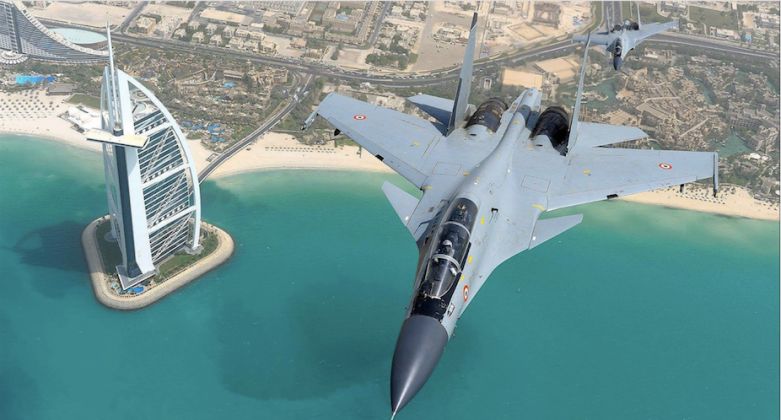
A number of analysts have questioned the continued relevance of twin engine fighter aircraft for fifth or sixth generation warfare, as improved automation of multiple functions and the expected integration of artificial intelligence is expected to make the role of the second crewmember, the weapons systems officer, redundant. Nevertheless, it is possible that other uses will be found for a second seat, beyond training purposes which for such a high end fighter are likely to be more efficiently served by lighter aircraft specialised in such roles. One notable possibility is that, with the aircraft expected to deploy alongside multiple ‘wingman’ stealth drones such as the Okhotnik, the officer second seat could be tasked with helping to coordinate supporting actions by these unmanned jets.
Beyond Algeria and India, countries which have reportedly shown interest in the Su-57 have included China, Myanmar, Vietnam, Malaysia, Iran and Turkey. This number is expected to grow as basic fourth generation fighter designs increasingly become obsolete and more countries are pressed to consider options for next generation warfare. The Su-57 is the only Russian next generation manned combat jet known to have been test flown, although it is expected to be followed by the MiG-41 next generation interceptor, which will almost certainly be far more costly and much larger. A cheaper single engine next generation fighter is thought to also be under development using a single Saturn 30 engine to serve as a lighter complement the Su-57, much like in the fourth generation the American F-16 complemented the F-15 or the Chinese J-10 complemented thee Su-27 and Su-30.
