
Russia’s New Stealth Drone Built to Hunt Enemy Aircraft: Okhotnik Tests Air to Air Combat Performance
Military Watch Magazine Editorial Staff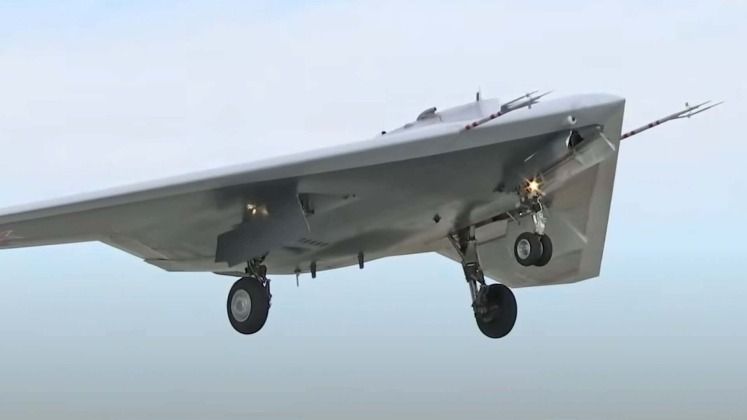
Russian Okhotnik Stealth Drone
Russia’s new Okhotnik stealth drone is confirmed to have begun flight testing with air to air missiles, potentially confirming prior speculation that the aircraft was designed from the outset with an emphasis on air to air combat. The Russian Air Force reportedly plans to receive the first of the drones before 2025, which are designed to operate closely alongside its new Su-57 next generation fighters. Russian state media described the stealth drone as operating in a “fighter-interceptor role,” with tests having taken place in southwestern Russia. “From the airstrip of the military airfield of the Russian Aerospace Forces’ Combat Training and Combat Application Center at the Ashuluk training range, the Okhotnik performed several flights with functional simulators of guided air-to-air missiles… In the combat version [of the drone], such missiles are designed to destroy other aircraft,” Russia’s RIA Novosti reported. It further highlighted that the trials “will make it possible to assess the coupling of the drone’s avionics with missile guidance systems and the lead Su-57 aircraft.”
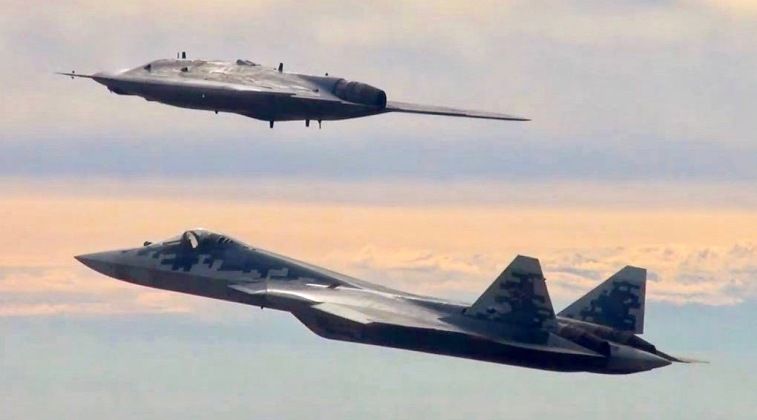
The types of missile the Okhotnik will carry remain unconfirmed, but are likely to include some of Russia’s most advanced long ranged designs many of which were developed to be deployed by Su-57 fighters. These include the R-37M hypersonic platform with a 400km range and the K-77 APAA guided missile with a range of approximately 195km. It is possible that the drone will not deploy short ranged missiles due to its apparent emphasis on beyond visual range engagements. It remains uncertain whether the drones will be paired with aircraft other than the Su-57, such as the MiG-35 which is lighter but integrates many similar technologies, or on what scale it will be produced. Russia’s close defence partner Iran has notably extensively combat tested stealth drone designs with similar ‘flying wing’ profiles in a range of roles, including penetration of enemy air defences, ground attack, and reconnaissance, and Russia could potentially benefit from sharing of this experience.
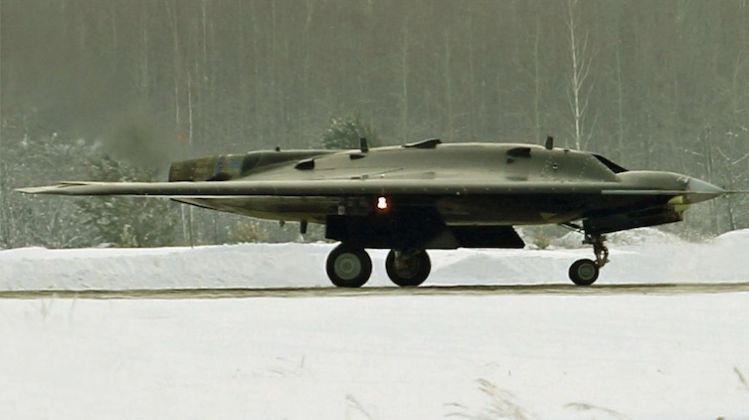
The Russian Defence Ministry previously stated that the Okhotnik would “broaden the [Su-57’s] radar coverage and provide target acquisition for employing air-launched weapons,” indicating that the drones would deploy their own independent sensors possibly based on the Su-57’s own AESA radar technologies. The Su-57 notably can accommodate more missiles in its internal bays than any other next generation fighter, with a capacity for up to ten air to air missiles where the American F-22 and Chinese J-20 carry eight and the American F-35 carries just four. The ability of the Okhotnik to carry additional missiles could expand the firepower of Su-57 units considerably and highly cost effectively. While initial variants of the Okhotnik are expected to rely on remote piloting, later variants will likely benefit more from artificial intelligence granting them greater autonomy.
