
Republic of China Army’s New U.S. HIMARS Rocket Artillery Suffers High Misfire Rate in First Live Fire Drills
Military Watch Magazine Editorial Staff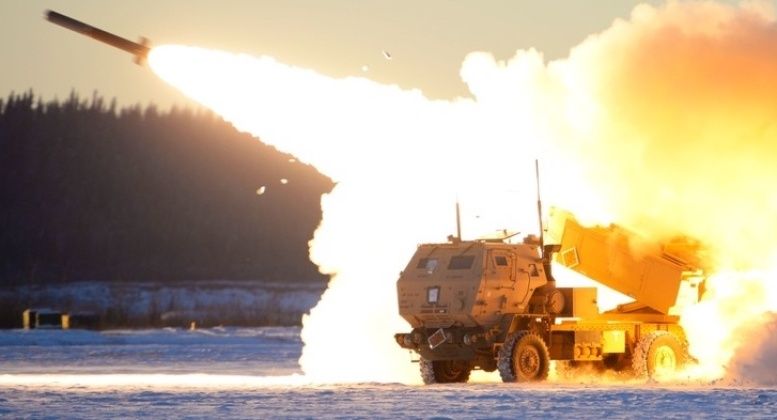
Rocket Artillery Launch From HIMARS
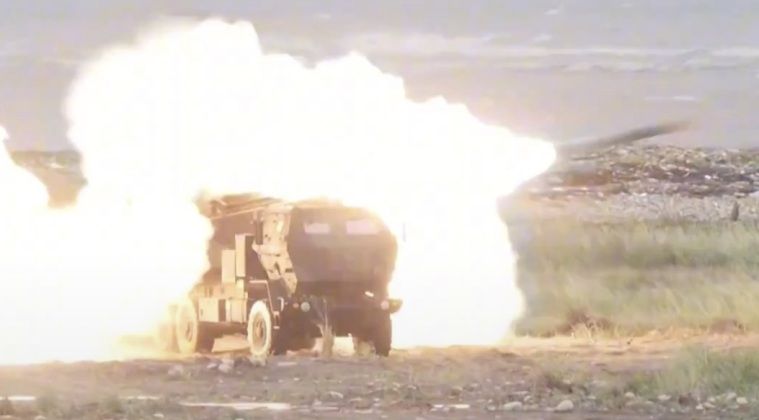
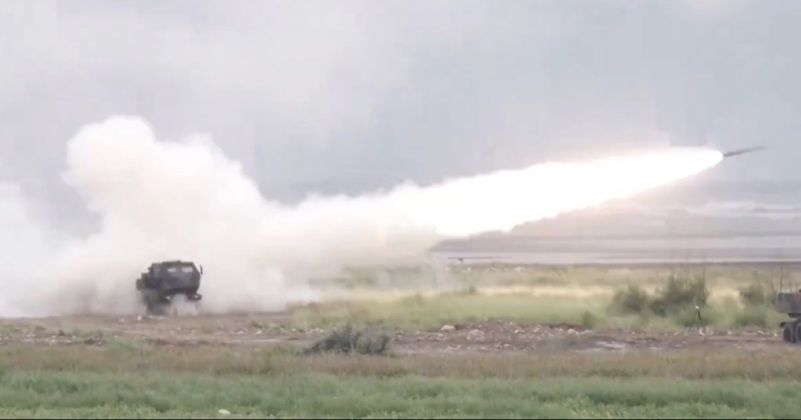
The Republic of China Army has deployed U.S.-supplied High Mobility Artillery Rocket Systems (HIMARS) for the first ever live fire exercises conducted using the systems in the Taiwan Strait, launching 36 guided rockets into the water off the coast of the Chinese mainland. The exercise was meant to demonstrate HIMARS’ ability to rapidly redeploy to avoid counterattacks, and to fire on hostile forces launching amphibious landings on Taiwan Island. The exercises have caused considerable concern among local defence analysts, after four of the 36 rockets fired misfired, representing an 11 percent failure rate, the cause of which snow under investigation. Plans to supplement the firing of guided rockets from HIMARS systems with launches of ATACMS ballistic missiles, which can also be integrated onto the systems, were cancelled due concerns that it would allow the Chinese People’s Liberation Army to collect valuable intelligence on their flight profiles.
Commenting on defence procurement decisions in March, Vice Chairman of the Forward Auxiliary Association Li Wenzhong criticised procurements in assets such as tanks and howitzers that "fight yesterday instead of tomorrow's war.” He singled out procurements of HIMARS for praise, highlighting their high sophistication and the fact that their capabilities had been verified in actual combat. He singled out the system’s ability to launch ATACMS ballistic missiles with 300 kilometre ranges as being of particular high value due to its ability to strike high value targets across the Taiwan Strait, and stated that in future the Republic of China Armed Forces should work to field a multi-warhead missile type with a longer 500 kilometre range. HIMARS and ATACMS have been extensively combat tested in the Ukrainian theatre, and have been used to target multiple high value targets including the the destruction of launchers and radars from S-400 air defence systems, the destruction of other radar systems, the neutralisation of Russian Iskander-M ballistic missile launchers.
In March it was confirmed that negotiations on the sale of further HIMARS to equip the Republic of China Armed Forces had been extended, as it is expected that the systems will continue to be prioritised for procurement funding. Conflicts in the Middle East and in Ukraine, however, have limited availability. In parallel to exports of HIMARS and ATACMS to equip the Republic of China Army, the U.S. Armed Forces have continued to rapidly expand its deployments of HIMARS in the Western Pacific region, reflecting broader trends towards the prioritisation of the most capable equipment for the region. The U.S. Army in April deployed and fired HIMARS in the Philippines during Exercise Salaknib 2026, which represents a significant landmark in the expansion of forward-positioned long-range strike capabilities near Chinese territory. The prioritisation of Japan and the Philippines for the deployment of long range missile and rocket artillery systems is far from unprecedented, and is a result of the countries’ geographic locations which makes them optimal to serve as a staging ground for attacks on China. The establishment of a Joint Firepower Coordination Centre in Taipei in January 2026 has also allowed U.S. forces to select targets and overseen planning of strikes using Republic of China HIMARS against targets on the Chinese mainland.
