
Iran Named This Supersonic Cruise Missile After Qasem Soleimani: Mass Production to Begin By Year’s End
Military Watch Magazine Editorial Staff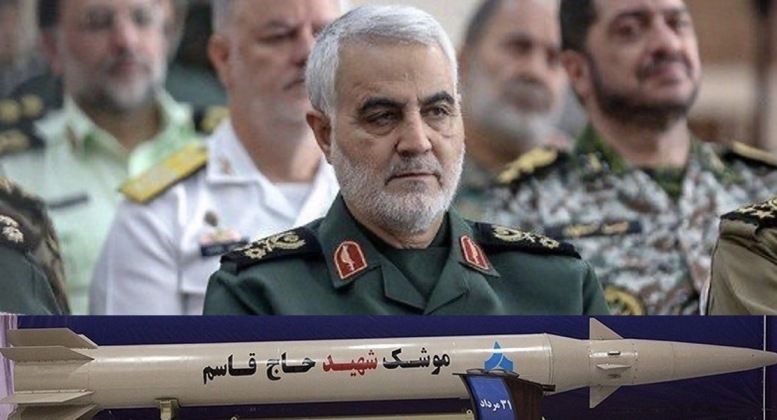
Qasem Soleimani and Haj Qasem Cruise Missile
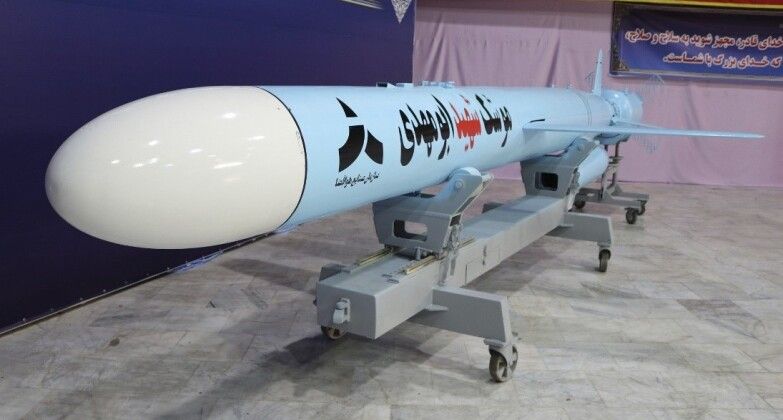
Following the assassination of the commander of Iran’s Islamic Revolutionary Guard Corps Quds Force, Qasem Soleimani, in a drone strike in January 2020 by the U.S. Central Intelligence Agency, Iran named a new class of supersonic cruise missile in the honour of the fallen general. The country is expected to begin mass production of the new ‘Haj Qasem’ missile by the end of 2021, which will come as part of growing deployments of cruise missile designs to provide more diverse and sophisticated means of launching precision strikes and to support the Iranian ballistic missile arsenal. The missile has a range of 1,400-1,800km, allowing it to strike targets across the Middle East including U.S. military facilities across the Persian Gulf region as well as targets in Israel. Development of the Haj Qasem missile comes as part of a wider investment in the expansion of Iran’s cruse missile arsenal, and it was unveiled in August 2020 alongside the Abu Mahdi naval cruise missile. This second missile was named after the Iraqi commander Abu Mahdi Al Muhandis who was killed at Soleimani’s side. The new designs follow on from both new submarine launched cruise missiles and from the Hoveyzeh long range platform which was unveiled early in 2019. Tensions between Iran and the United States have risen considerably since 2018, culminating in General Soleimani’s assassination and a subsequent Iranian retaliatory missile strike on U.S. military facilities in Iraq that month which caused over 100 American casualties.
Leading up to the assassination, the U.S. expanded its military presence in the Persian Gulf considerably in 2019, deploying assets ranging from B-52H nuclear capable bombers to Patriot missile batteries and F-22 Raptor air superiority fighters all of which were seen to be aimed at Iran. Tehran has also come under very considerable pressure from Washington and its European partners to accept Western drafted restrictions its missile capabilities. Its advanced arsenal of long range ballistic and cruise missiless has provided it with a formidable asymmetric deterrent against the U.S. and its allies to compensate for its lack of either weapons of mass destruction or a viable air force - meaning there is a strong incentive for Western powers to seek to remove it. A formidable missile arsenal provides Iran with the option of striking enemy airfields across much of the Middle East with precision attacks to disable their air units in a war’s early stages, largely evening the odds between them. Iran is also looking to expand its strike with the acquisition of its first modern aircraft since 1991 - with a UN Security Council arms embargo on the country having been lifted in October 2020 which paved the way for purchases of advanced Chinese and Russian fighter jets such as the J-10C and Su-30SM. The U.S. had pledged to do all it can to prevent such a sale, although there are no known legal avenues for a third party to block a bilateral arms deal without the support of the UN Security Council.
