
Iran Claims Dangerous Approach of Civilian Airliner By American F-15s Injured Passengers
Military Watch Magazine Editorial Staff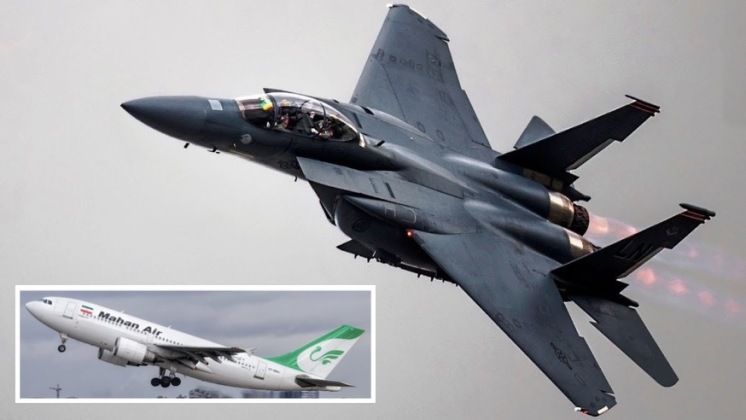
F-15 Fighter and Mahan Air Airbus A310
An Iranian Airbus A310 airliner belonging to the country’s Air Mahan was closely approached by American F-15 fighter jets during a routine flight to the Lebanese capital Beirut in the late hours of July 23rd. The incident occurred inside Syrian airspace, where American military aircraft are not legally permitted to operate but have frequently done so over the past eight years, exploiting the erosion of the country’s air defence capabilities and its state of internal conflict. While the F-15s were initially identified by a number of media outlets as Israeli, with the Israeli Air Force more frequently operating in Syrian territory and having allegedly placed civilian airliners in the country at risk in the past, the F-15s were later confirmed to by American. U.S. officials claim that F-15s only came within 5,000 feet of the Iranian airliner, although Iranian sources claim that the fighters were much closer, forcing the passenger jet to swerve sharply and injuring several passengers onboard.
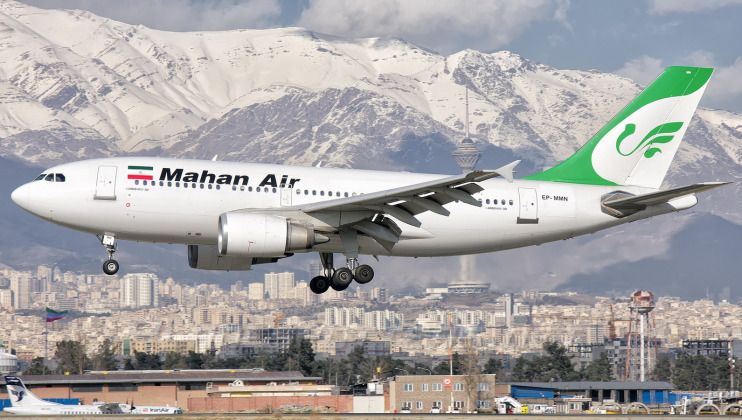
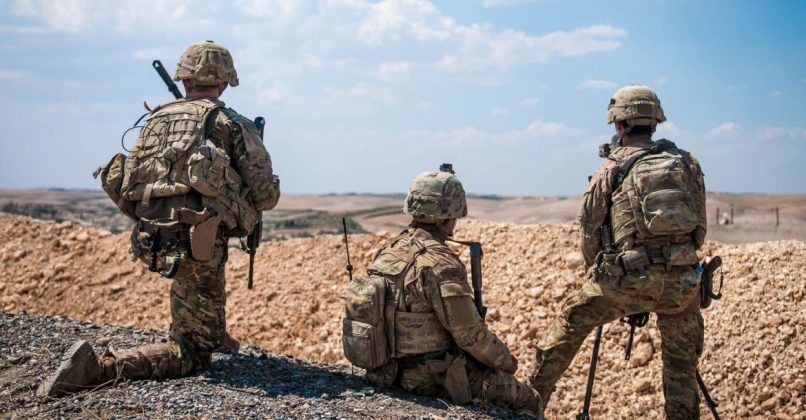
The U.S. Military currently illegally occupies a large part of Syrian territory and has guarded operations to extract oil there which is being used to fund Western-aligned militias in the country known as the Syrian Democratic Forces. The U.S. has established a deconfliction zone around its garrison on Syrian soil, and prohibited Syrian and allied forces from entering either by land or by air. This has been enforced both by naval aircraft such as F-18E Super Hornets and by U.S. Air Force F-15E strike fighters based in neighbouring Jordan, and it is likely that these F-15s were responsible for the incident. U.S. media outlets have since claimed that F-15s were dispatched only because the Iranian flight "drifted from [the] established air route" and did not reply to radio calls. The claim that the fighters stayed around 5,000 feet away from the airliner notably contradict those by the U.S. Central Command tat the jets came within 3,290 feet of the aircraft - although both of these contradict Iranian claims that the F-15s were operating at an unsafe distance. Iranian media have since published images of injured and bleeding passengers, although if U.S. reports are to be believed then the airliner could have pulled sharp manoeuvres on its own accord unprovoked.
Tensions between Iran and the United States have steadily risen since the Donald Trump administration withdrew from the Joint Comprehensive Plan of Action (JCPOA) nuclear agreement between the two countries in May 2018, and escalated considerably the following year as the U.S. sharply expanded its regional military presence and lost an MQ-4 Global Hawk drone to Iranian air defences after it allegedly violated the country’s airspace. Relations only worsened further after the U.S. carried out an illegal assassination of Iranian Quds Force Commander Qasem Soleimani on Iraqi soil on January 3rd, 2020, which was followed by Iranian missile strikes on U.S. facilities in Iraq causing over 100 casualties. Iran has since removed caps on its uranium enrichment in response to escalating U.S. sanctions, and Washington has meanwhile continued to push for an arms embargo on the country, set to expire in October, to be extended indefinitely. Throughout July Iran has continued to suffer mysterious explosions at a number of industrial and energy facilities, leading to widespread allegations in the country of foreign sabotage, with these incidents following a major cyber attack by U.S. ally Israel on Iranian civilian infrastructure which was reported two months prior. The outcome of the current U.S.-Iranian standoff remains to be seen, but multiple further clashes, provocations and alleged provocations are to be expected.
