
India Pulling Ahead of Europe in Stealth Fighter Development Despite Major Delays
Military Watch Magazine Editorial Staff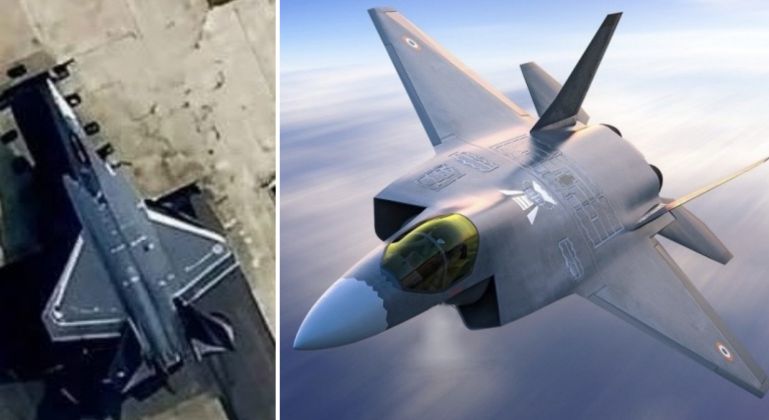
AMCA Radar Cross Section Test Airframe (left) and Artwork
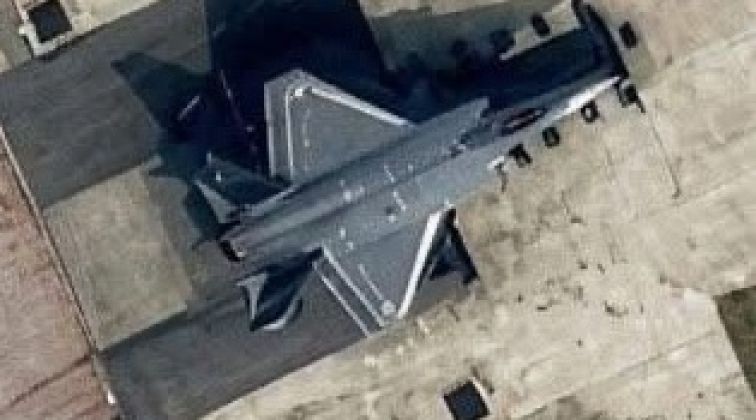
Footage released on June 11 has show the first test model of the Indian Advanced Medium Combat Aircraft (AMCA) fifth generation fighter program’s radar cross section, which appeared at the Indian Air Force Academy, located in Dundigal. The fighter model used for radar cross section testing closely resembles artwork of the next generation fighter design shown by official defence sources in the past. Developed by the Aeronautical Development Agency (ADA) under the Defence Research and Development Organisation (DRDO), the program represents India’s most ambitious aerospace project to date, and is expected to be ready for service in the early 2040s. The program is intended to strengthen India’s defence-industrial base and reduce reliance on foreign suppliers, namely by driving investment in stealth materials, avionics, software, sensors, weapons integration and advanced manufacturing techniques.
India remains decades behind China and the United States in fighter development, and has struggled to develop even a competitive lightweight fourth generation fighter. The AMCA program has nevertheless shown signs of greater progress than rival European programs, with the French-led European Global Air Combat Programme having failed to finalise a design, let alone move on to radar cross section testing, despite having been initiated almost a decade ago in 2017. The program was confirmed on June 7 to have collapsed. China and the United States remain in a league of their own in fighter development, with China projected to introduce two types of sixth generation fighter into service in the early 2030s, followed by the U.S. introduction of the F-47 sixth generation fighter in the 2040s. Although no other countries are expected to develop similarly capable aircraft for the foreseeable future, South Korea, India, and a partnership of the United Kingdom, Japan and Italy are all working to develop their own fifth generation fighters. Russia is the only country outside China and the U.S. which has already brought its own fifth generation fighter, the Su-57, into service, placing its industry in a very distant third place.
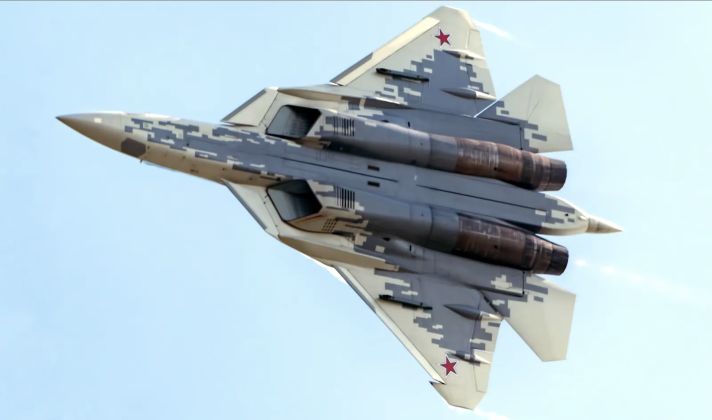
The AMCA program is expected to benefit significantly from technology transfers from Russia, with the Indian Defence Ministry having in January 2026 confirmed that talks for license production of the Su-57 fifth generation fighter had reached an advanced technical stage. The Russian Defence Ministry has made an unprecedented offer to provide full access to the fighter’s source code, as well as extensive technology transfers. Investment in the Su-57 will thus provide both an option for fielding fifth generation fighters over a decade before the AMCA becomes available, and a means of accelerating development of the indigenous fighter by obtaining Russian technologies. The extent of the difficulties India’s defence sector faced with the Tejas fourth generation fighter program, which despite being relatively unambitious has still been one of the most problematic fighter programs of the past half century, has raised serious questions regarding the country’s ability to develop a fifth generation fighter independently. Despite its simplicity, the Tejas is still very heavily reliant on foreign technologies, with its engine, radar and much of weaponry being foreign sourced. It is likely that the AMCA program will come to rely more heavily than expected on Russian technologies and support, with delays to development expected to increase market share for the Su-57.
