
France and Germany’s First Stealth Fighter Program Collapses After Years of Setbacks
Military Watch Magazine Editorial Staff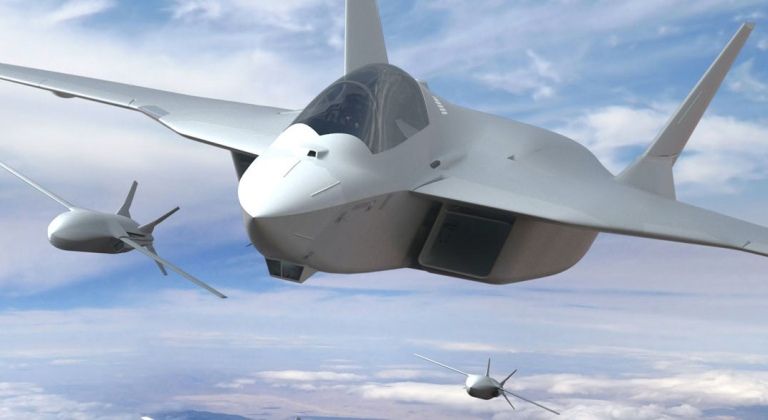
Future Combat Air System Fighter - Artwork
The Franco-German Future Combat Air System (FCAS) next generation fighter program has officially collapsed, after French President Emmanuel Macron and German Chancellor Friedrich Merz reached a shared conclusion that common ground to resolve longstanding disputes could not be found. The program had been launched in July 2017 to provide a successor to the Eurofighter in German service, and the Rafale in French service, from around 2040. Serious deficiencies in the two countries technological bases, and a long history of major inefficiencies in most of their major defence programs, from the outset raised serious questions regarding whether such an ambitious fighter development effort was possible. A major landmark in the program was the admission by Dassault CEO Eric Trappier in 2021 that due in part to major delays over the past four years, the program was not expected to produce a fighter for over two decades. “[The target of] 2040 is already missed, because we already stall, and the discussions of the next phase will surely also be long... so we rather aim for the 2050s,” he observed at the time.
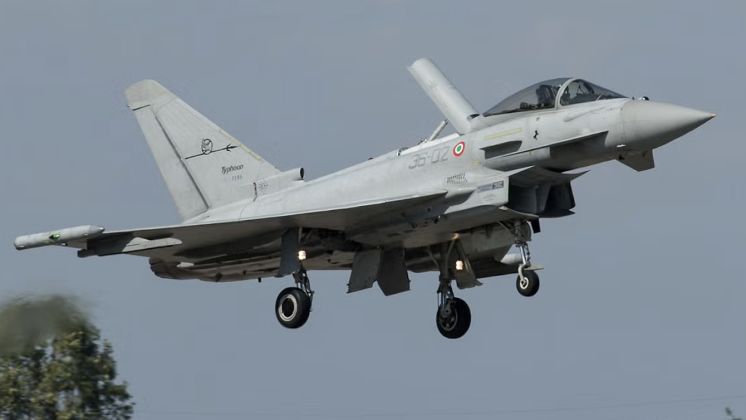
European defence sectors have remained far behind China, the United States, and to a lesser extent Russia, in the capabilities of their combat aircraft, with the U.S. having operated fifth generation fighters for over two decades, and China for close to a decade. China is expected to bring its first sixth generation fighters into service in the early 2030s, closely followed by the United States with the F-47 fighter in the early 2040s, while the two countries are rapidly modernising their J-20 and F-35 fifth generation fighters to ‘5+ generation’ standards. The Eurofighter and Rafale have consistently been assessed to have very limited combat potentials compared not only to these fifth generation fighter types, but also to top end U.S. and Chinese ‘4+ generation’ fighters like the F-15EX and J-16. While Chinese fighters for political reasons have not been able to compete in NATO tenders, the F-35 has consistently won every tender in which it has competed against European fighter types, reflecting the limitations of the Eurofighter and Rafale. Not only is the discrepancy currently wide, but it has continued to widen, as European fighter production even decades later are expected to face major difficulties overcoming the technological hurdles to move into the fifth generation era.
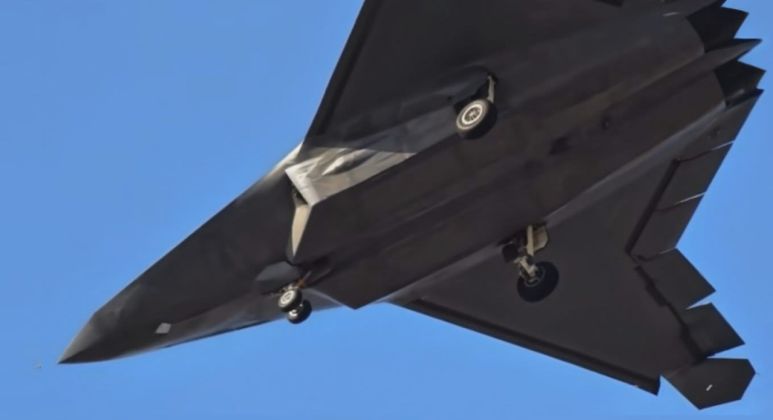
The FCAS program has faced growing difficulties, with reports in September 2025 indicating that officials at the German Defence Ministry were considering options to leave the program entirely. Responding to this mounting crisis, the head of Airbus Defence and Space Mike Schoellhorn stated that one possibility would be for the program to develop two separate fighter types to meet separate French and German requirements. In December the United Kingdom Ministry of Defence offered Germany possible entry into the the Global Combat Air Programme (GCAP) next generation fighter program being pursued jointly with Japan and Italy. The GCAP is expected to itself face major difficulties due to the major industrial and technological constraints of the countries involved, and the far from outstanding records of the British and Italian defence sectors in particular. It is nevertheless considered likely that Germany will join following the collapse of the rival Future Combat Air System program, with Germany having previously partnered with Italy and the United Kingdom to develop the Eurofighter.
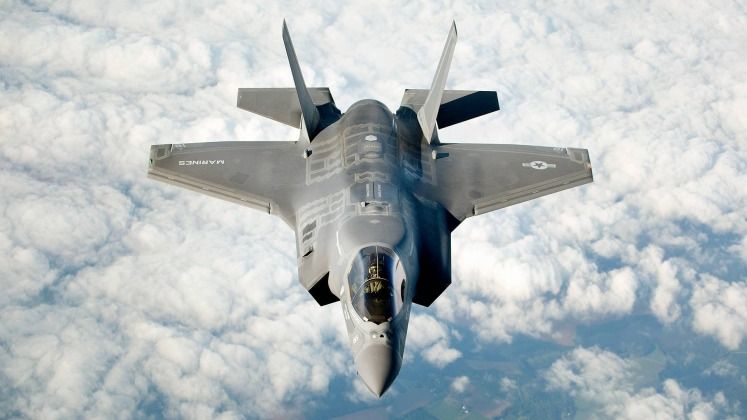
The ability of either the GCAP or the FCAS programs to produce a fighter with comparable capabilities to the F-35 or J-20 has long been in serious question, particularly considering the extensive efforts being made to rapidly enhance both fighters to ‘5+ generation’ standards by countries with much larger technological bases and more efficient defence sectors than those seen in Europe. While European states may still develop fifth or ‘5+ generation’ fighters, if entering service they will still be very considerably behind in terms of technology and performance, and will likely become operational only after the first Chinese and possibly U.S. sixth generation fighters are already operations. A likely outcome of the GCAP’s collapse is that France will seek to develop a fighter independently, possibly with support from the United States and relying on U.S. technology imports. The expected continued issues faced by European programs are expected to continue to increase interest in the F-35, and potentially in procurements of the U.S. F-47 sixth generation fighter should it be offered for export.
