
Airbus Defence Head Highlights Major Franco-German Rift Crippling Their First Stealth Fighter Program
Military Watch Magazine Editorial Staff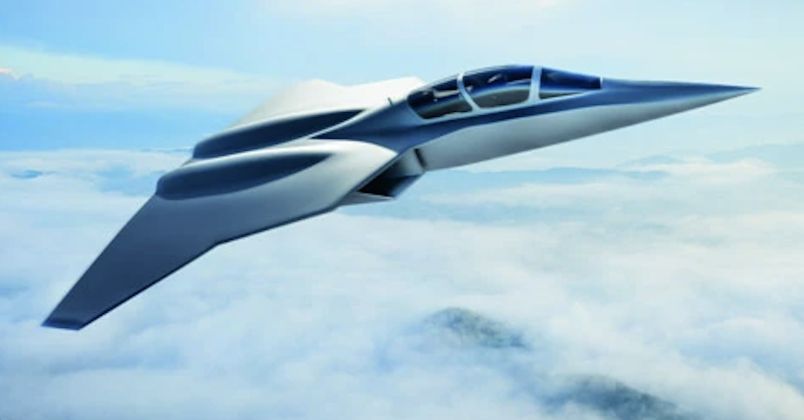
Future Combat Air System Fighter - Artwork
The head of Airbus Defence and Space Mike Schoellhorn has provided details on ongoing issues with the Franco-German Future Combat Air System (FCAS) program, which has for years been considered one of the most problematic fighter development efforts in part due to disagreements between the two leading partners. Regarding the difficulties caused by the contrasting requirements of the French and German defence ministries, he observed: “It was not a secret that it would be quite a bit of a compromise to fit carrier capability, nuclear capability [required by France] with an air dominance system that Germany and Spain needed.” From an engineering perspective, that was always seen as “very difficult”, he noted. Schoellhorn stressed that he was “supportive of finding a solution” to the current impasse between the two sides.
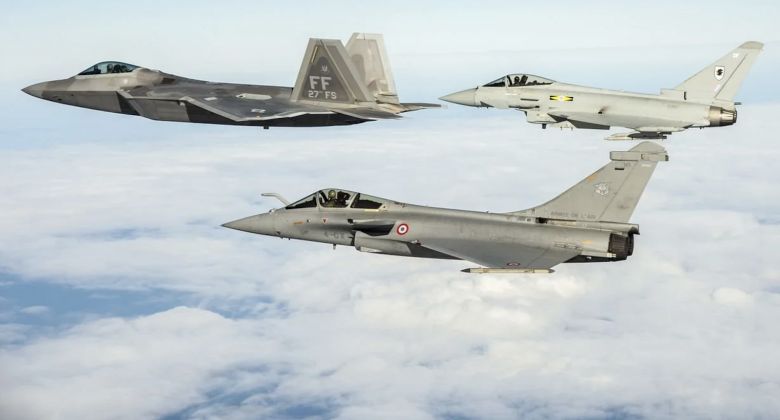
The FCAS has faced growing difficulties, with reports in September indicating that officials at the German Defence Ministry were considering options to leave the program entirely. Responding to this mounting crisis, Schoellhorn stated that one possibility would be for the program to develop two separate fighter types to meet separate French and German requirements, presumably while trying to maximise commonality between the two. He noted that as work on the program began before the outbreak of full scale hostilities in Ukraine, at a time when European defence spending levels were significantly lower, a two fighter program may be viable where it previously had not been. He added that the “basic idea” of a “networked system” linking the fighter jets and the sensors and drone elements of the project was still highly relevant in the current defence environment, the war in Ukraine had changed the calculus on the core warplane elements, and left France and Germany less willing to compromise. If the solution is not to stick with a “one fighter solution, then I support a two-fighter solution”, he added.
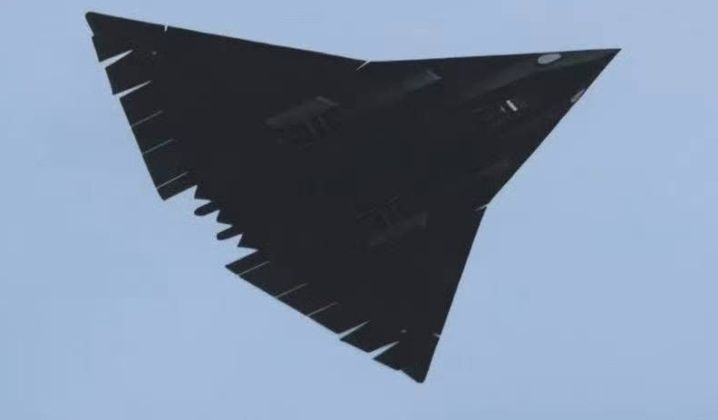
The FCAS program is not expected to produce a fighter for over two decades, with Dassault CEO Eric Trappier having observed as early as 2021 that “[The target of] 2040 is already missed, because we already stall, and the discussions of the next phase will surely also be long... so we rather aim for the 2050s.” China, by contrast, is expected to bring its first sixth generation fighters into service in the early 2030s, closely followed by the United States with the F-47 fighter in the early 2040s. Much as is the case with the British-Japanese-Italian Global Air Combat Programme (GCAP), the FCAS program is being marketed as a sixth generation program, but is expected to produce a ‘5+ generation’ fighter broadly on par with enhanced variants of the U.S. F-35 and Chinese J-20. This reflects the fact that European states had by the end of the Cold War already since ceased to be top tier competitors in fighter aviation, having fallen far behind the U.S. and USSR, after which they were rapidly overtaken by China in the 2010s.
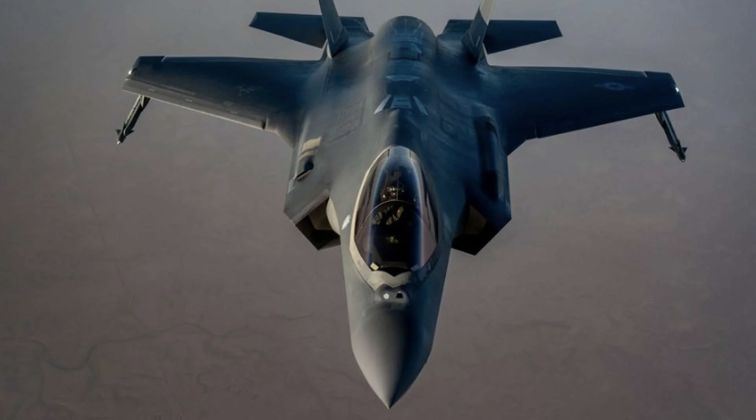
European states have been left increasingly heavily reliant on the F-35 as the only NATO-compatible fighter type of the latest generation. The American aircraft has consistently won every tender in which it has competed against European fighter types. Major delays to efforts to bring the F-35 up to a Block 4 standard, which is considered vital for high intensity combat, have had significant negative implications for aerial warfare capabilities across the continent. With the competitiveness and international standings of European fighters continuing to diminish, the FCAS program was intended to provide an alternative to the F-35 both for European states and for export clients. Nevertheless, the much larger scale of the F-35 program and the much greater levels of research and development for new enhancements, including weaponry and subsystems, raises serious questions regarding whether Europe’s much less efficient defence sectors can produce a comparably capable aircraft.
