
British Analysts Project Disaster For New GCAP Stealth Fighter Program: Industry’s Record Remains Poor
Military Watch Magazine Editorial Staff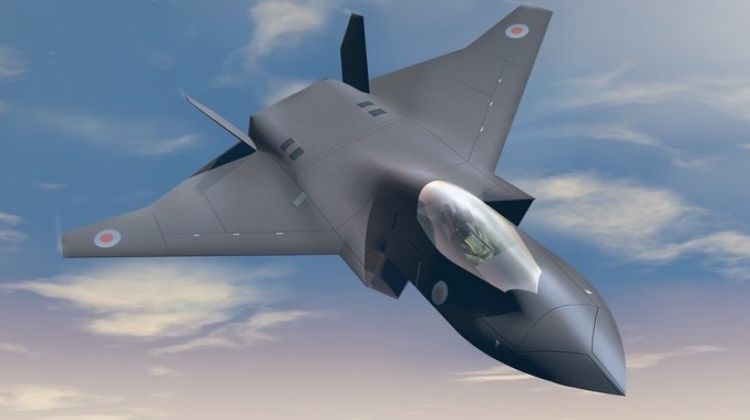
GCAP Tempest Fighter in Royal Air Force Service - Artwork
UK MoD
Analysts writing for the British conservative news outlet The Telegraph have warned that the new Global Air Combat Programme (GCAP) being developed jointly by the United Kingdom, Japan, and Italy, its projected to suffer from a wide range of issues that will significantly undermine the three partners’ aerial warfare capabilities. The assessment was the latest to note that the two preceding generations of British fighters, the Tornado and Eurofighter, were both very far from competitive and suffered from wide ranging issues. Regarding the Tornado, it observed, the aircraft “was not a success. It was good at one thing only: flying fast and low, the idea being that this would let it stay below enemy radar to reach its target. Unfortunately this tactic didn’t actually work: when it was tried against the Iraqis in 1991, eight Tornados from a force of 48 were shot down.”
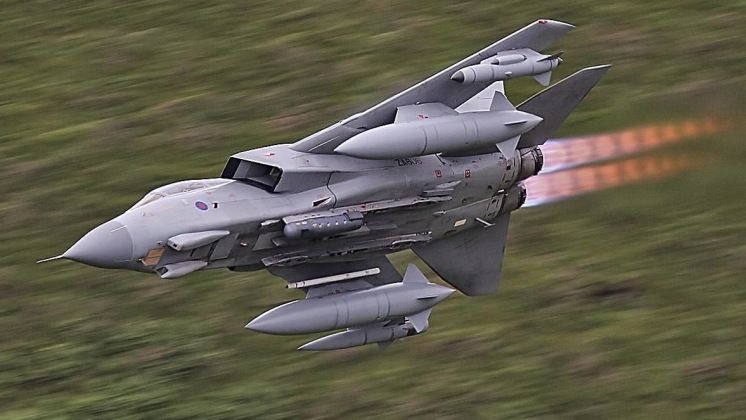
Continuing the assessment of the Tornado, the assessment noted that its performance in the Gulf War raised the question: “What would have happened to our Tornado fliers if they had ever gone in fast and low against serious opposition hardly bears thinking about. The later fighter version of the Tornado wasn’t good at anything and basically didn’t work at all for much of its service: it was a laughing stock.” This was in line with broader assessments widely pointing to the Tornado as being the least capable fighter type of the late Cold War era. The aircraft “cost huge amounts of money to buy and to fly, in large part because of their complicated variable-geometry ‘swing wings’ – an idea long since consigned to the dustbin of engineering history.” The assessment aligned with broader criticisms noting that the Tornado remained far behind its time in its design, with the U.S., USSR, and even France having long since moved towards designs that were more efficient in terms of both combat performance and maintenance requirements.
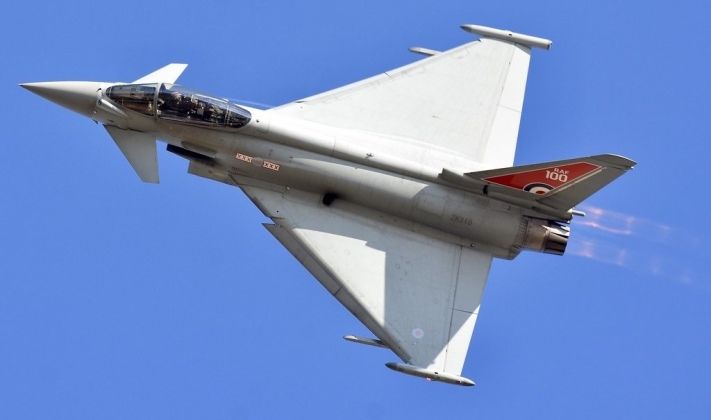
Assessing the latest British fighter program, the Eurofighter Typhoon, the article observed that the aircraft “finally went operational with the Royal Air Force (RAF) in 2007 following an almost unbelievably lengthy and expensive gestation.” The aircraft “had taken so long to arrive that it was literally an entire generation behind the state of the art. The initial Typhoons are assessed by the Ministry of Defence (MoD) as “early fourth generation” in capability and technology terms. The first fifth generation jet, the F-22 Raptor, had been in U.S. service for two years when Typhoon finally arrived.” Highlighting major issues with the aircraft, it was noted that the Tranche 1 variants that formed the bulk of the British fleet have been retired while less than half way through their service lives, reportedly because they are not considered worth the cost of upgrading to a modern performance standard. “The Typhoon was a procurement disaster,” it noted, highlighting that the aircraft cost more than the U.S. F-22 stealth fighter to procure, and had tremendous sustainment costs of £45,000 to £48,000 per flying hour, far exceeding those of the more advanced and complex U.S. F-35 stealth fighter.
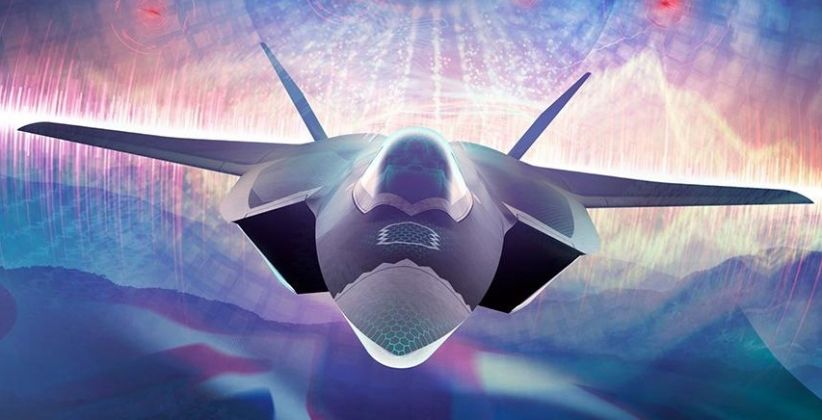
Elaborating on the disaster caused by both the Tornado and Eurofighter Typhoon programs for the state of British air power, and contrasting them sharply with U.S. program such as the F-22 and F-35, the assessment pointed to these precedents to highlight that the GCAP program, which in British service is to produce a fighter designated the Tempest, is unlikely to produce a capable or cost effective aircraft. “First, we built a jet called Tornado in collaboration with Italy and Germany; which resulted in an expensive, prolonged disaster. Then we developed a jet called Typhoon in collaboration with Italy and other nations. This led to an even more expensive and even more prolonged disaster. Now once again, Britain is preparing to embark on a multinational collaboration, building a jet called the Tempest with Italy and Japan. What do we think the result will be?,” the article concluded. Although marketed as a sixth generation fighter, significant questions remain regarding whether the GCAP program can produce an aircraft on par with enhanced ‘5+ generation’ variants of the respective U.S. and Chinese F-35 and J-20 fighters. Delays to development have already reportedly caused significant frustration in the Japanese military leadership, raising the possibility of the country diverting investment to more F-35 procurements.
