
Footage Shows China’s New ‘5+ Generation’ J-20S Fighter Built For Airborne Command and Control
Military Watch Magazine Editorial Staff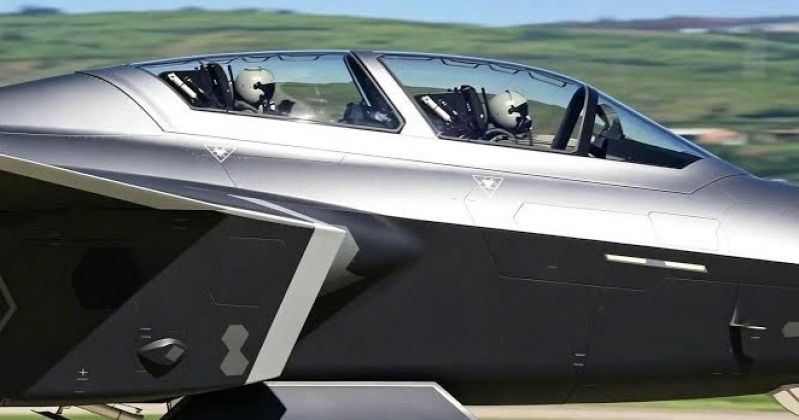
J-20S Twin Seat Fighter Cockpit
Chinese Internet
New footage released on Chinese social media has provided a clear close up image of the cockpit of the J-20S twin seat fifth generation fighter, drawing attention to the type’s reported increasingly central role in service and entirely unique capabilities. While the J-20 first entered service in 2017, and has been rapidly modernised between incrementally more capable batches, the ability of the J-20S to accommodate a second airman is considered invaluable to bringing the fighter up to a ‘5+ generation’ standard. The design will potentially provide China with the first ever fighter of this generation. Alongside advantages in terms of workload sharing for complex combat operations, and command and control over other J-20 fighters, the J-20S has a design optimised to accommodate a controller for accompanying unmanned ‘wingman’ aircraft.
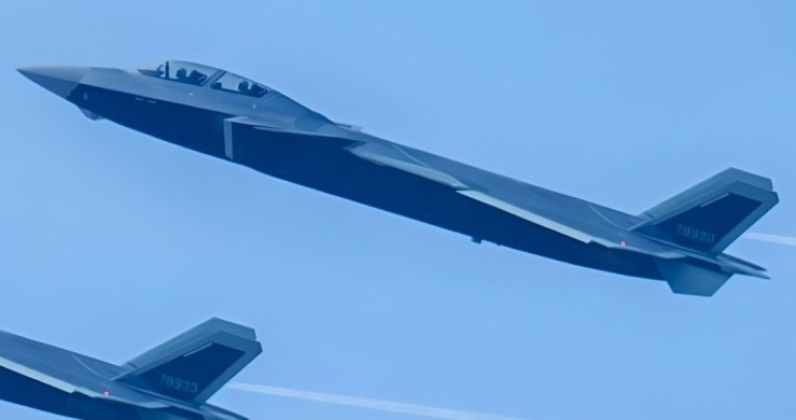
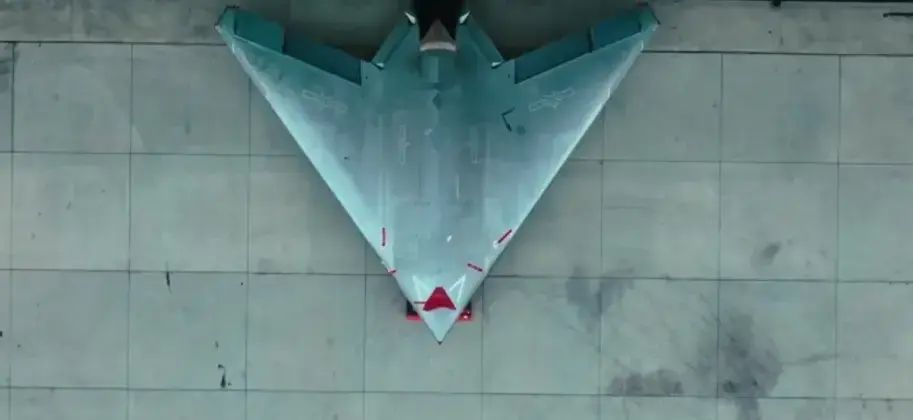
The pairing of manned fighters with unmanned support aircraft is a central capability under development for sixth generation combat aircraft, and is also expected to strengthen the capabilities of fifth generation designs produced in China, the United States and Russia. The designation J-20S from an early stage indicated that the twin seat variant of the J-20 was intended primarily for frontline roles, rather than being a trainer, with trainer variants having been given the ‘JJ’ designation such as the J-6’s trainer variant the JJ-6. At the Zhuhai Airshow in 2021, a few days before the J-20S was first seen, the J-20 program’s chief designer Yang Wei revealed that a twin-seater “would not be a trainer aircraft, because it would be developed for the enhancement of the aircraft.” This indicated that a twin seater was considered the next step in the evolution of the J-20 design. Pilots had in the past strongly emphasised the advantages twin- seat configurations provided in combat, notably on the J-16 which had no single seat variant.
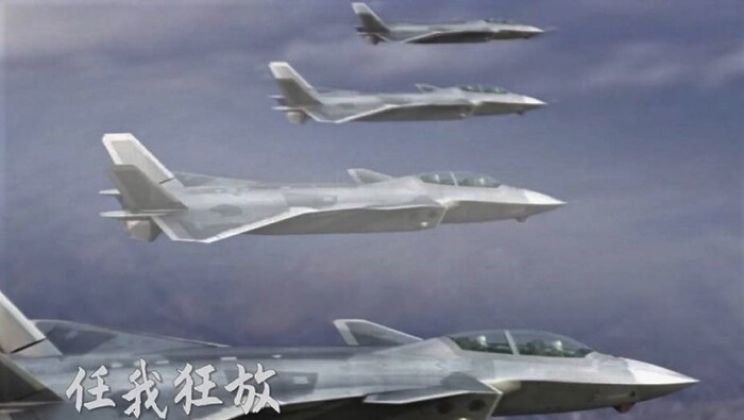
Leading expert on the J-20 program, and author of the book China's Stealth Fighter: The J-20 'Mighty Dragon' and the Growing Challenge to Western Air Dominance, Abraham Abrams, in 2024 posited that the Air Force could gradually transition from primarily procuring single seat J-20 fighters, to procuring more twin seaters. He observed that this could mirror how the Air Force had in the 2000s and early 2010s procured primarily single seat J-11 fourth generation air superiority fighters, before developing the J-16 as an enhanced derivative of the same design that was produced exclusively as a twin seater, and transitioning all procurements to this variant. “Official artwork preceding the J-20S’ unveiling showed twin seaters operating in formation with no single seaters among them, possibly indicating an intention for them to form entire units for frontline combat operations like the J-16, rather than a small portion of predominantly single seat units as seen with the J-11BS,” Abrams observed.
The People’s Liberation Army Air Force was confirmed in July 2025 to have brought the J-20S into service, marking the first time that an aircraft of its generation became operational with the ability to accommodate two airmen. The J-20’s much longer range than rival Western fighter types, with a combat radius approximately twice as wide as the F-22 and F-35, makes work sharing particularly important to avoid pilot fatigue, despite the aircraft’s unprecedentedly high levels of automation and highly streamlined information displays. While a number of the F-35’s clients have shown an interest in a twin seat variant, in particular Israel, this was never viable in large part due to the fighter’s much smaller airframe which cannot easily be modified to accommodate a second seat. All sixth generation fighters developed in China and the U.S., however, are expected to be twin seaters.
