China’s Sixth Generation Air Superiority Fighter Seen in First Ever Detailed Flight Footage
Military Watch Magazine Editorial Staff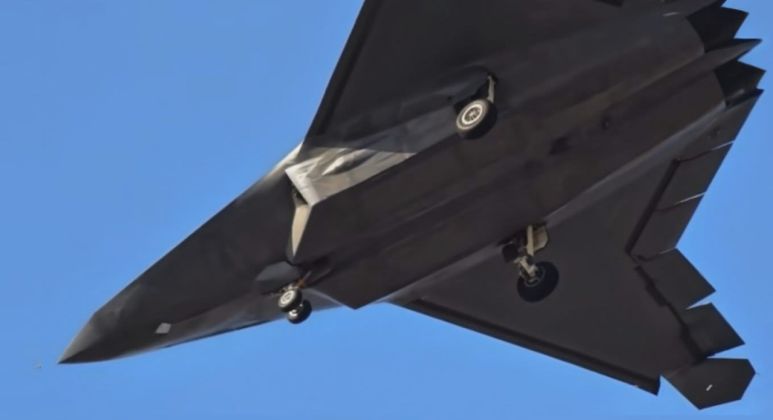
Shenyang Sixth Generation Fighter Prototype
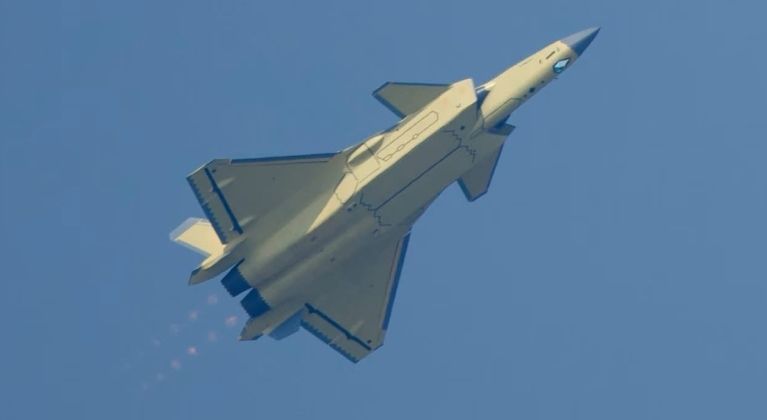
New footage released on Chinese social media has provided the a rare close look at China’s next generation air superiority fighter in flight, as the program approaches 18 months since its first confirmed test flight. Developed by the Shenyang Aircraft Corporation for the Chinese People’s Liberation Army Air Force, the new fighter was first seen in flight testing in December 26, 2024, and appears to be being developed as a direct successor to the J-20 fifth generation air superiority fighter that is currently in large scale serial production. The new images provide a detailed look at the sixth generation fighter’s multiple flight control surfaces, which appear to be intended to compensate for its lack of vertical tail surfaces, which is a distinctive feature of sixth generation fighters that optimises them for stealth across multiple wavebands. The images also indicate a very high production quality and smooth surfaces, despite the aircraft still being individually built and serial production having not yet started.
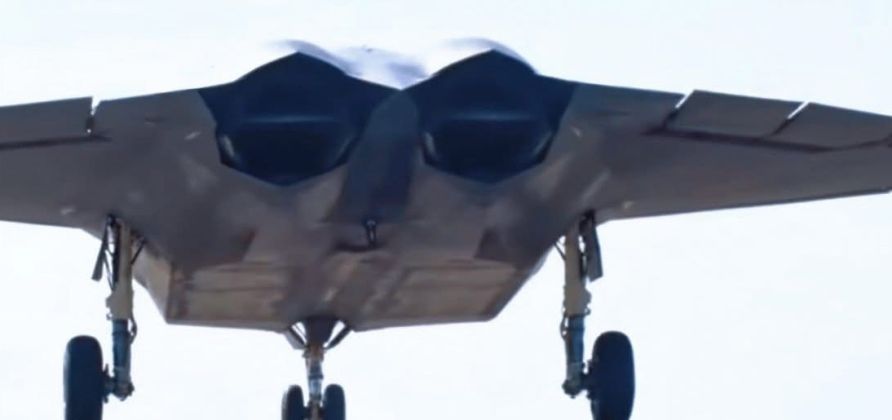
A significant uncertainty regarding the current development stage of Shenyang’s sixth generation fighter program is whether it the WS-15 engines, which power enhanced variants of the J-20, may also be powering prototypes of the new aircraft. The J-20 itself notably initially used enhanced variants of the older WS-10 engine that was developed to power fourth generation J-10 and J-11 fighters, with production only later transitioning to the WS-15. It is thus highly possible that the new fighter will use the WS-15 both for flight testing and during its initial years in service, until a clean sheet next generation engine can be developed. The WS-15 is one of the two most advanced and efficient fighter engines in productio, with a similar weight/thrust ratio to the F135 that powers the U.S. F-35 stealth fighter. It is expected to allow the new fighter to cruise at over twice the speed of sound, while also providing substantial power for onboard systems.
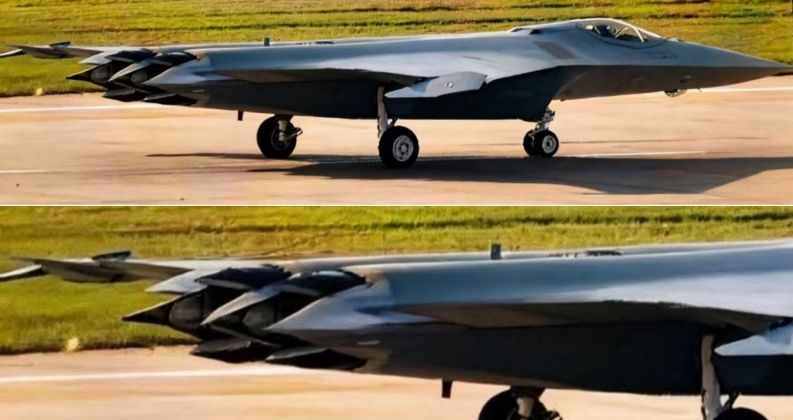
The new fighter appears to have an outstandingly large radar nose cone relative to its size, indicating a strong focus on beyond visual range capabilities and plans to integrate an outstandingly powerful sensor suite. The aircraft uses an unusual lambda wing planform with a beaded wing-body shape that appeared heavily optimised to reduce its radar cross section and increase its internal volume for fuel, weaponry and electronics. While the J-20A is already considered likely to be the world’s longest ranged fighter, rivalled only by the Russian Su-34, its sixth generation successor is expected to have an even wider combat radius of closer to 2,500 kilometres. To place this in perspective, the Western world’s sole fifth generation fighters the F-22 and F-35 have combat radii of around 1,000 kilometres.