
China’s Stealth Fighter Program Entering New Phase: Single Crystal Blade WS-15 Engines Will Supercharge the J-20
Military Watch Magazine Editorial Staff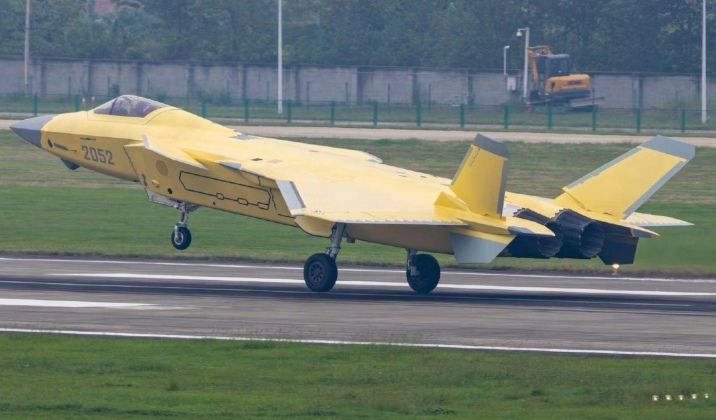
J-20B with WS-15 Engines
An image recently circulated on the internet has provided the clearest look so far of China’s J-20B fifth generation fighter taking off with next generation WS-15 turbofan engines. The image notably first appeared in mid-July, but was only widely circulated in recent days. While J-20B deliveries to the Chinese People’s Liberation Army (PLA) Air Force have not yet begun, and could be over a year away, the fighter in the image was prototype number 2052 - a model intended to test various aspects of the J-20B’s design including launching the class’ first flight with twin configured WS-15s. Following the baseline J-20 which first entered service in March 2017 with stopgap Russian engines, the J-20A variant was brought into service in 2021 with incremental design upgrades and the integration of indigenous WS-10C engines, which were considered more reliable and provided greater thrust levels to facilitate non-afterburner supersonic flight - better known as supercruise. With J-20A production having surged since then, and deliveries for 2024 expected to exceed 100 aircraft, the J-20B builds on incremental upgrades to the design with some important fundamental changes.
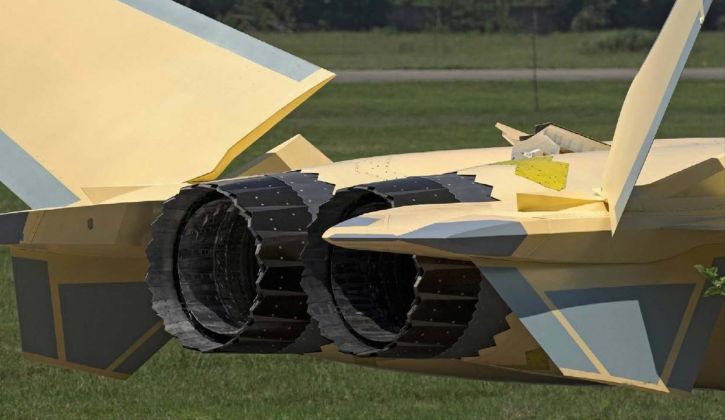
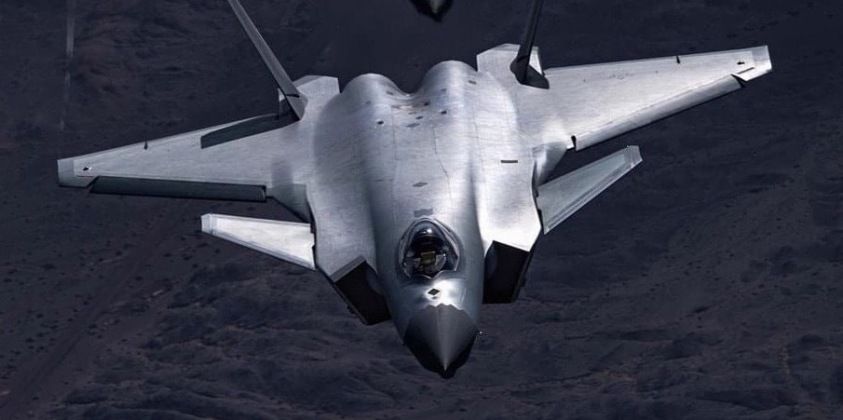
The recently published first book on the J-20 program: J-20 Mighty Dragon: Asia's First Stealth Fighter in the Era of China's Military Rise highlights that the J-20B “included a much flatter cockpit canopy with a distinctive low-profile appearance blending into the fighter’s raised spine and a nose radome with slight geometric revisions. The changes appeared intended to improve its aerodynamic performance and further reduce its RCS, with the enlarged spine also expected to accommodate more fuel or possibly new avionics.” By far the most significant known change to the new variant, however, is its engine. Regarding the WS-15, the book J-20 Mighty Dragon notes that compared to previous engines the new powerplant boasts a “much higher thrust/weight ratio estimated at 10:1 or 11:1, require less maintenance, improve thermal management properties, and have a significantly longer service life. Its cutting-edge single- crystal turbine blades, although proving particularly difficult to mass produce, were expected to almost double the engine’s lifespan compared to the WS-10B while significantly lowering maintenance needs.”
The WS-15 was first seen integrated onto the J-20 in single configuration for a test flight in January 2022, and was subsequently first flown in twin configuration in June 2023 - namely on prototype 2052. The J-20B itself was first seen in December 2022 , and was reported to have begun full serial production in March 2023. The J-20A is considered technologically unrivalled by any fighter in the world other than the American F-35, with key features in both fighters’ avionics and airframes setting them apart. The American F-22 that entered production in the 1990s notably lacks use of modern composite materials in its airframe and uses avionics widely considered obsolete, while the Russian Su-57 was designed to prioritise reduced production and operational costs and lacks key features such as distributed aperture systems seen only on the F-35 and J-20. Where the F-35 which was developed with a single engine to reduce lifetime costs at the expense of a far inferior flight performance in all parameters, the J-20’s twin engine design will with the WS-15 be a close contender for the title of the fighter with the world’s top flight performance. The engines allow supercruise at high speeds, possibly at Mach 2, while providing the fighter with more thrust than any other in the world. Their much greater power generation capacity will also allow the J-20 to use a much more powerful avionics suite and could potentially power directed energy weapons in future. The discrepancy in performance is only expected to grow due largely to the United States Air Force’ recent cancellation of plans to develop an enhanced engine for the F-35 under the Adaptive Versatile Engine Technology program, after previously also cancelling the promising F136 engine.
