
China Has Upgraded 100 J-11BG Air Superiority Fighters with Next Generation AESA Radars: Taipei Intel. Provides New Details
Military Watch Magazine Editorial Staff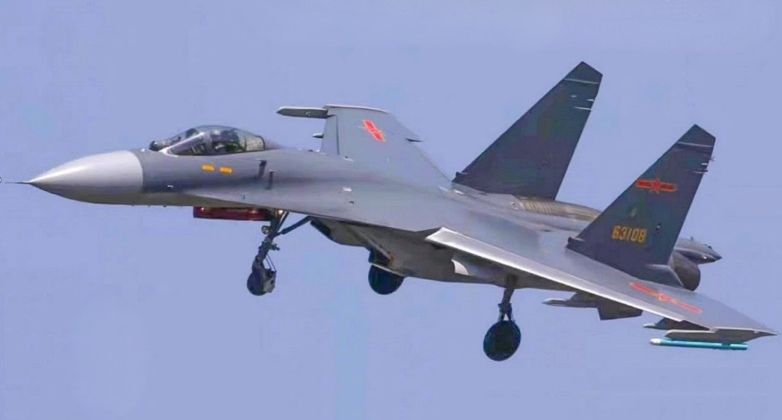
Chinese PLA Air Force J-11BG Air Superiority Fighter
The Chinese People’s Liberation Army Navy and Air Force have financed the modernisation of approximately 100 J-11B air superiority fighters to the J-11BG standard, bringing their avionics including their radars up to a ‘4+ generation’ level, and allowing them to integrate new weaponry developed for the Air Force’s fifth generation fighters. Although the J-11BG modernisation program was first reported in the late 2010s, recent reports from Taipei-based sources have provided new details on the aircraft, including the number of J-11B fighters modernised to the new standard, and the origin of their radars. Specifically, the Taipei-based sources reported batches of J-16s accounting for approximately to 100 fighters underwent radar upgrades, receiving a newer radar with superior ground detection capabilities. The older radars were in turn integrated onto the J-11B as part of the J-11BG program, significantly lowering the costs of modernisation.
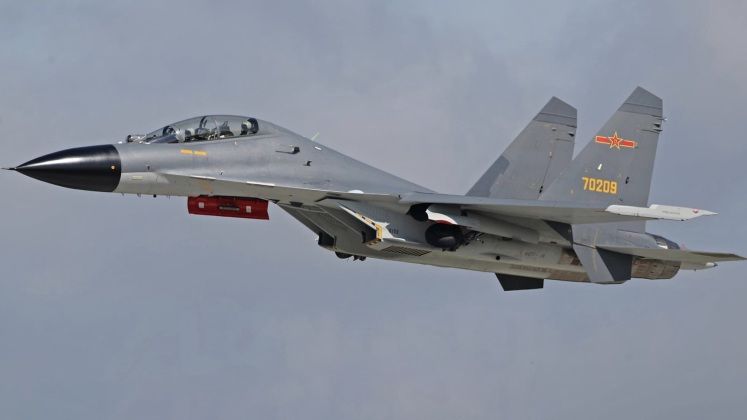
The J-11B and J-16 are both heavily enhanced derivatives of the Soviet Su-27 air superiority fighter, which the People’s Liberation Army Air Force became the first foreign client to receive in 1991, the design of which was subsequently modernised extensively in China to significantly surpass the capabilities of Soviet and Russian models. The development of the J-11B represented an important landmark in the emergence of China’s combat aviation sector as a global leader, with the fighter being brought into service in 2009. It benefitted from new engines, a much higher use of composite materials, and more modern avionics. The J-16 was developed in parallel to China’s first fifth generation fighter, the J-20, and used many of its technologies. When entering service in 2014, it was the first Chinese fighter to integrate an active electronically scanned array radar and new generations of air-to-air missiles, data links, and composite materials, representing an even greater landmark for the Chinese fighter industry.
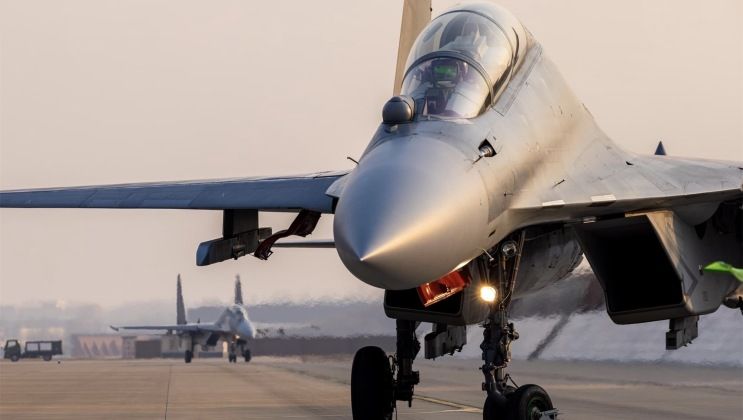
While the J-16 serves as a multirole fighter, the J-11B fleet is thought to be deployed primarily for air superiority roles, meaning the reduced ground mapping capabilities of the J-11BG’s radar will have a much lower impact than it would for the J-16. The fighters were confirmed in the early 2020s to integrate the same PL-10 short range air-to-air missiles as the J-20, which are considered top contenders for the title of the most capable of their kind in the world. They are capable of being cued by helmet mounted sights to engage targets at very extreme angles. The aircraft also integrate the complementary radar guided PL-15 long range air-to-air missile, which has an estimated 200-300 kilometre engagement range that capitalises on the significantly greater power of the J-11BG and J-16’s active electronically scanned array radars. This combination makes the J-11BG one of the most formidable fourth generation fighters in terms of its air-to-air potential, overwhelmingly outperforming Japan’s F-15J air superiority fighters, and maintaining a significant advantage over the newer South Korean F-15K and U.S. Air Force F-15E fighters.
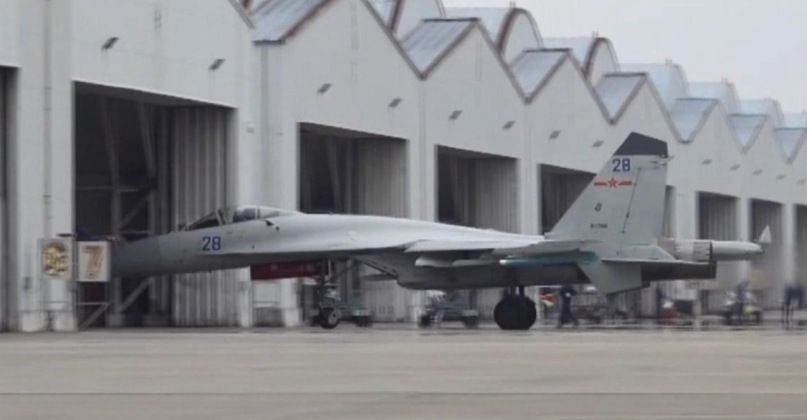
A significant uncertainty regarding the J-11BG fleet is whether they integrate the world’s longest ranged air-to-air missile, the oversized PL-17, which can engage large high value aircraft over distances of close to 500 kilometres. Although the missile was tested on the J-11B, it is only confirmed to have been integrated on the J-16. While a successor to the J-11B, the J-11D, reached an advanced prototype stage in development, the far superior capabilities of the J-20 and J-35 fifth generation fighters appears to have been a primary factor leading development to be cancelled. The J-11D design was instead used as a basis to develop the J-15B carrier based air superiority fighter, which was confirmed in 2025 to have entered service in the Navy. It remains uncertain, but highly possible, that modernisation of the J-11B fleet to a ‘4+ generation’ standard will expand beyond the approximately 100 aircraft that radars from early batches of the J-16, although this will depend heavily on cost effectiveness evaluations when considering the fighters’ remaining time in service, and the costs of replacing them with more capable J-20s, J-35s or J-16s.
