
India’s Enhanced Tejas MK2 Fighter Faces Two Years of Further Delays: Greater Reliance on Russian Aircraft Expected
Military Watch Magazine Editorial Staff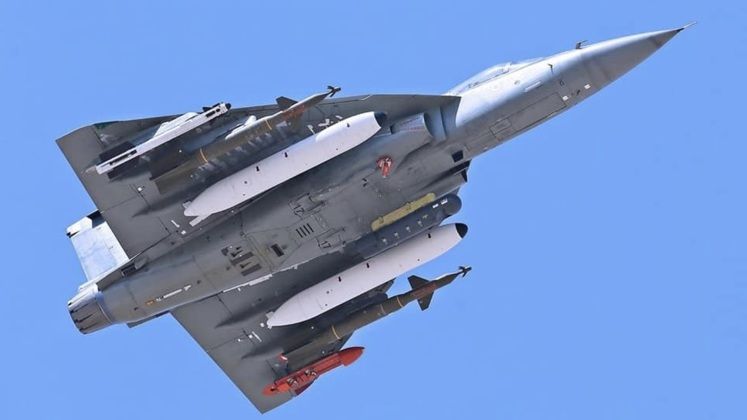
Tejas Fighter
The first flight of the enhanced Tejas Mk2 fighter developed or the Indian Air Force has been delayed by two years, following a long and consistent history of serious delays which have seriously undermined the Tejas program throughout its development. Local media have reported that although the Indian Defence Council approved the program at the end of 2022, the actual allocation of funding and the finalisation of international cooperation were later postponed until to the end of 2023. The Tejas Mk2 is a significantly more complex and sophisticated aircraft than the currently operational Tejas fighter, otherwise referred to as Tejas Mk1, with a larger fuselage, canards for improved manoeuvrability, and a more powerful U.S.-supplied F414 engine to replace the older F404.
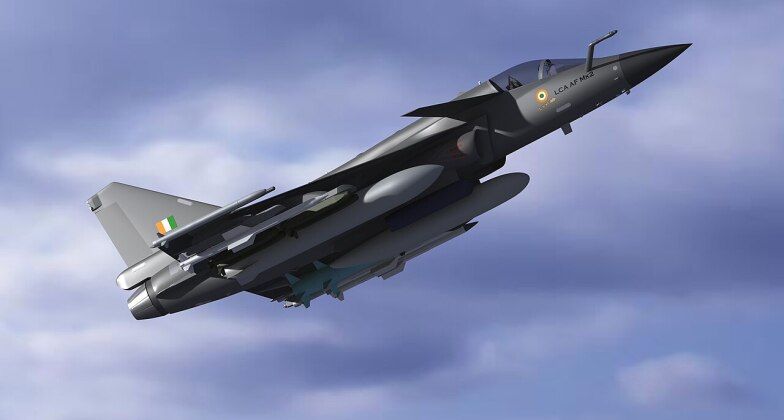
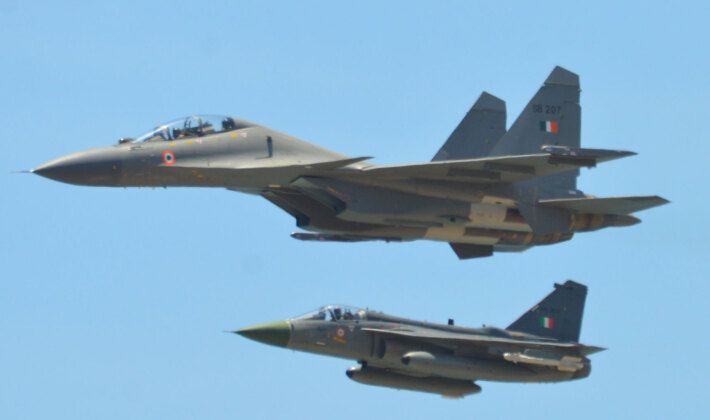
After U.S. engine supplier General Electric encountered supply chain problems, causing delays in the delivery of the F414, there was considerable speculation that an alternative powerplant could be considered for the program. A primary issue expected to delay the development of the new Tejas variant is the requirement that at least 80 percent of its parts be produced in India, with the strong tendency of domestic programs to face considerable delays, and the limited diversity of the industrial base, expected to make this highly challenging to achieve. The Tejas Mk2 is expected to provide a complementary lightweight counterpart to the Su-30MKI ‘4+ generation’ air superiority fighter that currently forms the backbone of the fleet, and is a much smaller aircraft with less than half the engine power and much lower maintenance needs and operational costs.
The Indian Defence Ministry in September 2025 signed the largest procurement contract in the history of the Tejas program, ordering 97 Tejas Mk1A lightweight fighters for $7 billion. Deliveries are scheduled to begin in 2027–2028, with the new variant of the Tejas having slightly improved avionics over prior models. Although the Tejas has been under development for close to 40 years, it has yet to enter service in meaningful numbers, with the aircraft having made its much delayed first flight on January 4, 2001, while entering service in limited numbers only 18 years later in February 2019. At approximately $72 million per aircraft, the cost effectiveness of the fighters has repeatedly been brought to serious question.
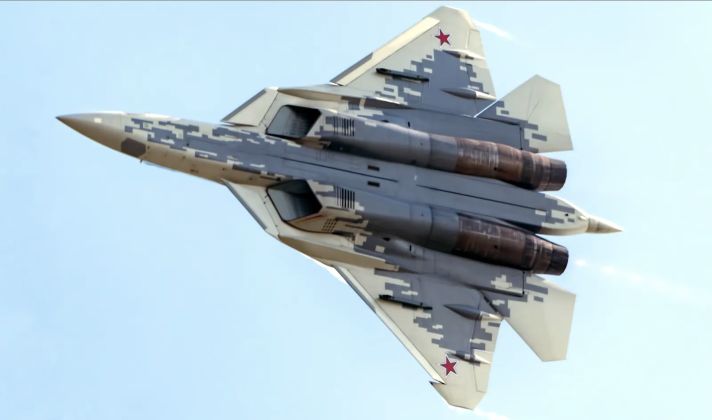
The Tejas MK2 is one of multiple fighter programs which are currently underway in India, and by far the most conservative in terms of its combat potential. In February 2026 it was confirmed that the Defence Ministry was moving ahead with plans to comprehensively upgrade its Su-30MKI heavyweight fighters with Russian assistance, under a program that will first focus on enhancing 84 of the over 270 fighters by integrating a wide range of new subsystems. The design is seen to have very considerable potential for modernisation with fifth generation technologies. After it was confirmed in February 2025 that a license production deal for the Su-57 fifth generation was being considered, the Indian Defence Ministry in January 2026 confirmed that these talks had reached an advanced technical stage, with the Russian Defence Ministry having made an unprecedented offer to provide full access to its source code as part of a deal. India is also developing its own fifth generation fighter under the AMCA program, although this is not expected to bring an aircraft into service until close to 2040. The difficulties that have sat back domestic programs are expected to further increase interest in advanced Russian fighters that can be supplied much more quickly.
