
Indian Air Force Moves Ahead with Major Su-30MKI Fighter Upgrade Program Using New Russian Technologies
Military Watch Magazine Editorial Staff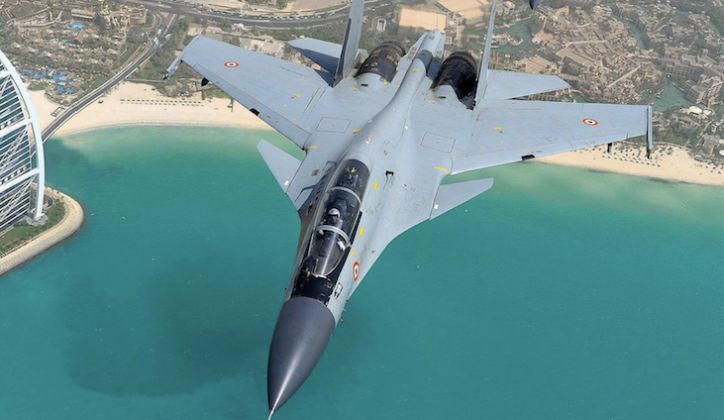
Indian Air Force Su-30MKI Fighter
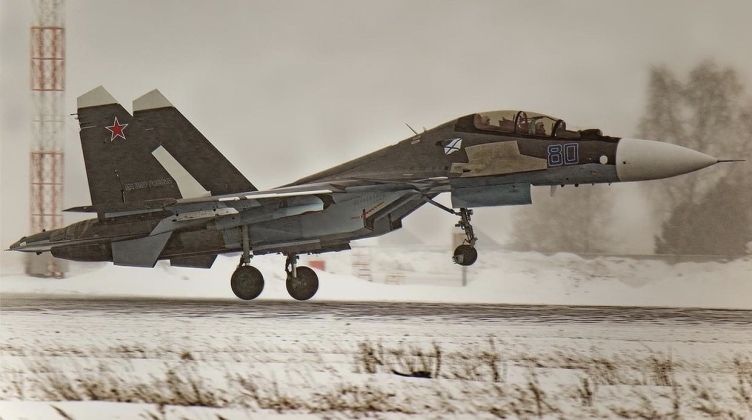
The Indian Air Force is moving ahead with plans to comprehensively upgrade its Su-30MKI heavyweight fighter aircraft with Russian assistance, which will first focus on enhancing 84 of the over 270 fighters that are currently in service by integrating a wide range of new subsystems. A top-level delegation from Russia recently visited a Hindustan Aeronautics Limited facility which had manufactured the Su-30MKI under license, and services the aircraft. The program is currently waiting for approval from the Cabinet Committee on Security, with cooperation with Russia directly reportedly intended to avoid the longer duration normally associated with local upgrade programs. After developing the Su-30MKI to meet Indian requirements in the late 1990s and early 2000s, Russia developed a superior variant for its own fleet, the Su-30SM, and has since enhanced them to the Su-30SM2 standard, potentially providing a template for some of the upgrades.
In June Indian Defence Minister Radjnath Singh held talks with his Russian counterpart Andrey Belousov on the further modernisation of the Su-30MKI fleet. The meeting was held “against the backdrop of Operation Sindoor,” according to the Defence Ministry, in reference to India’s air offensive against Pakistan in early May. The perceived underperformance of the fleet during the operation, with the loss of several fighters confirmed including at least one newly procured French Rafale, is considered a major factor stimulating interest in modernising the Su-30MKI. During a visit by Russian President Vladimir Putin’s visit to India from December 4, representatives of both countries reportedly discussed plans to upgrade the Su-30MKI fleet and the possibly of further expanding production.
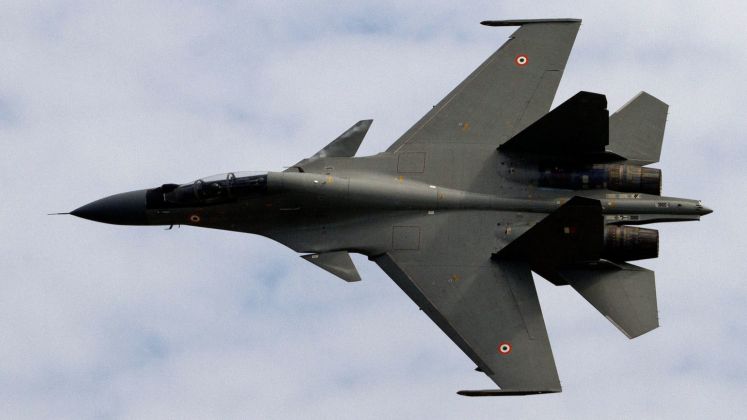
It remains highly uncertain what technologies and subsystems are envisaged to modernise the Su-30MKI. A significant possibility is that they will integrate the AL-41F-1S engines that have been used on the Su-30SM2, providing a far superior flight performance, a longer range through improved fuel efficiency, and reduced operational costs and maintenance needs. The engine’s integration can considerably improve availability rates for the large and high maintenance aircraft. It would also provide three dimensional thrust vectoring capabilities, improving on the two dimensional thrust vectoring which the Su-30MKI was the first fighter in the world to operationalise to revolutionise the aircraft’s low speed manoeuvrability. The integration of the new R-77M air-to-air missile is also likely, and would provide a broadly peer level capability to the Meteor missiles on the Rafale fighters, and the PL-15 missiles carried by Pakistani J-10C and JF-17 Block III fighters.
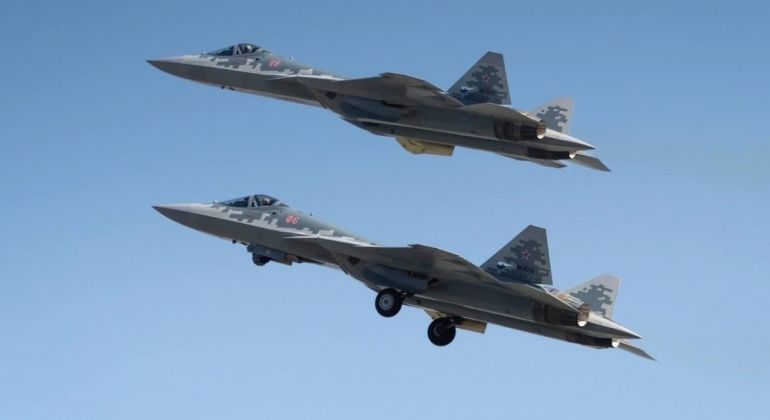
A significant possibility remains that contracts to upgrade the Su-30MKI could be linked to technology transfers agreed to under a license production deal for the Su-57 fifth generation fighter, the procurement of which is planned to provide a direct successor as the backbone of the Indian fleet. It was confirmed in February 2025 that a license production deal for the Su-57 was being considered, while the Indian Defence Ministry in January 2026 confirmed that these talks had reached an advanced technical stage. In June 2025 the Russian Defence Ministry was reported to have made an unprecedented offer to provide full access to the Su-57’s source code as part of a license production deal, while Director of the Russian Federal Service for Military-Technical Cooperation Dmitry Shugayev in December alluded to the possibility of this reaching the stage of a fully joint program, providing the Indian defence sector with joint ownership of key technologies.
