
What Upgrades Are Being Planned For India’s Top Fighter the Su-30MKI During Putin’s Visit?
Military Watch Magazine Editorial Staff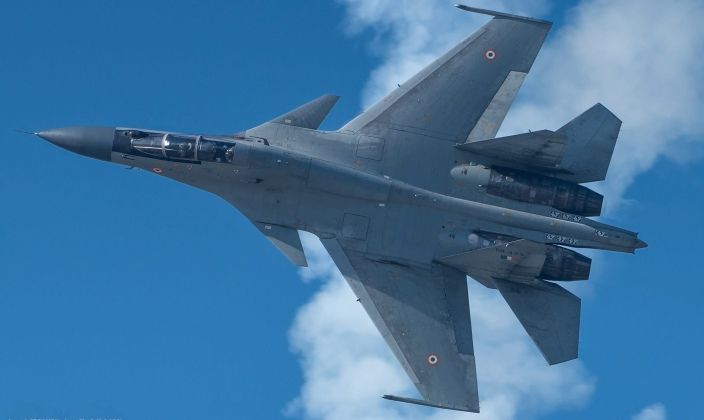
Indian Air Force Su-30MKI Fighter
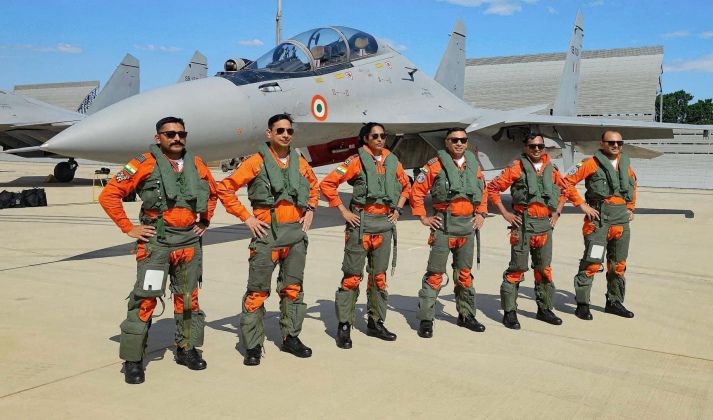
During Russian President Vladimir Putin’s visit to India from December 4, representatives of both countries are expected to discuss plans to upgrade the Indian fleet of Su-30MKI ‘4+ generation’ fighter aircraft, and possibly to further expand production. Entering service from 2002, the Su-30MKI is by far the most widely produced variant of the Su-30, and the most produced post-Soviet Russian fighter type, with over 270 having been procured by the Indian Defence Ministry. Commenting on plans to upgrade the aircraft, Director of the Russian Federal Service for Military-Technical Cooperation Dmitry Shugayev stated that alongside talks on the joint production of modern air-launched weapons, Russia and India were already discussing the possibility of further production of the Su-30MKI in India and further modernisation of the aircraft.
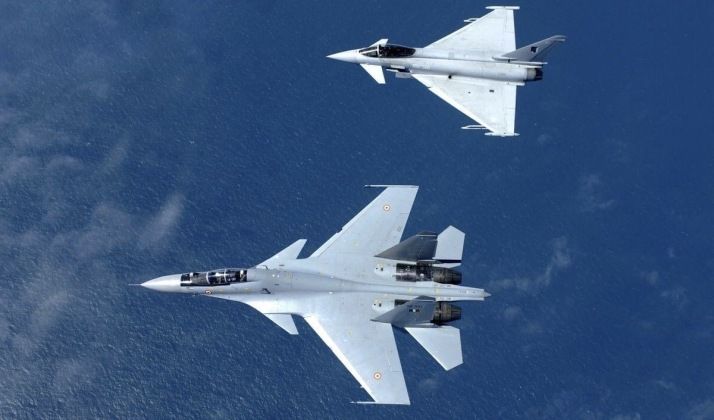
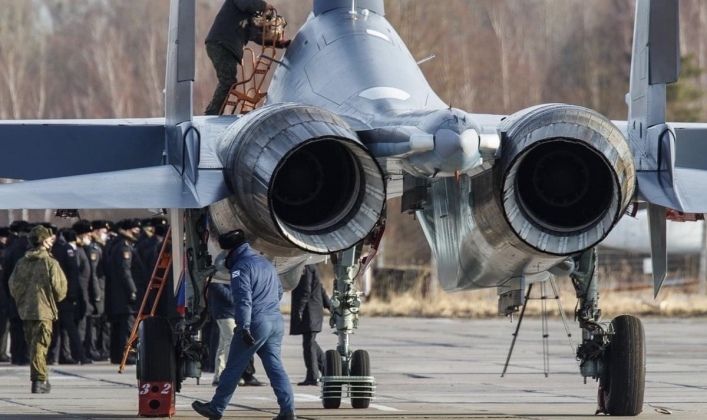
Although the Su-30MKI was a close contender for the title of the most capable fighter in the world when it first entered service in 2002, its standing has diminished considerably since then, with its sensors, engines and weaponry considered increasingly out of date. The Russian Armed Forces in 2022 began integrating AL-41F1S engines developed from the Su-35 fighter onto the country’s Su-30SM fleet, with its significantly more efficient powerplant providing a much longer range, higher weapons carrying capacity, and greater manoeuvrability. The engine not only increases the Su-30’s thrust/weight ratio, but also provides three dimensional thrust vectoring capabilities, improving on the two dimensional thrust vectoring which the Su-30MKI was the first fighter in the world to operationalise. Integration of the AL-41F-1S would provide far higher power levels for onboard avionics, would allow the Su-30MKI to fly supersonically without using its afterburners, a capability known as supercruise, and would significantly reduce maintenance requirements and time between overhauls. Beyond this engine, the significantly more advanced AL-51F engine which is expected to enter service near the end of the facade may be favoured to provide greater improvements to the Su-30’s performance.
Following recent confirmation that the Russian Aerospace Forces had begun to integrate R-77M air-to-air missiles developed for the Su-57 fighter onto the Su-35S fleet, the possibility has also emerged that these could be procured by the Indian Air Force to enhance its Su-30MKI, MiG-29K and MiG-29UPG fleets. The missile has almost double the engagement range and a more advanced seeker head than the Russian R-77-1 and indigenous Astra currently relied on by Indian fighter units, and would narrow if not fully close the gap in performance with Pakistan Air Force J-10C fighter units equipped with Chinese PL-15 air-to-air missiles. Alongside the R-77M, Russia may provide support for the development of new variants of the Astra missile with superior capabilities, and move further ahead with the development of a larger very long range air-to-air missile equivalent to the Russian R-37M and Chinese PL-17, which was reported in 2020 to be under discussion.
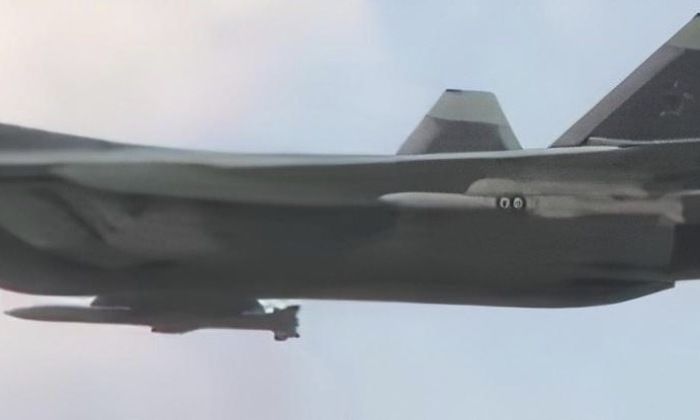
A further possibility for the modernisation of the Su-30MKI would be the integration of a Russian active electronically scanned array (AESA) radar, possibly based on the new design developed for the Su-57M1 fighter. Although the Indian Defence Ministry previously planned to procure a domestically developed AESA radar for the Su-30MKI, questions regarding the ability of the country’s electronics sector to produce a competitive radar design on an acceptable schedule have been widely raised. A Russian alternative could provide a more readily available and advanced stopgap for a portion of the fleet until an indigenous alternative completes development. Joint development of a new AESA radar for the fighter, which could potentially then be marketed to other Su-30 clients, remains another distinct possibility. As talks remain ongoing for the license production of Su-57 fifth generation fighters in India, the transfer of technologies to further modernise the Su-30MKI could potentially be attached to the deal.
