
Rostec Reveals Russia’s Su-57 Fifth Generation Fighter Was Designed to Operate as an Airborne Command Centre
Military Watch Magazine Editorial Staff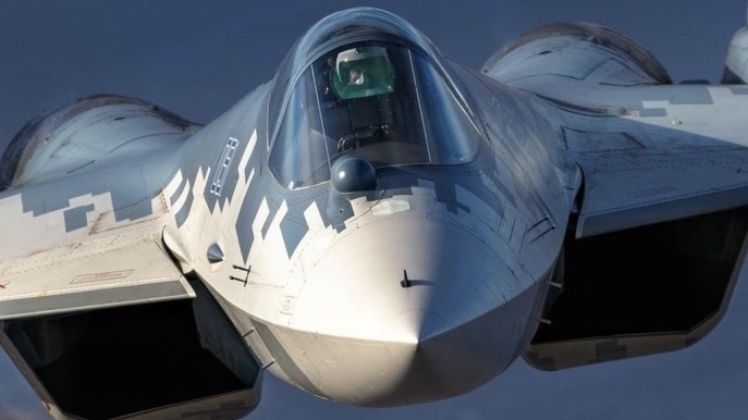
Su-57 Fifth Generation Fighter
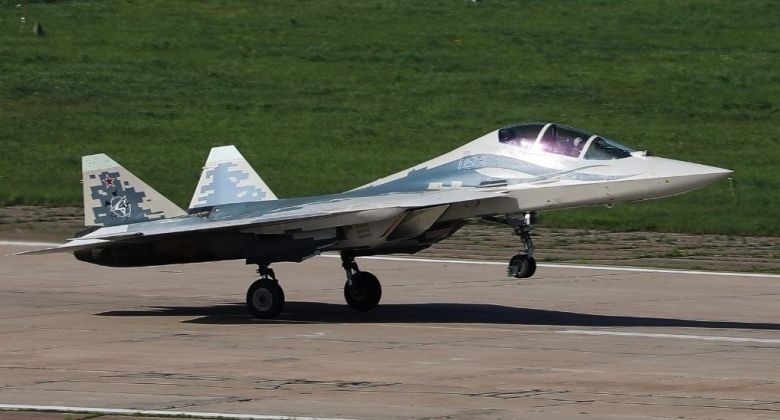
The Russian Su-57 fifth generation fighter was designed to be able function as an airborne command centre, according to a recent statement by the state defence conglomerate Rostec which is responsible for overseeing the aircraft’s development. “The Su-57 is a highly intelligent aircraft capable of acting as an airborne command centre, including for unmanned aerial vehicles. The aircraft is also equipped with a wide range of modern and advanced weapons,” Rostec announced. “The aircraft is capable of engaging both enemy air and ground targets. Moreover, it can operate undetected by enemy air defence systems thanks to its high stealth capabilities,” it added. The statement was made shortly after the first flight of the the Su-57D variant on May 19, which is considered particularly well optimised for command and control roles due to the greater working capacity of its larger crew.
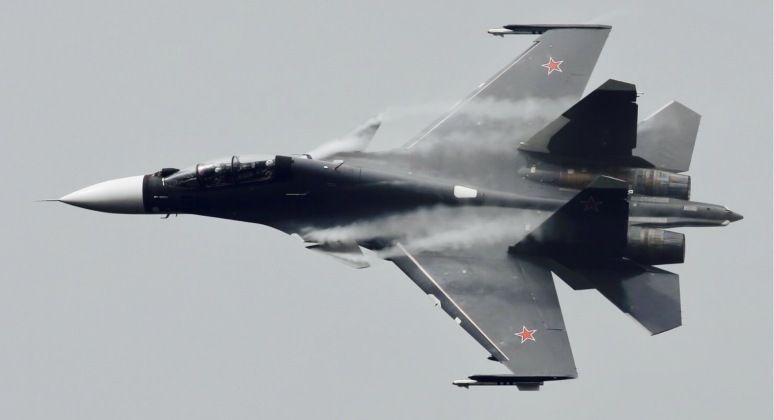
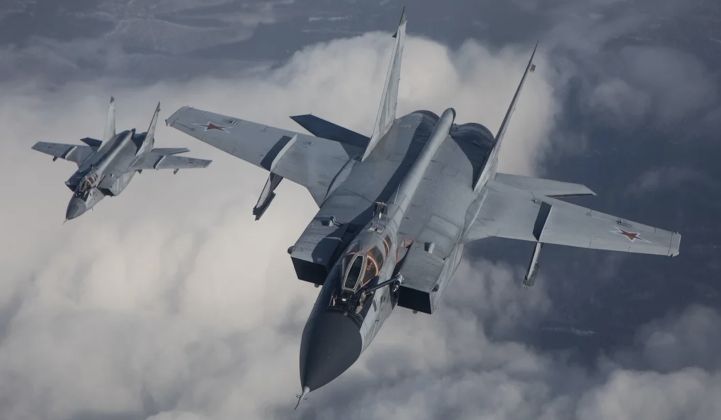
The Soviet Union in the 1980s pioneered the use of tactical combat aircraft as airborne command centres, with the MiG-31 interceptor, which integrated by far the most powerful sensor suite of any tactical combat jet of its era, having been heavily optimised for command and control functions to serve as a force multiplier for other types of aircraft such as Su-27 and MiG-23ML fighters. The Su-27PU fighter, which was later remanded the Su-30, was similarly designed as a “fighter commander” capable of coordinating groups of aircraft over long distances. The second crew member can manage sensors, weapons, and communications while the pilot focuses on flying and tactical manoeuvring. This is especially valuable during complex maritime strike missions, long-range patrols, and mixed air-to-air and air-to-ground operations. In many respects, the aircraft fills some of the roles that Western air forces assign to specialised command-and-control or strike coordination platforms like the E-3 Sentry AWACS.
The optimisation of the Su-57 for command and control functions has long been expected, and will allow the fighter to better succeed the fourth generation Su-30 in frontline service both domestically and in the fleets of export clients such as Algeria, Vietnam and India. Nevertheless, the newer fighter has a notable drawback in that it is somewhat smaller and carries a significantly smaller primary radar than the Su-30, and moreso than the MiG-31, which is expected to reduce its ability to serve as an alternative to airborne early warning and control (AEW&C) systems like the A-50 and A-100 as the MiG-31 has proven able to. Nevertheless, a notable advantage of the design is that its sensors are considerably more sophisticated than those of older Russian fighter types, while rather than a single radar, it integrates five separate radars across its airframe to maximise situational awareness.
Beyond its use of multiple sophisticated sensors, the Su-57 also integrates more advanced data links that previous generations of Russian combat aircraft, which allows multiple aircraft to build up a clearer picture of the battlespace. As fifth generation fighter aircraft have benefitted from significantly greater levels of automation, the primary tasks of airmen has shifted from piloting to managing data, with the accommodation of a second airman in the Su-57D expected to optimise the aircraft for doing so as a command and control platform. A further major strength of the Su-57 is that its advanced stealth capabilities allow it to operate in contested airspace in ways preceding aircraft such as the Su-30 and MiG-31 cannot, and moreso AEW&Cs like the A-50 which are large and unmaneovurable. This allows the fighters to provide command and control support from close to the frontlines in ways that could be particularly invaluable.
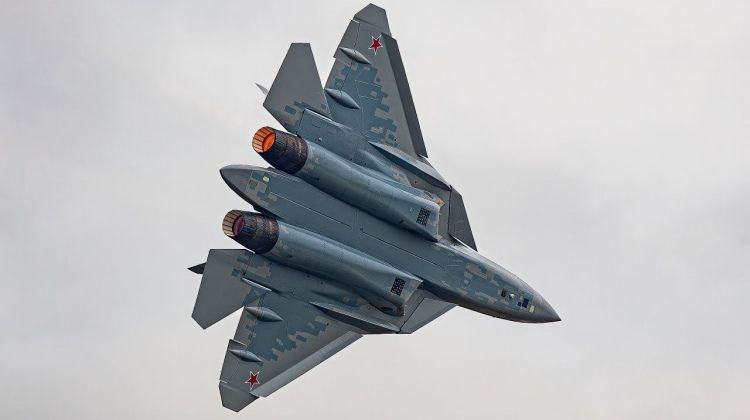
Providing an early indication of the Su-57D’s intended role as a command and control platform, the program’s chief test Sergey Bogdan observed in late May: “The paradigm of war is evolving, and the combat capabilities of a unit with twin-seater aircraft could be expanded. This format is becoming especially relevant in the context of the network-centric nature of modern conflicts. The functions and capabilities of a twin-seater (cockpit) aircraft for interaction with other aircraft are much broader,” he observed. “Regarding the role of the second pilot for the Su-57D, I am convinced that in certain combat formations, especially during a major operation, it is essential to have a leader in the group who can make decisions directly in the air,” he stated. “It’s one thing to command from the ground, when people may be thousands of kilometres away. In such a case, radio interference can occur, requiring switching between communication channels. But if a unit is flying and there’s a pilot with extensive experience among the pilots, they can perform certain functions and assist the pilot in the front cockpit, while also making decisions based on the situation they see," he added.
