
U.S. Positions E-3 Flying Radar Systems to Guard Arctic Amid Tensions with Russia
Military Watch Magazine Editorial Staff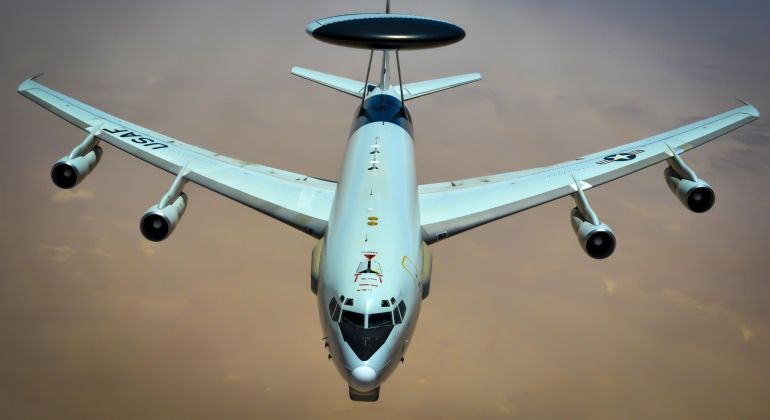
U.S. Air Force E-3 Sentry AWACS
The U.S. Air Force has deployed E-3 Sentry airborne warning and control systems (AWACS) to strengthen air defence capabilities in the Arctic during Red Flag-Alaska 26-1 exercises, reinforcing North American Air Defence command readiness across key northern approaches. Alaska’s position as a frontline corridor for strategic attacks, primarily by Russian and Chinese strategic bombers, makes the maintaining of high situational awareness there critical, with systems like the E-3 considered optimal asset for such duties. The E-3 acts as an airborne command-and-control hub, and can built a real-time air picture, directed fighters and other tactical assets activity, and extended surveillance across a large battlespace using its very large sensors and data links.
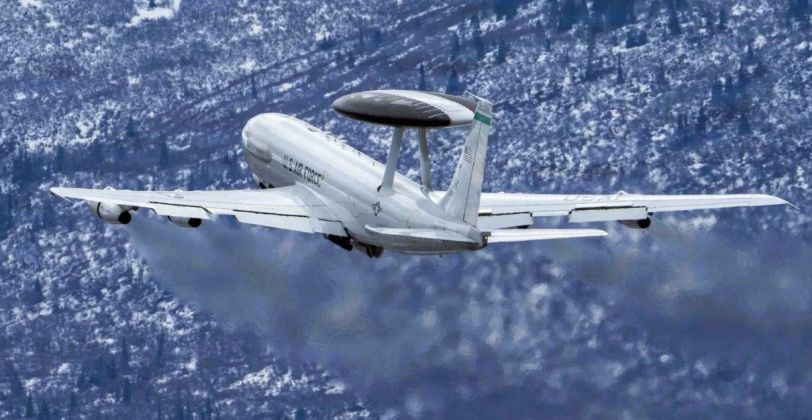
The E-3s participating in Red Flag-Alaska 26-1 was deployed to Joint Base Elmendorf-Richardson on April 23 under the 960th, 961st, and 962nd Airborne Air Control Squadrons. Exercises tested the systems for defence duties across very wide areas, in complex mission scenarios simulating unfavourable electronic warfare conditions and an extreme climate. E-3 pilot with the 961st Airborne Air Control Squadron Major Michael Dunlap explained that crews establish an orbit and provide control to fighters, while using passive identification capabilities. He added that the systems fuse information, support intelligence collection, and enable commanders to understand how an air situation is developing.
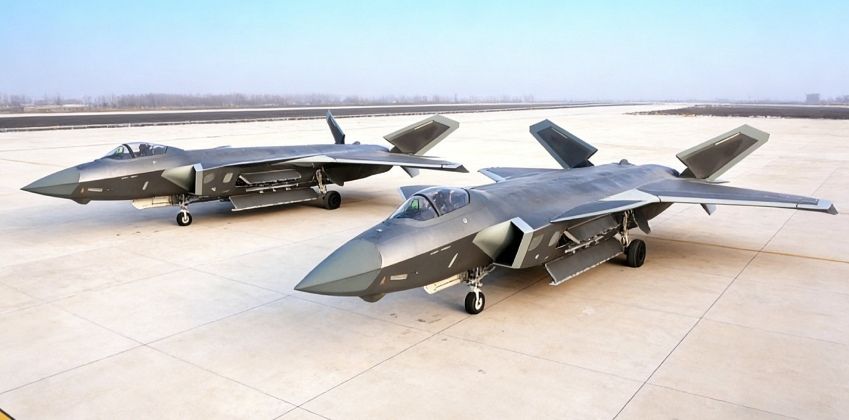
The lack of a successor to the E-3 in the U.S. Air Force has caused considerable controversy, with the importance of replacing the aircraft having been highlighted by commander of the U.S. Pacific Air Forces General Kenneth Wilsbach in March 2022. Shortly after the first encounter with Chinese J-20 stealth fighters was confirmed, Wilsbach lamented regarding the E-3’s limitations: “our early warning aircraft could not see the J-20… Those sensors that we rely on on the E-3 aren’t really capable in the twenty-first century especially against a [stealth] platform like the J-20 or something similar to that. It just can’t see those platforms far enough out to be able to provide an advantage to the shooters.” “That’s why I would like to have the E-7,” he added. The fleet has suffered not only from growing obsolescence of its sensors, but also from mounting maintenance issues, resulting in very low availability rates.
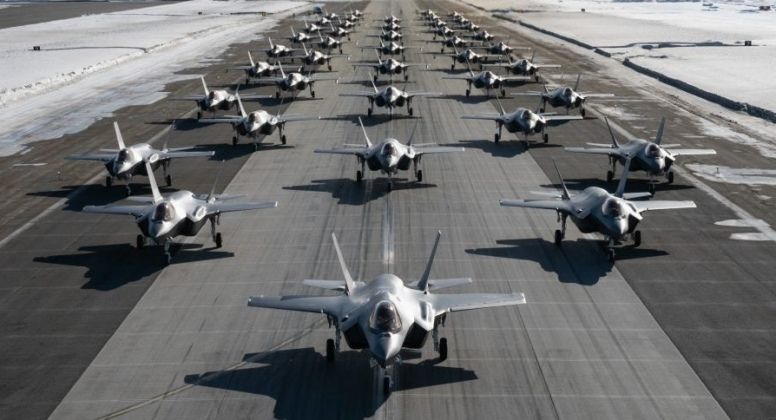
The U.S. Air Force is particularly heavily reliant on the E-3 as U.S. and Western fighter planes on average carry much smaller radars than their Russian and Chinese counterparts, with AWACS depended on to provide greater situational awareness. The Russian Su-30 and Chinese J-16 fighters, for example, carry radars approximately three times the size of that of the F-35 that forms the backbone of the United States and its strategic partners’ fleets. The systems also have the ability to guide missiles fired by fighters, ships, or ground-based systems to their targets using their powerful sensors. Advances in Chinese stealth fighter programs, and more recently in the development of stealth bombers, have increased the urgency of developing successors to the E-3, which is considered wholly insufficient to provide situational awareness against attacks by such aircraft. Significant attention was drawn to the matter of the procurement of a new system, namely the E-7, to replace the E-3, after Iranian ballistic missile and drone attacks destroyed at least one E-3 at Prince Sultan Air Base in Saudi Arabia in late March.
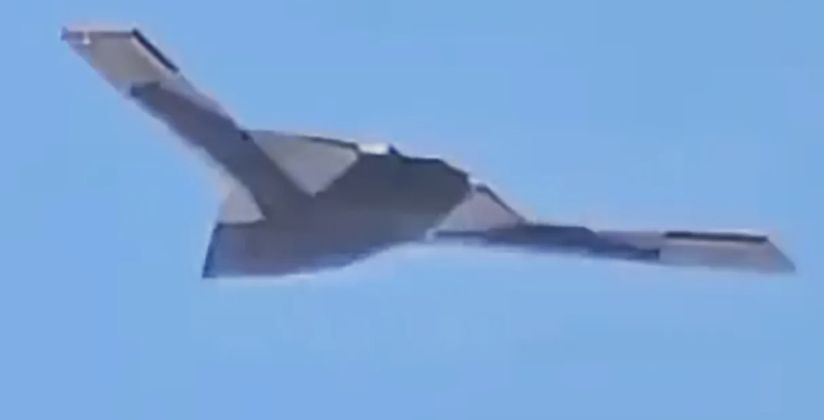
Reflecting its fronline position against strategic bomber attacks, as well as its proximity to the Pacific, the U.S. Air Force has prioritised Alaska to deploy a particularly high concentration of fifth generation fighters, including 54 F-35A fighters under the 354th Fighter Wing at Eielson Air Force Base, and F-22s at Joint Base Elmendorf–Richardson. U.S. air defences in Alaska have come under growing strain from Russian bomber patrols, and from 2024 from Chinese bomber patrols as H-6 bombers have been temporarily based in Russia. China and Russia are currently the only ones in the world serially producing bomber aircraft, and are modernising their aircraft’s strike capacities by integrating new generations of ballistic and cruise missiles. China is expected to begin fielding its first intercontinental range stealth bomber in the early 2030s, with the aircraft having already seen in flight testing in October 2025, with this development marking a likely game changer for Alaska’s defences.
