
Test Pilot Highlights Expanded Combat Potential of New Su-57D Twin Seat Stealth Fighter
Military Watch Magazine Editorial Staff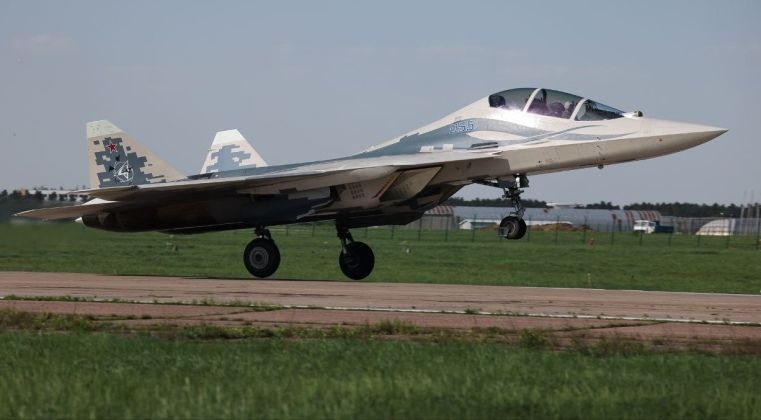
Su-57D Prototype During First Flight
The chief test pilot supporting the Su-57 fifth generation fighter program, Sergey Bogdan, has provided new details on the combat potential of the new Su-57D variant, after flying the first prototype on its maiden test flight on May 19. "These aircraft can be considered independent combat units. The paradigm of war is evolving, and the combat capabilities of a unit with twin-seater aircraft could be expanded. This format is becoming especially relevant in the context of the network-centric nature of modern conflicts. The functions and capabilities of a twin-seater (cockpit) aircraft for interaction with other aircraft are much broader,” he observed. He added that additional missions may be assigned to the aircraft in the near future, “but this is a matter of the future; the window of combat opportunity for twin-seater aircraft is only just opening.”
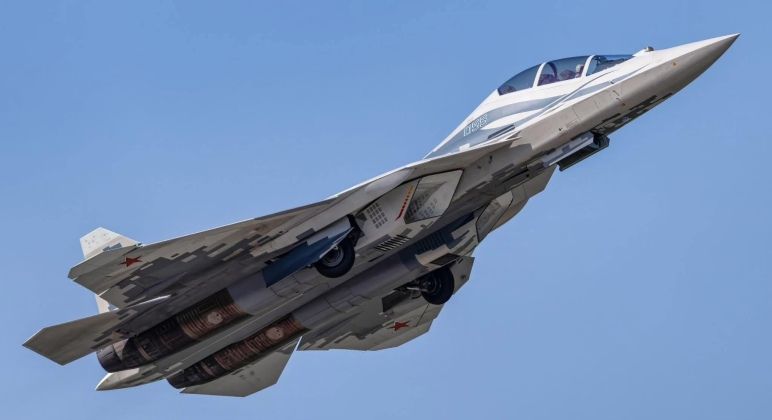
At the time of the Su-57D’s first flight, the press service of the state defence conglomerate Rostec observed that the new aircraft could be used to organise and control combat operations of a joint group of manned and unmanned aircraft, creating a unified information and control space. The first flight of the new variant closely coincides with confirmation that the Russian Aerospace Forces deployed Su-57s for high-tempo operations along nearly the entire length of the Ukrainian front, primarily for cruise missile strikes on hostile targets. Although officials have indicated that the Su-57D was developed in large part due to demand from export clients, it remains uncertain whether experience operating the aircraft in high intensity combat in the Ukrainian theatre could result in a perceived need for a command and control variant.
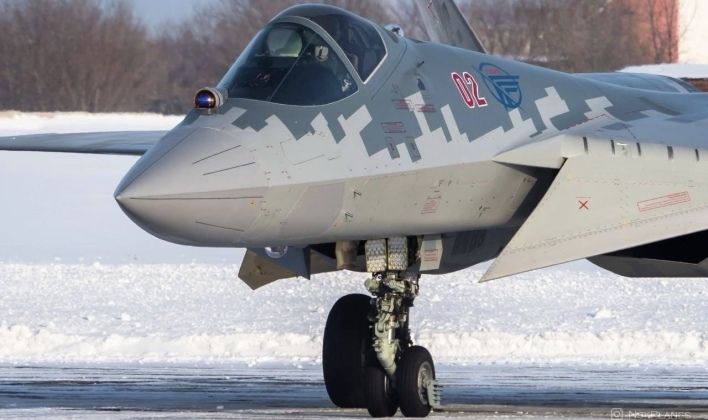
Chief Test Pilot Bogdan previously elaborated on the role of the Su-57D, observing that the aircraft could be used to accommodate a commanding officer near the frontlines, serving as an in-air command post for directing combat operations. “Regarding the role of the second pilot for the Su-57D, I am convinced that in certain combat formations, especially during a major operation, it is essential to have a leader in the group who can make decisions directly in the air,” he stated. “It’s one thing to command from the ground, when people may be thousands of kilometres away. In such a case, radio interference can occur, requiring switching between communication channels. But if a unit is flying and there’s a pilot with extensive experience among the pilots, they can perform certain functions and assist the pilot in the front cockpit, while also making decisions based on the situation they see," he added.
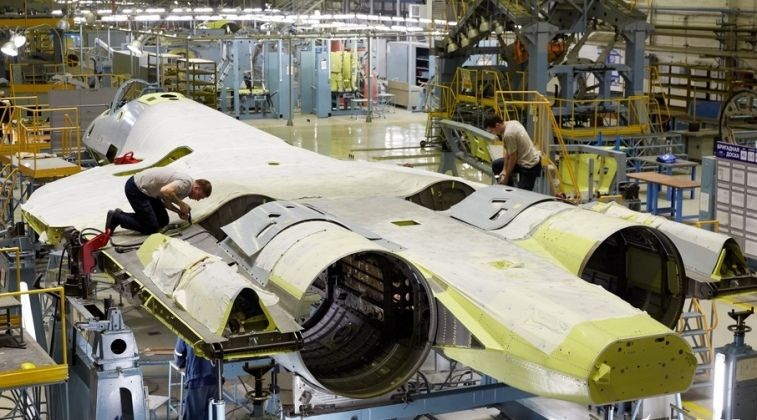
The Su-57 fleet is estimated to have reached approximately 50 fighters, which although reflecting a major increase in annual production over the past five years, also reflects the result of serious delays to the program, which was previously expected to have reached 200 fighters in 2025. As a result of delays, the Russian Aerospace Forces have invested heavily in procuring enhanced derivatives of the Su-27 fourth generation fighter design, namely the Su-30 and Su-35, which were significantly more straightforward to develop, produce, and integrate into service, but have far more limited combat potentials than the Su-57. Following confirmation in April that multiple countries have ordered the Su-57, with Algeria having already received the aircraft while there are multiple indications that India and Iran have also placed orders, it is likely that the Su-57D will quickly begin serial production, and may be ordered to comprise the entire fleets of some clients in line with their differing doctrines.
