
New Russian Su-57D Stealth Fighter’s Chief Test Pilot Highlights Future Export Demand
Military Watch Magazine Editorial Staff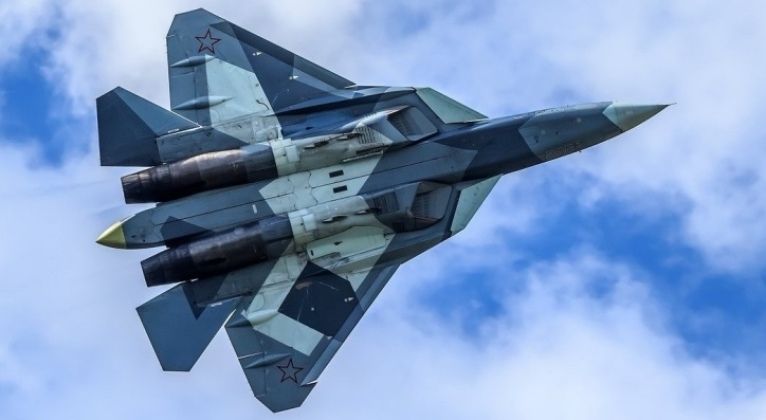
Su-57 Fifth Generation Fighter
Following the first flight of Russia’s first twin-seat fifth-generation fighter, the Su-57D, on May 19, the program’s chief test pilot Sergey Bogdan has elaborated on the aircraft’s expected future export sales. “I believe this aircraft is very much needed. It will be in high demand. First and foremost, it will be in demand with foreign customers. It’s crucial when training for any type of aircraft to have a similar twin-seat (cockpit) configuration. Currently, we have a certain level of continuity. We easily retrain pilots who have flown Su-27, Su-30, and Su-35 aircraft. Pilots transition well from these aircraft. But if we consider the fact that customers are emerging who don’t have, or have never had, Sukhoi aircraft, then pilot training becomes a priority,” he stated.
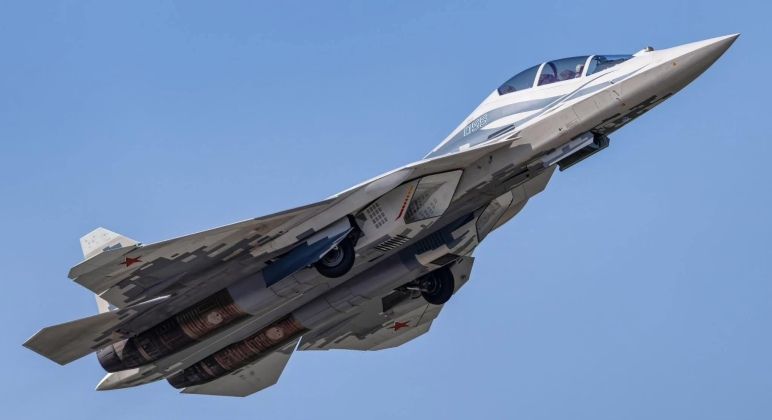
Bogdan observed that an important feature of the Su-57D is its high level of commonality with single seat variants of the fighter. “This aircraft is designed in such a way that it retains virtually all the characteristics of a single-seat aircraft. And if it is considered as a component of any combat unit, then I believe that any unit would benefit from its deployment, because it will streamline both the process of training pilots from scratch and the process of retraining skills if necessary,” he observed. Only one prototype of the Su-57D has so far been observed, raising questions regarding whether the aircraft will enter production as a twin seat variant of the baseline Su-57 fighter, which first entered service in 2020, or as a variant of the much more advanced Su-57M1 which is currently under development.
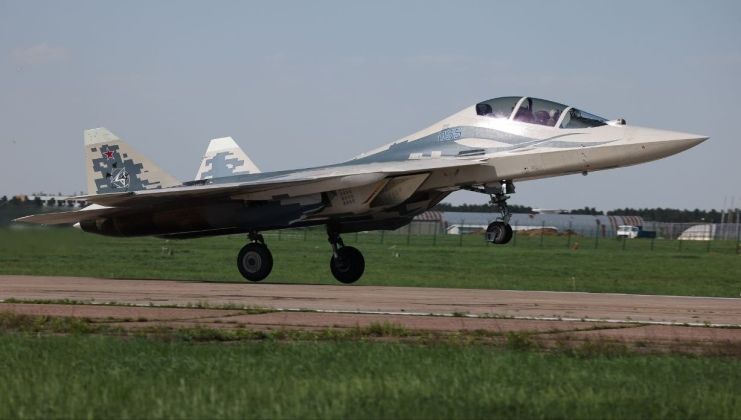
Russian officials have for over half a decade pointed to the development of a twin seat variant of the Su-57 specifically to meet the demand of foreign clients. Deputy Prime Minister Yuri Borisov on June 16, 2021, stated to this effect: “There is interest in this aircraft and, in my view, it will grow with every passing year as our Russian Army is supplied with this model. Foreign customers at first look at how a particular weapon of the Russian Armed Forces operates. The Defence Ministry and the Sukhoi Design Bureau have plans to develop a two-pilot aircraft that will boost the export demand for this model… and it may create additional demand.” Six months prior on December 15, 2020, First Deputy Chairman of the Board of the Russian Military-Industrial Commission Andrey Yelchaninov stated that a twin seat version of the Su-57 was of interest to at least one possible export client.
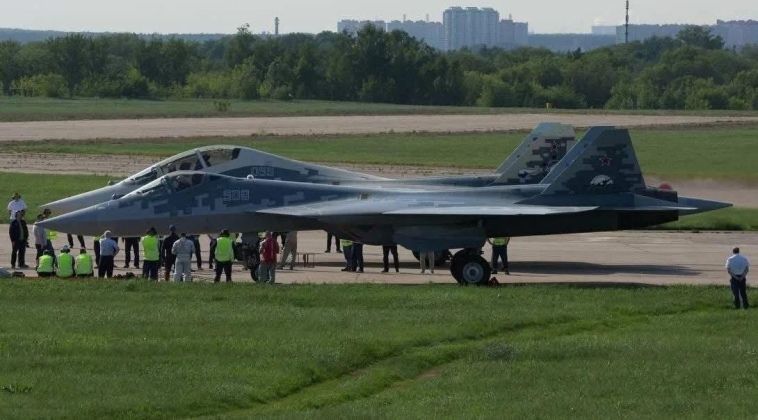
India is widely assessed to be the most likely client referred to when requests for a twin seat fifth generation fighter have been mentioned. In February 2025 it was confirmed that a license production agreement for the Su-57 was being considered, while eleven months later the Indian Defence Ministry in January 2026 confirmed that these talks had reached an advanced technical stage. In June 2025 the Russian Defence Ministry was reported to have made an unprecedented offer to provide full access to the fighter’s highly sensitive source code as part of a license production deal. Analysts have assessed that there are three primary possibilities for Indian procurements of the Su-57, including ‘off the shelf’ orders of Russian-built aircraft, license production with conservative changes, and a joint program under which the aircraft is very heavily customised and integrates local Indian-designed subsystems to significant and growing degrees. A jointly developed variant could be based exclusively on the twin seat variant, which would be closely in line with Indian doctrine.
