
Russia Unveils First Su-57 Fighter Customised to Meet Indian Requirements
Military Watch Magazine Editorial Staff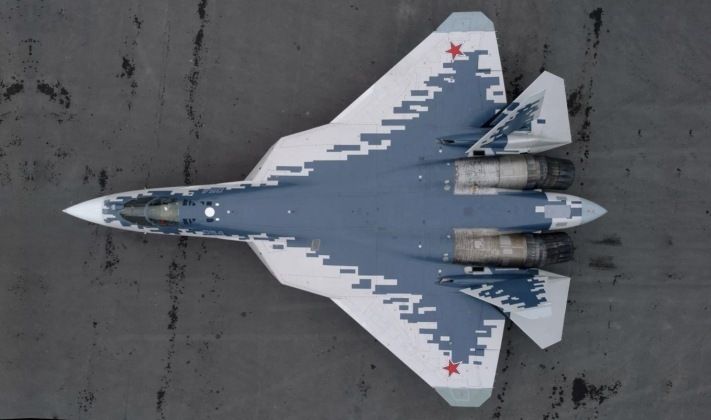
Su-57 Fighter
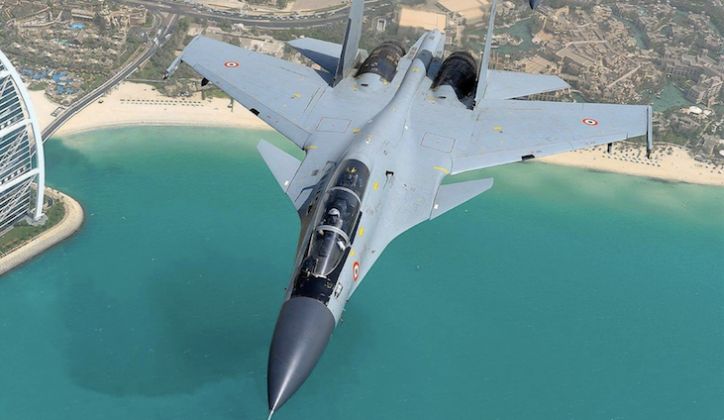
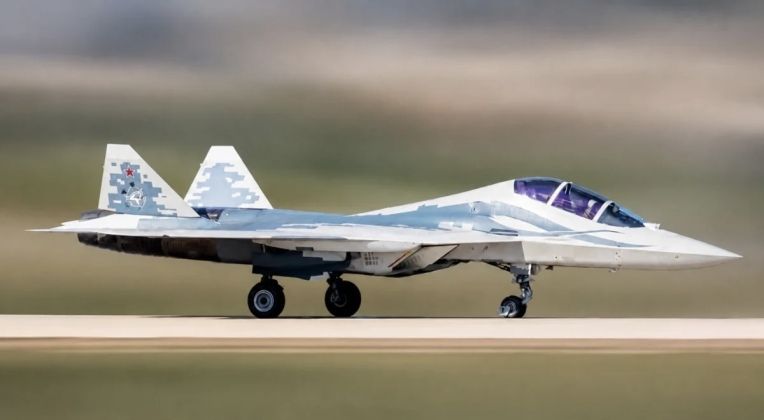
Following the unveiling of a new variant of the Russian Su-57 fifth generation fighter with a twin seat configuration, an informed Russian source has reported that the aircraft was developed specifically in response to Indian Defence Ministry requirements for such a configuration to equip its own fleet. The source added that other potential clients have also shown an interest in procuring twin seat variants of the Su-57, without naming any specifically. The Indian Air Force previously exclusively procured the Russian Su-30MK and Su-30MKI twin seat long range fourth generation fighters, and did not procure their single seat counterparts the Su-27 or Su-35. Multiple other potential clients including Vietnam and Malaysia have similarly strongly favoured twin seat fighters when previously making procurements.
Analysts have assessed that there are three primary possibilities for Indian procurements of the Su-57, including ‘off the shelf’ orders of Russian-built aircraft, license production with conservative changes, and a joint program under which the aircraft is very heavily customised and integrates local Indian-designed subsystems to significant and growing degrees. A twin seat variant could be of interest under any of these three arrangements, although considering that a primary attraction of ‘off the shelf’ purchases beyond reduced costs is to reduce the time taken before deliveries, marketing twin seaters to India under such an model for sales would likely require that development is completed quickly. After Russian defence export conglomerate Rosoboronexport in April confirmed that multiple countries had already placed orders for the Su-57, it was speculated that an ‘off the shelf’ order may have already been placed by India, providing a fifth generation capability more quickly until license production can begin or a joint program can be initiated.
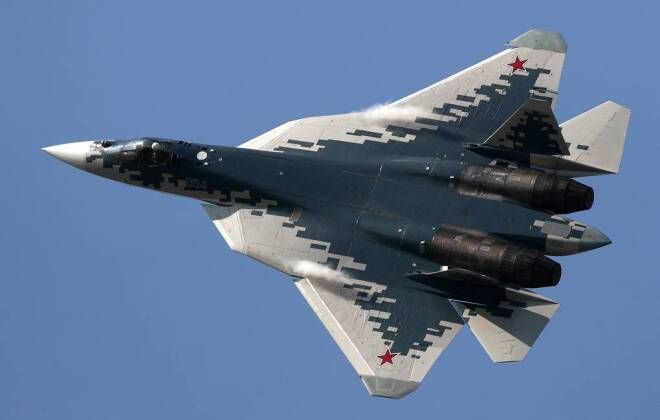
In February 2025 it was confirmed that a license production agreement for the Su-57 was being considered, while eleven months later the Indian Defence Ministry in January 2026 confirmed that these talks had reached an advanced technical stage. In June 2025 the Russian Defence Ministry was reported to have made an unprecedented offer to provide full access to the fighter’s highly sensitive source code as part of a license production deal. This bore a strong contrast to other potential suppliers of fighter aircraft, most notably France and the United States, with their restrictions on Indian autonomy operating and customising their aircraft having been a major factor preventing large scale sales to India.
Director of the Russian Federal Service for Military-Technical Cooperation Dmitry Shugayev in December 2025 alluded to the possibility of cooperation on the Su-57 reaching the stage of a fully joint program. Indian analysts have voiced high expectations for the local defence sector’s ability to develop cutting edge technologies and subsystems for a heavily customised jointly developed variant, although the country’s record with major defence programs has brought the viability of this into serious question. Mounting delays to India’s indigenous fighter development efforts are considered a primary factor strengthening the appeal of the Su-57. The appearance of a twin seat variant of the Su-57 is nevertheless expected to represent a major landmark in adapting the fighter program to meet Indian requirements, with a significant possibility remaining that twin seaters will achieve greater successes on foreign markets than single seaters. Available information on Indian plans for customisation indicates that the unveiling of a baseline twin seater will represent only a first step in broader much more ambitious plans to adapt the design. It is nevertheless likely the first significant indicator of Indian influence on the program.
