
Russia Unveils New Twin Seat Fifth Generation Fighter Built For Drone Warfare Future
Military Watch Magazine Editorial Staff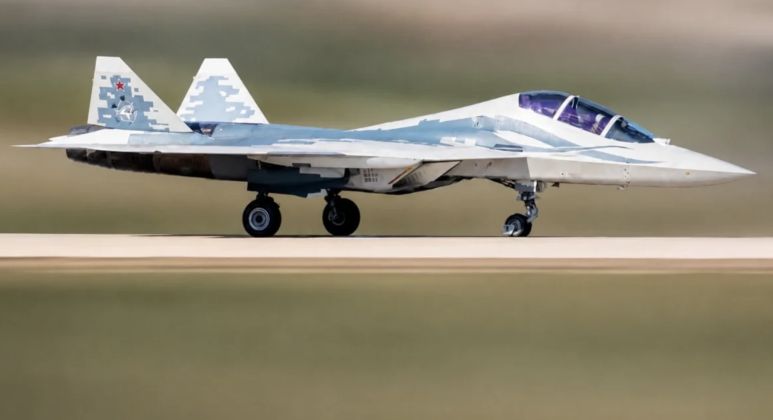
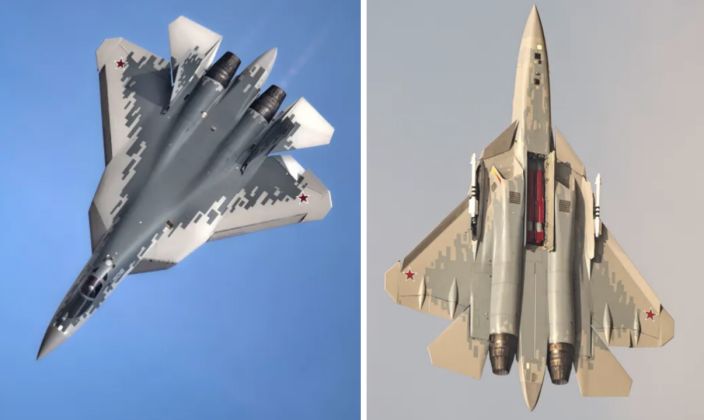
Su-57 Twin Seat Fifth Generation Fighter
A new variant of the Russian Su-57 fifth generation fighter with a twin seat configuration has for the first time been unveiled, representing a major landmark in the program as the aircraft rapidly gains growing traction on global markets. The aircraft was photographed conducting ground taxi trials, with its designation remaining uncertain. Previously, the Chinese J-20 fifth generation fighter was the only aircraft of its generation with a twin seat variant developed, with the Soviet MiG 1.42 and its twin seat variant, as well as a twin seat variant of the U.S. F-22, having all seen development cancelled due to post-Cold War industry contraction and budget cuts in the two countries. The perceived value of twin seat configurations has increased significantly as fifth generation fighters are increasingly expected to serve as drone controllers for unmanned ‘wingman’ aircraft.
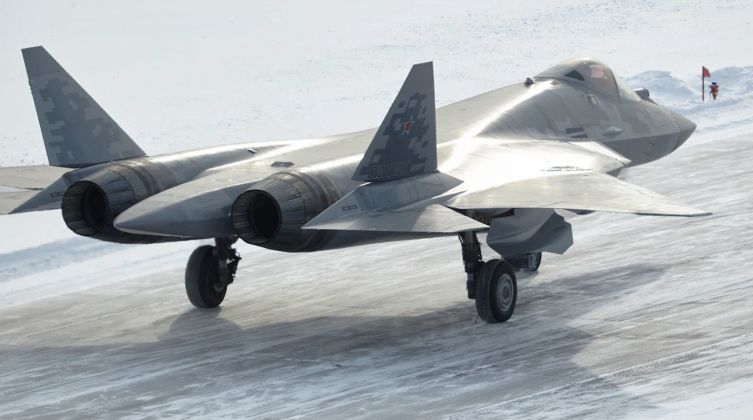
Russian sources have for over half a decade indicated plans to develop a twin seat variant of the Su-57, with Deputy Prime Minister Yuri Borisov having confirmed on June 16, 2021, that this was intended specifically to meet the demand of foreign clients. “There is interest in this aircraft and, in my view, it will grow with every passing year as our Russian Army is supplied with this model. Foreign customers at first look at how a particular weapon of the Russian Armed Forces operates. The Defence Ministry and the Sukhoi Design Bureau have plans to develop a two-pilot aircraft that will boost the export demand for this model… and it may create additional demand,” he observed at the time.
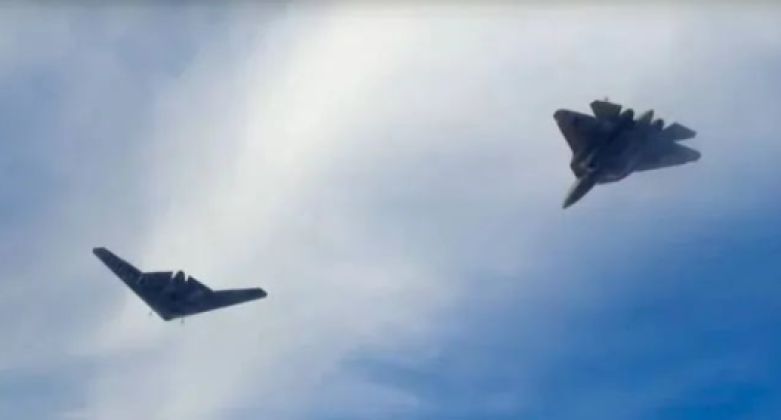
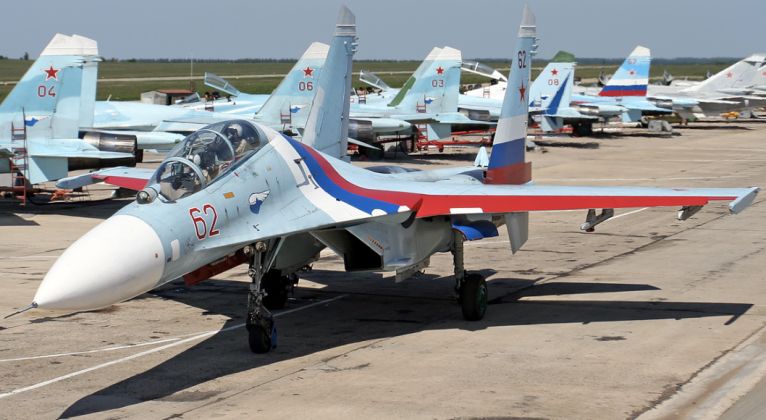
There remains a significant possibility that the Su-57’s twin seat variant will be produced in greater numbers the single seat variants. The fighter’s direct predecessor, the Su-27, saw its twin seat variant the Su-27UB used to develop the Su-30MKK and Su-30MKI to meet respective Chinese and Indian orders, with these and their enhanced derivatives being produced in much greater numbers in the post-Cold War era than either the single seat Su-27 or the enhanced Su-35 single seat air superiority fighter. Should Indian orders primarily focus on procuring twin seat Su-57 variants, it is possible that other future clients such as Vietnam and North Korea will also favour the aircraft. It remains uncertain what sacrifices to other capabilities were made to the Su-57’s design to accommodate a second seat. With the Su-27UB having had a slightly lower fuel capacity and shorter range, it remains possible that the twin seat Su-57 was designed in much the same way.
Russian defence export conglomerate Rosoboronexport in April confirmed that multiple countries had placed orders for the Su-57, preceding which Russian Industry and Trade Minister Anton Alikhanov in February announced that contracts had been signed in the Middle East for the export of the aircraft. Iran was considered the only likely client for the aircraft in the region. A month prior in January the Indian Defence Ministry confirmed that talks for the license production of the Su-57 had reached an advanced technical stage, a year after it first confirmed that talks were underway. There remains a significant possibility that Indian or Iranian orders were a primary factor leading to the accelerated development of a twin seat variant of the Su-57.
