
‘Contracts Already Signed’ For Russian Su-57 Fighter Export to the Middle East: Iran Remains Most Likely Client
Military Watch Magazine Editorial Staff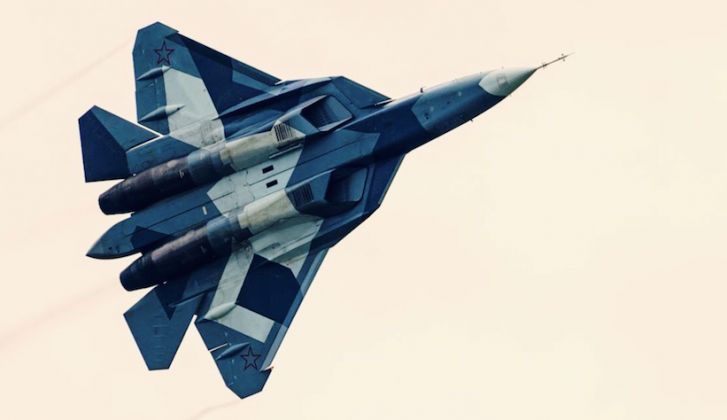
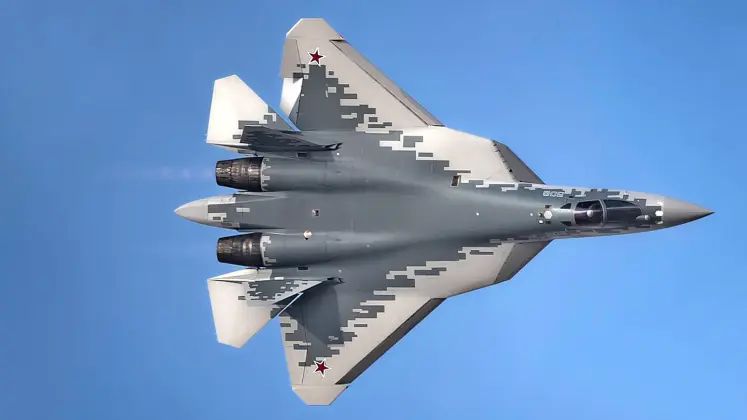
Su-57 Fifth Generation Fighter
Speaking at the Innoprom exhibition in Saudi Arabia, Russian Industry and Trade Minister Anton Alikhanov has announced that contracts have already been signed in the Middle East region for the export of the country’s new Su-57 fifth generation fighter. “There is significant interest, and some contracts have been signed, though I cannot disclose the details," Alikhanov stated. "We recently unveiled the Su-57E, which is among the best aircraft in the world - possibly the best at present. It is also combat-tested,” he elaborated. His statement has raised considerable speculation regarding which country may have placed orders, with Syria and Iraq, which during the Cold War were the primary regional clients for Russia armaments, have both seen their governments toppled by Western-led military interventions, while Yemen, which was a more minor client, has been deeply destabilised since 2011.
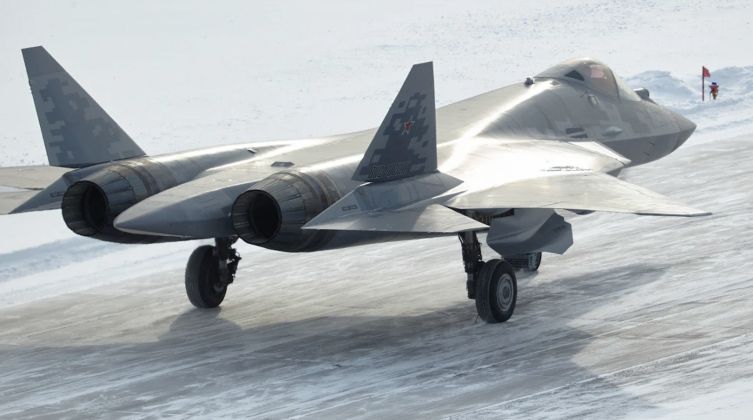
Alikhanov’s statement closely coincides with the release of the first footage showing Su-57 fighters operational in the Algerian Air Force, after they were confirmed in November to have been delivered and brought into service. Nevertheless, Algeria remains the only major Arab state outside the Western sphere of influence to have remained stable, with others such as Libya and Sudan having been deeply destabilised as Western Bloc states have broadened their military and political interventions into North Africa. Although Russia has sought to market fighters to Western-aligned states, such as the United Arab Emirates, in the past, Western political pressure has ensured that there have been no opportunities to enter major markets. While Egypt emerged as a relatively neutral state in the Arab Middle East in 2013, after the military overthrow of a Western-aligned Islamist government in the country that year, the country has consistently been deterred from procuring high value Russian fighters, with threats of U.S. sanctions leading Cairo to cancel plans to procure the Su-35.
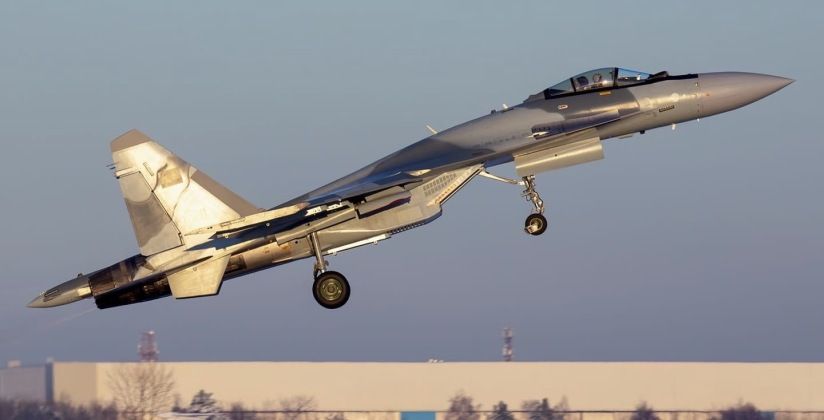
A leading possibility for the Su-57’s export to the Middle East is that the fighters may have been ordered to equip the Iranian Air Force. Leaked Russian government documents in late 2025 showed that Russia alongside the delivery of an estimated 18 Su-35s to Algeria near the beginning of the year, Russia was scheduled to deliver of 48 Su-35 fighters to re-equip the Iranian Air Force, and six more Su-35s to Ethiopia. Iran lacks post-Cold War fighters in its fleet, but fields close to 300 obsolete fighters, primarily Vietnam War era F-4E and F-5E/F jets that are almost three generations behind the cutting edge. The service thus has considerable capacity to absorb Su-57s alongside the Su-35. With the Su-35 able to be delivered significantly more quickly, it is highly possible that the two aircraft are intended to serve in complementary roles. While the Su-57 may have been initially favoured, the urgency of the security threats facing the country makes it appear favourable to first strengthen defences with the Su-35, which is also easier for the Air Force to absorb due to its lower complexity.
Any major sale of the Su-57 would significantly shift the balance of power in the air in the Middle East, with Israel being the only operator of fifth generation fighters in the region, while Algeria is the only operator in Africa. Israeli F-35I fighters are notably far from fully capable of high intensity combat due to their lack of Block 4 software, and will remain so until the early 2030s, as demonstrated by their restriction to intelligence collection roles during attacks on Iran in June 2025. A fully operational Su-57 fleet operated by Iran or another Middle Eastern state could thus potentially provide top fighter squadrons with primacy in the air. The Su-57 has the advantage over other fighters of its generation of far greater high intensity combat testing, including air defence suppression, air-to-air combat, and operations in heavily defended enemy airspace in the Ukrainian theatre.
In late January it was confirmed that Russian-Indian talks regarding a license production deal for the Su-57 had reached advanced technical stages, leading multiple Indian sources to comment on the significant possibility of the aircraft equipping frontline squadrons, and being heavily customised to meet local requirements. While India is expected to be by far the largest foreign client for the aircraft, Vietnam and North Korea are also expected to place orders. While Iran is expected to largely pay for fighter procurements with the export of its own military equipment to Russia, primarily unmanned aircraft, the far larger scale of North Korean exports to Russia could potentially cover the costs of reequipping multiple fighter squadrons with the new fifth generation aircraft should Russia be willing to either ignore the UN arms embargo, or consider possible loopholes.
