
Pilots Warn Deeply Customised Russian Su-57 Fighter with Indian Avionics Could Outperform the F-35
Military Watch Magazine Editorial Staff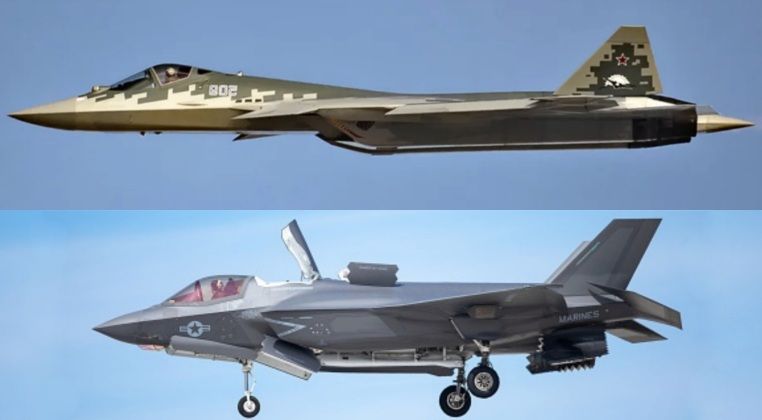
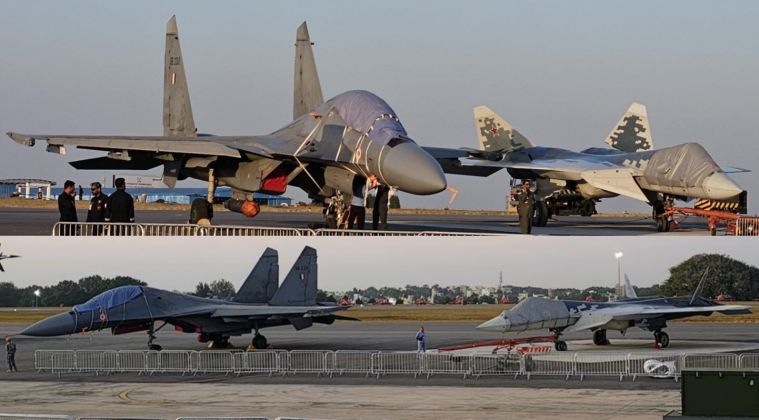
Su-57 (top) and F-35B Fighters
Following confirmation that Russia-Indian talks regarding a license production deal for the Su-57 fifth generation fighter had reached advanced technical stages, multiple Indian sources have commented on the now significant possibility of the aircraft equipping frontline squadrons. Assessments of possible Indian procurements have centred around three primary possibilities, including ‘off the shelf’ orders for small numbers of aircraft built in Russia, license production of the aircraft with few or conservative changes, and a more ambitious joint program under which the aircraft is heavily adapted to integrate local Indian-designed subsystems. While orders of Russian-built fighters remain highly likely to equip two to three initial squadrons until deliveries from local production lines can begin, reports from Indian sources indicate that a high degree of customisation appears to be favoured, either from the outset or gradually, to develop an new variant of the Su-57 distinct from the original.
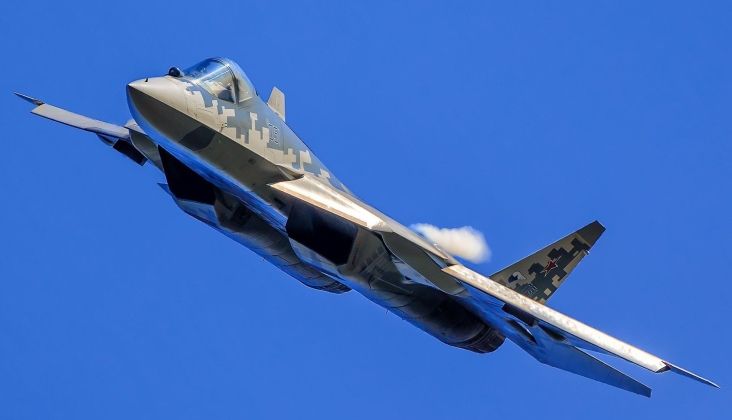
Despite a long history of license production deals, the development of a heavily indigenised variant of the Su-57 using locally developed avionics would be unprecedented. Nevertheless, the Su-30MKI build under license in India has integrated a growing portion of indigenous inputs, including not only Russian-designed components built under license, but also in a small but growing number of cases locally designed subsystems. The most notable example is the development of a new active electronically scanned array radar which is expected to be integrated onto the aircraft from the early-mid 2030s. Advances in the capabilities of the Indian defence sector, in particular in the electronics industry, combined with post-Soviet decline in the standings of Russian industries, have made a greater number of indigenous inputs appear increasingly viable.
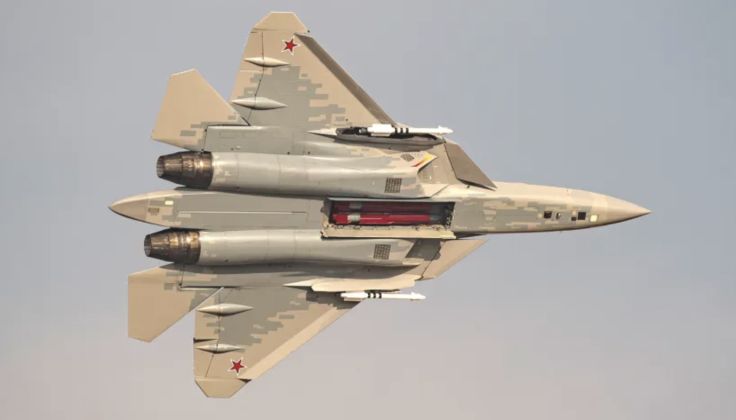
Commenting on the possibility of a deeply customised Su-57 variant with local avionics being brought into service, Indian Air Force Group Captain M. J. Augustine Vinod noted that the combination of the Russian design with local subsystems could be particularly potent. “When you combine the exceptional aerodynamics of Su-57 and the Indian avionics and software to it, you have an airplane much better than the F-35,” he claimed, pointing to the Su-57’s twin engine configuration, which contributes to its far superior flight performance. Although the Su-57’s stealth capabilities are estimated to be significantly inferior to those of Chinese and American fifth generation fighters, albeit to a far less extreme extent than critics in the Western world have often claimed, the greatest discrepancy remains in their avionics, reflecting shortcomings in the Russian electronics sector.
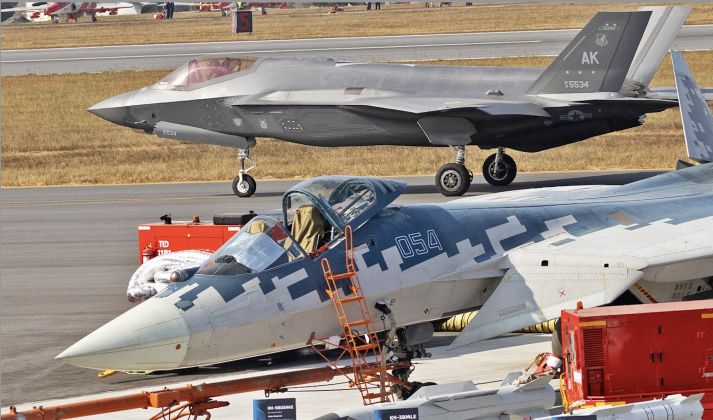
A primary disadvantage of the Su-57 is its lack of a comparably advanced radar to the F-35’s AN/APG-85 and rival sensors integrated onto the Chinese J-20 and J-35, with Russian industry having been slow to transition to producing active electrically scanned array radars, well over a decade beyond China and close to two decades behind the United States. Cooperation with India, however, may help to offset both countries’ disadvantages and allow for the development of a more advanced radar than either country could have developed independently. The fact that the Su-57 integrates five separate AESA radars across its airframe provides opportunities for all of these to potentially be replaced with jointly developed or fully Indian designed radars.
Indian sources have widely speculated that a miniaturised variant of the Virupaksha AESA radar currently under development for the Su-30MKi could be integrated onto the Su-57. The radar will reportedly use an antenna with a 950mm diameter and approximately 2400 transmitter/receiver modules, and gallium nitride technologies for improved efficiency. Little is known regarding the Su-57’s current N036-1-01 nose-mounted AESA radar, although it was confirmed in June 2025 that the new variant of the fighter, the Su-57M1, will use a new primary radar. This may be a new clean sheet design, or an enhanced derive of the N036. A technology transfer deal to support the Virupaksha program may be a key Indian requirement to procure the Su-57, potentially with the intention of later using these technologies to develop a new radar for the Su-57.
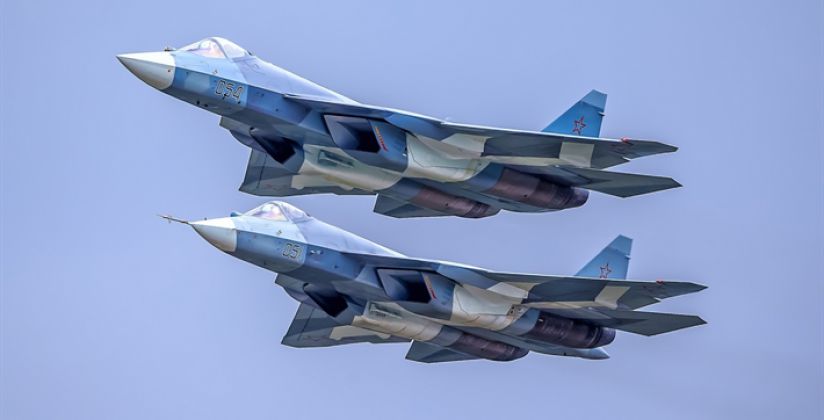
A key facilitator of the possible customisation of the Su-57 is the Russian state owned United Aircraft Corporation’s unprecedented offer made public in May 2025 to provide the Indian Defence Ministry with full access to the Su-57’s source code. This would allow for extensive customisation and integration of local weaponry and subsystems potentially without any Russian support. Only the United Kingdom has significant access to the F-35’s source code, while Israel, which is the only country permitted to make significant modifications to the aircraft, has to ‘plug in’ its own limited added avionics without significantly modifying those already built into the fighter.
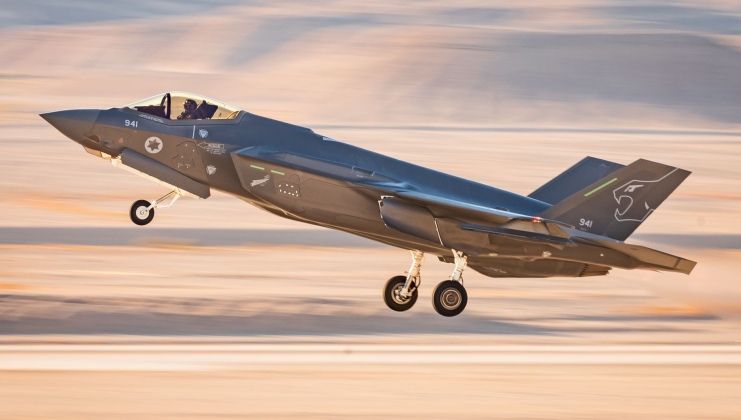
The scope of customisation permitted for the F-35I was summarised by General Manager of the Lahav Division at Israel Aerospace Industries, Benni Cohen, who stated: “It's open architecture, which sits on the F-35's central system, much like an application on your iPhone. So it doesn't change anything in the aircraft itself, but it gives the Israel Air Force the most advanced and adaptable processing capabilities with relative independence of the aircraft manufacturer.” An Indian-customised Su-57, which would include full authority to modify its sources codes and other software, will thus be entirely in a league of its own for its levels of customisation, with the development of a twin seat variant having been confirmed repeatedly by Russian sources, and likely to be adopted as the standard configuration. The effectiveness of the aircraft will depend very heavily on the extent to which the Indian defence sector will be able to realise the technological advances that it intends to make.
