
India Cancels Plans for Supercarrier INS Vishal - Reports
Military Watch Magazine Editorial Staff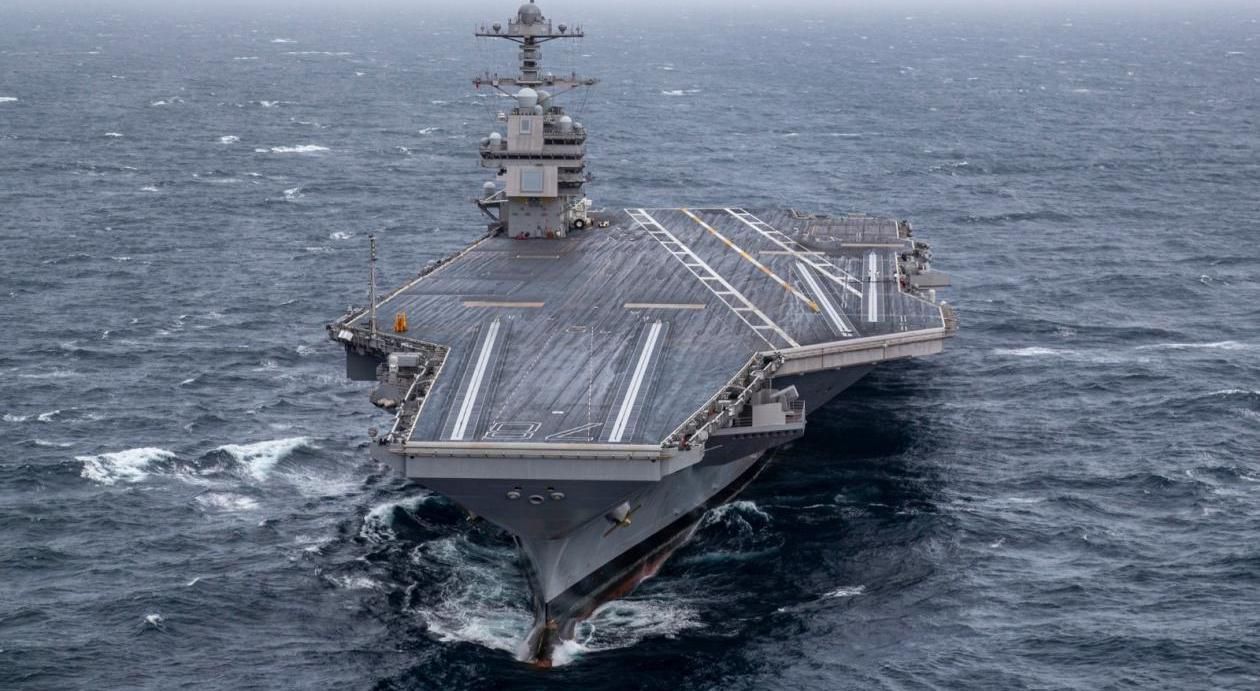
U.S. Navy Gerald Ford Class Supercarrier
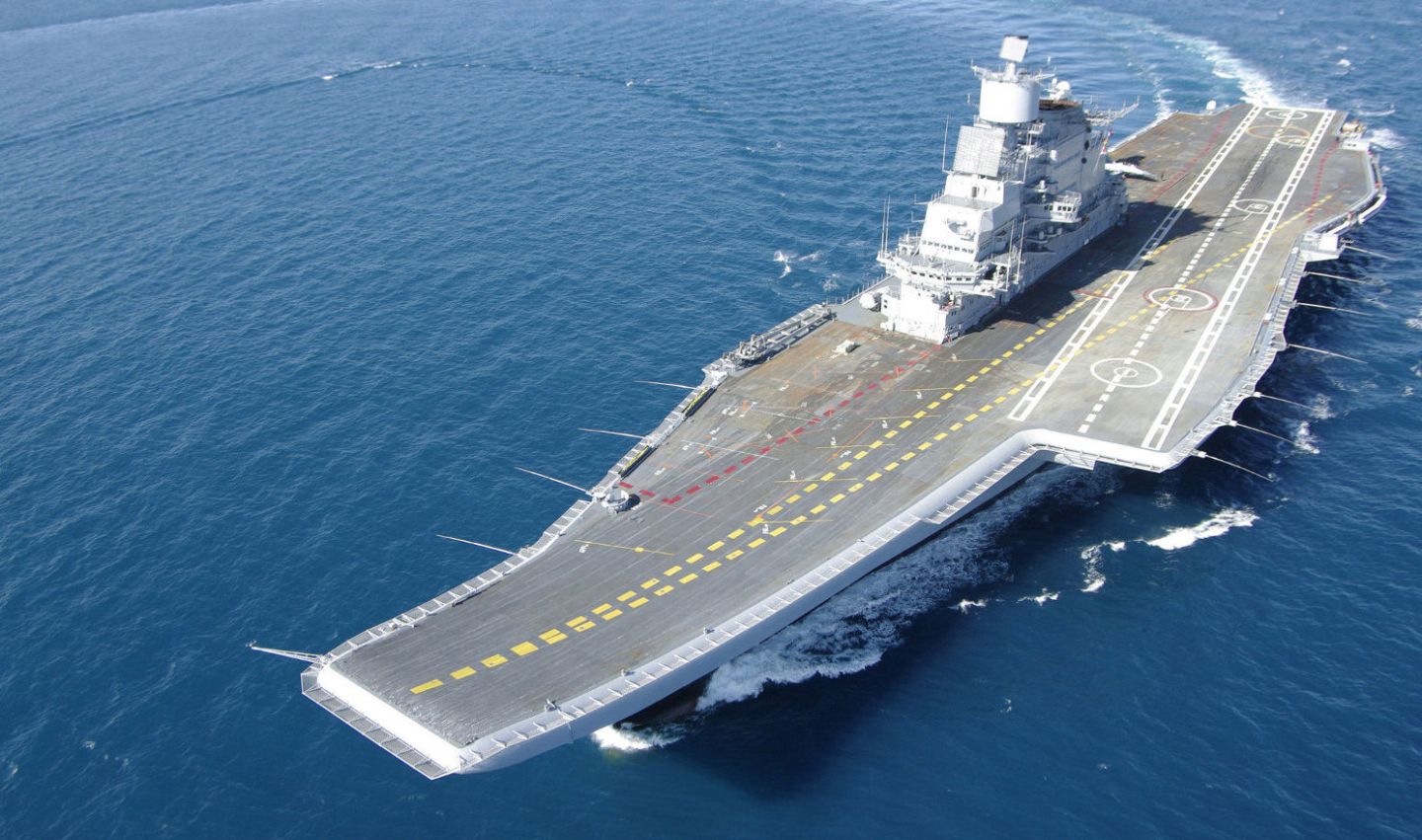
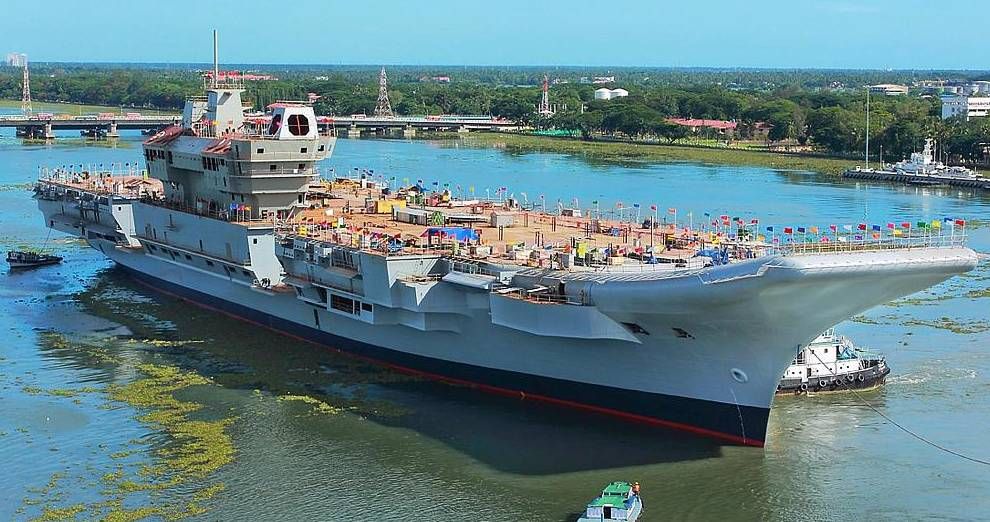
India’s plans for a third aircraft carrier have reportedly been shelved, after having been placed on hold in May 2019. The carrier, INS Vishal, was planned as a much more ambitious and higher end warship to be fielded alongside the Navy’s sole serving carrier, the INS Vikramaditya, and the upcoming light carrier INS Vikrant. The Vikramaditya was a laid down in the Soviet Union in the 1980s, and was extensively refurbished in Russia and equipped with advanced MiG-29K fighters. It displaces approximately 45,000 tons. The lighter Vikrant, at around 40,000 tons, was built in India with Russian assistance and is over half a decade behind schedule. The carrier is 600% over budget. Both carriers are relatively light and rely on ski jump launch systems - similar to that of the British Queen Elizabeth Class and Russian Kuznetsov Class - which restrict the maximum takeoff weights of fighters operating from their decks.
The difficulties developing the INS Vikrant are thought to have discouraged the Indian Navy from seeking to commission more indigenous carriers - particularly those with more ambitious designs like the Vishal. The INS Vishal was expected to displace over 80,000 tons, and would integrate an electromagnetic catapult system (EMALS) to allow fighters to deploy with considerably more fuel and munitions. EMALS would also better facilitate the deployment of more advanced carrier based support aircraft including airborne early warning platforms such as the E-2 Hawkeye and KJ-600. The U.S. Navy’s troubled carrier USS Gerald Ford is currently the only warship with such a system, although the two Chinese Type 002 Class ships currently under construction will integrate similar systems. The lack of EMALS on current Indian carrier designs will place them at a disadvantage against next generation American and Chinese carriers, but has also made them considerably cheaper both to develop and to operate. EMALS technologies were to be purchased from the United States, which is currently seeking to make them compatible with its new generation of F-35C fighters on the carrier USS Gerald Ford.
The high end capabilities planned for the Vishal led to it being widely termed a supercarrier - rivalled only by the American Gerald Ford Class and Chinese Type 002 and Type 003 Classes. Several warships from each respective class are expected to be in service in the U.S. Navies and Chinese by the time the Vishal would have entered service. While cost estimates for the Indian program were reduced considerably after plans to integrate a nuclear propulsion system were scrapped, the warship’s development and operational costs costs and additional costs of high end carrier based fighters and other aircraft are ultimately still considered excessive. While this decision may be reversed, the Indian Navy is likely to stick to a two carrier fleet for the foreseeable future as maritime threats remain relatively low. An EMALS equipped carrier may well be considered to replace the INS Vikramaditya in the mid-late 2030s - which are likely to integrate more advanced classes of fighters including navalised variants of the Su-57 and MiG-35 platforms, both of which expected to be deployed by Russia's own next generation carriers.
