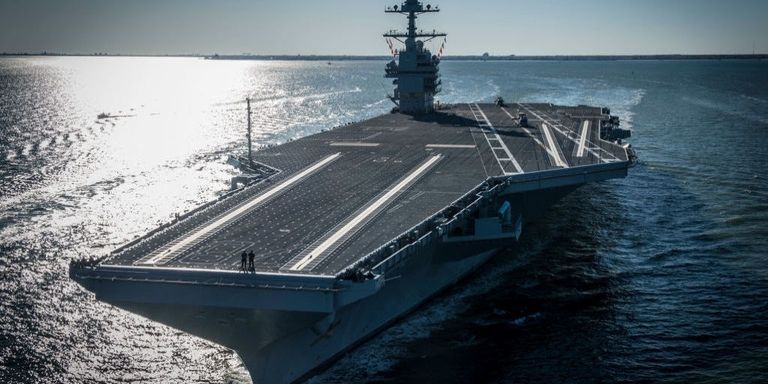
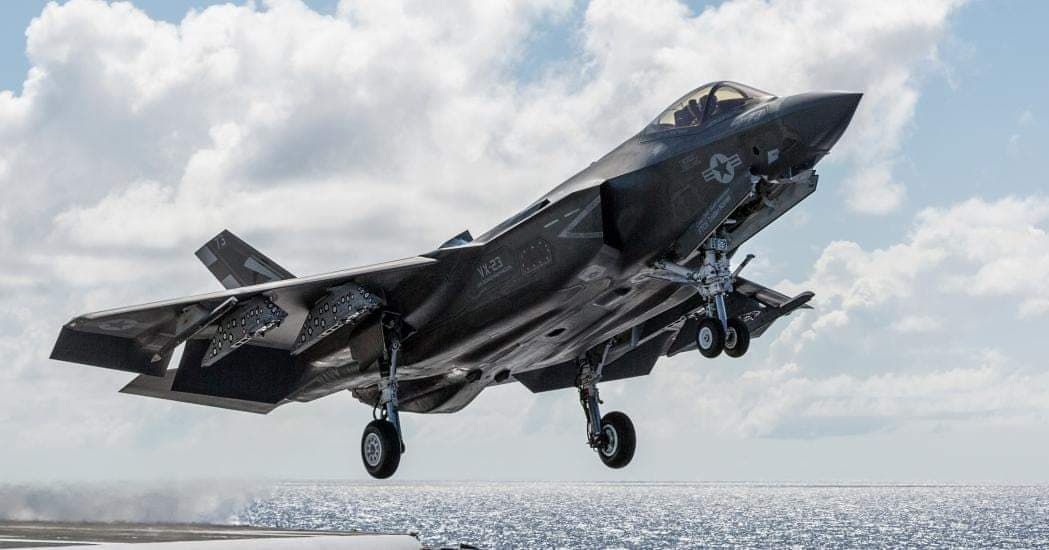
The USS Gerald R. Ford (CVN-78), the first in a new generation of nuclear powered 100,000 ton supercarriers being built for the U.S. Navy, has concluded fifteen months of repairs to begin sea trials. The platform was launched in the spring of 2017 and has faced significant performance issues since. Foremost among these have been a lack of compatability with the Navy's new F-35C carrier based fighter jets, manfunctioning lifts hindering the transport of weaponry and an underperforming sensor suite - which will be redesigned entirely for future warships of the class. Ten Gerald Ford Class carriers are planned to replace the ten Nimitz Class supercarriers cuerrently in service, with some of the improvements including a new more efficient nuclear propulsion system, increased automation to reduce crew requirements, a reduced radar cross section, and perhaps most importantly an electromagnetic catapult system for launching heavier combat aircraft. The Gerald Ford is the first and only carrier in the world to deploy such a launch system, an effective force multiplier for its air wings, although the Chinese Type 002 Class currently under construction and all competing designs for a new Russian heavy carrier also deploy such catapult systems - as do upcoming Chinese Type 003 Class supercarriers. F-35C Carrier Based Fighter Prototype While issues with the Ford Class design are considerable, the lessons learned from preparing the first ship of the class for service can be used to further refine the design of future carriers - including those currently under construction and those planned for construction in the 2020s and 2030s. A more pressing matter however may be the platform's cost, which adjusting for inflation is over double that of the Nimitz even without considering the cost of acquiring and operating its planned air wing of fifth generation fighters and stealth drones. Whether the U.S. Navy will be able to support acquiring a fleet of ten Gerald Ford Class supercarriers, or whether as has widely been speculated it will instead restore to extending the lives of later Nimitz Class ships such as the USS George H. W. Bush, remains to be seen.