
India’s First Indigenous Carrier to be Ready for Sea Trials by 2020 - What to Expect from INS Vikrant
Military Watch Magazine Editorial Staff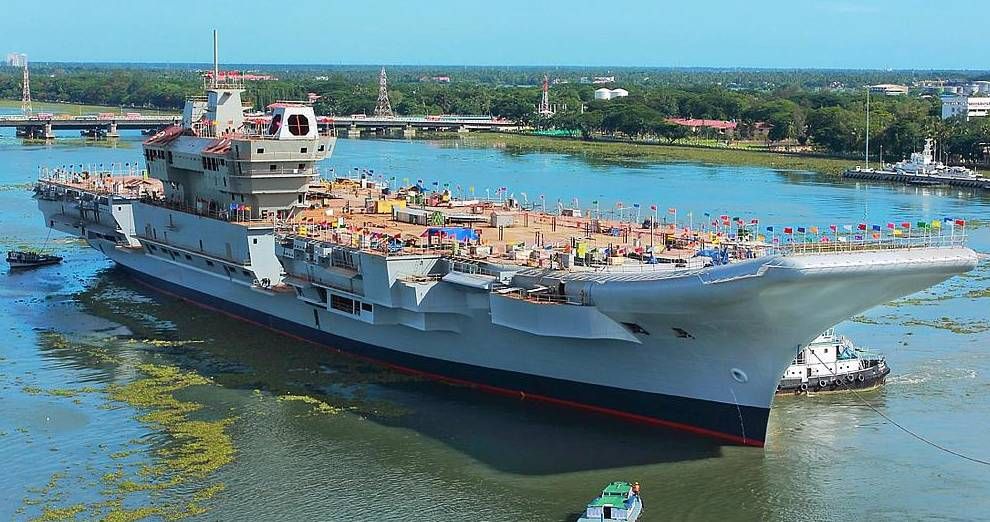
Indian Navy Carrier INS Vishal - under construction
India’s first indigenous aircraft carrier, the INS Vikrant (IAC-1), is set to commence sea trials by 2020 - according to a report by head of the Indian Navy Admiral Sunil Lanba. The warship is set to serve as the Navy’s flagship under the country’s Eastern Naval Command - and will bring the size of the country’s carrier fleet up to two warships. According to a previous report from the Indian government’s principal oversight body, the Comptroller and Auditor-General, the Vikrant was set to be ready for induction into service by 2023 - though this has been contradicted by the Eastern Naval Command which predicts a much earlier date.
The INS Vikrant is set to be inducted under the Indian Ministry of Defense’s Maritime Capability Perspective Plan, and the warship is reportedly now in its final phase of construction. The Vikrant has had a highly troubled history however, and construction difficulties have led the warship's entry into service to be delayed by more than five years - with the delay accounting for less than the time taken for neighbouring China to build a far larger carrier from the keel up - also the country's first. Furthermore, cost overruns on the Indian warship have been immense. The Vikrant was initially planned to cost $500 million, though this has since vastly increased to approximately $3.5 billion - 700% of the original price. Difficulties building the relatively simple carrier design have raised serious questions regarding the ability of Indian shipbuilders to handle far larger and more complex projects, namely the construction of the warship INS Vishal - set to serve as the Navy’s third carrier and deploy cutting edge technologies including electromagnetic launch systems. The Vishal is projected to have at least twice the displacement of the Vikrant.
Work designing the INS Vikrant began in 1999, and the warship’s keel was laid in February 2009. The carrier is lighter than the Navy’s existing platform, INS Vikramaditya, which was acquired second hand from the Russian Navy and extensively modified after having served as the Kiev Class warship Baku in the Soviet Navy. As the Vikrant lacks catapult launch systems, it will rely on a ski jump to deploy fixed wing combat aircraft - reducing costs but also limiting the weight of the carrier based fighters - therefore also limiting their range and weapons payload. The MiG-29K carrier based twin engine multirole fighters are set to deploy from the Vikrant’s 10,000 square metre deck, and benefit form low maintenance requirements, advanced sensors and high manoeuvrability, speeds and operational altitudes. The Indian carrier will deploy up to 40 aircraft, and will also carry Kamov Ka-31 and indigenous HAL Dhruv helicopters.
