
Could Russia’s S-500 System Be Marketed Abroad? Five Leading Potential Clients For New Hypersonic Air Defences
Military Watch Magazine Editorial Staff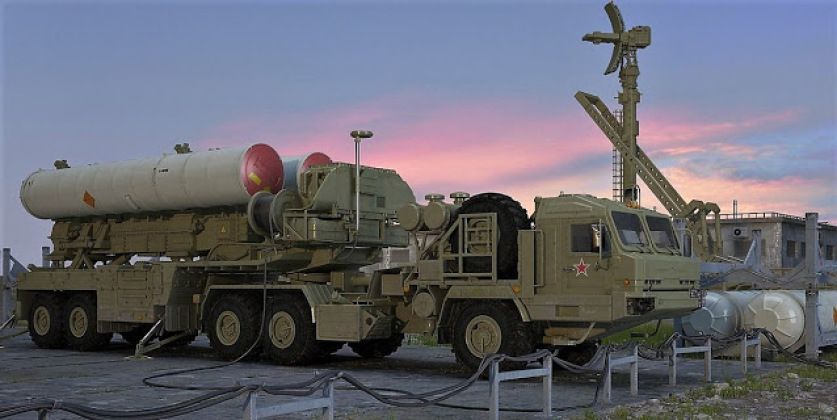
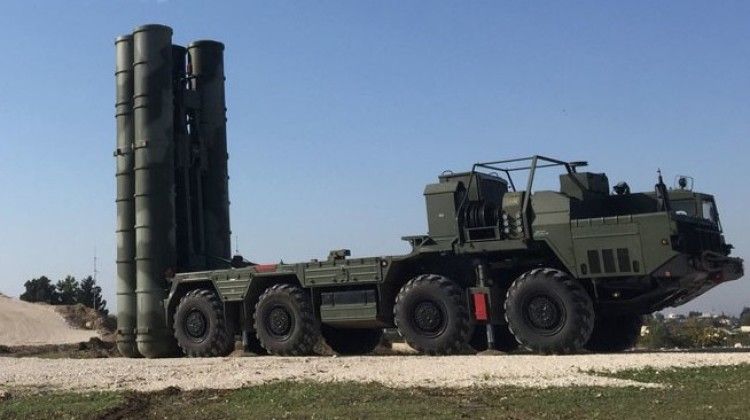
S-500 Surface to Air Missile Battery - artwork
Despite considerable delays, Russia’s armed forces are expected to induct the S-500 long range surface to air missiles system into frontline service some time before the end of 2021, with serial production having begun early in 2018 and advanced prototypes already fully operational for testing purposes. The S-500 is expected to add an additional tier to Russia’s already extremely formidable air defence network, and is designed primarily to counter emerging threats from enemy hypersonic missiles and aircraft, space planes and upcoming generations of stealth aircraft. The system will have an engagement range of at least 600km and be able to engage targets in space - meaning that if sold abroad it would provide several countries with a serious upgrade to their anti-satellite capabilities. Although the S-500 is being designed primarily to neutralise high value targets, it can also engage stealth fighters if needed, and its powerful sensor suite can network with and complement those of existing air defence systems such as the S-400 and S-300V4 to better allow them to counter stealth aircraft.
Although the S-500 is a much higher end system than the S-400 and S-300 platforms, it is expected to be marketed abroad for export much as all post-Soviet Russian multirole air defence systems have been. With the U.S. set to deploy a new generation of fighters, B-21 bombers and hypersonic space planes for both reconnaissance and bombing roles, the appeal of the S-500 is expected to be particularly high to provide a cost effective means to counter these threats. A look at the leading potential clients for the S-500 system is given below.
China
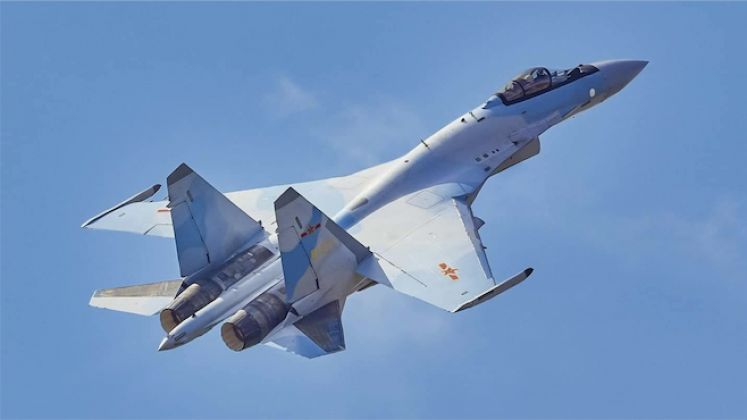
China’s People’s Liberation Army has been the first to purchase a number of state of the art Russian aerial warfare systems, from the S-300PMU-2 and S-400 air defence systems to R-77 air to air missiles and Su-27 and Su-35 fighter jets. Although China has developed a range of advanced air defence systems of its own, and its defence sector has eclipsed that of Russia in a number of critical fields from data links to air to air missiles, Russia still maintains a lead in space warfare and air defence technologies meaning the S-500 could prove a valuable asset for China’s defences. A sale could also be accompanied by contracts for technology transfers to improve China’s own space warfare and anti-hypersonic capabilities. With China facing a significant threat from new generations of American weapons systems, which are increasingly being tailored to target the country moreso than Russia, the appeal of the S-500 system is likely to be particularly high.
Belarus
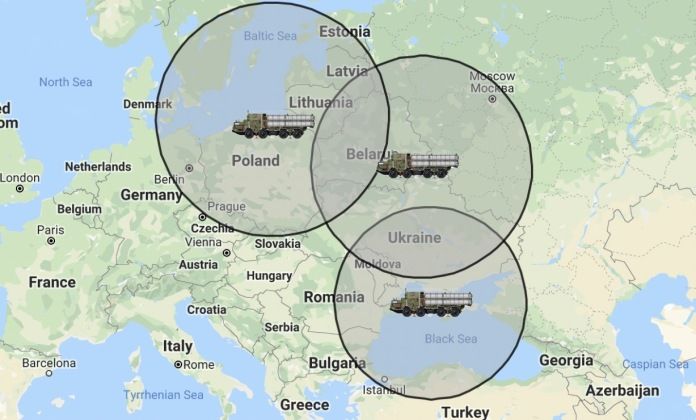
Although Belarus’ defence budget is far from sufficient to acquire the S-500 system, short of a major improvement to its economic situation later in the 2020s which cannot be ruled out entirely, Russia could well provide its only European ally with the next generation air defence system either at ‘friendly’ prices, as it does for hardware sold to Kazakhstan and other post-Soviet states, or free of charge as it reportedly did for the S-400. This would be strategically advantageous for Russia as intelligence is shared between the two treaty allies, and would allow the alliance to target enemy aircraft and satellites deeper into NATO territory. Failure to supply Belarus with the S-500 would otherwise leave a possible hole in Russian defences which NATO forces would be likely to exploit with hypersonic weapons and other advanced next generation systems.
India
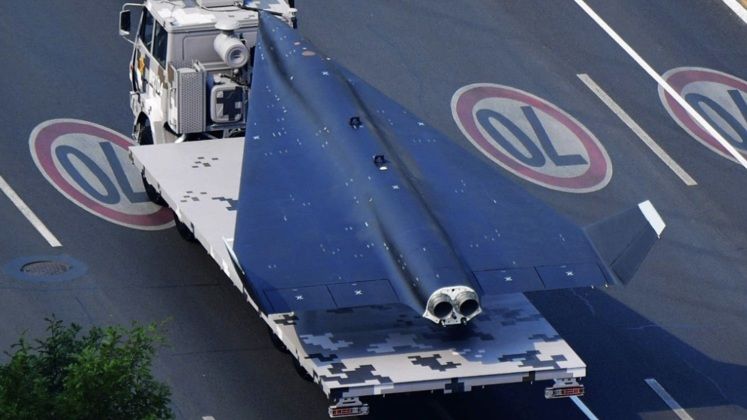
India has long been a leading client for Russian weapons systems, and today has over twice as many S-400 battalions on order as China after signing a contract valued at over $5 billion in 2018. The country’s efforts to build up a strategic missile force could be effective complemented by deployment of the S-500 system, which has the potential to counter new generations of Chinese and Pakistani ballistic and cruise missiles such as the DF-26. China was notably the first country in the world to deploy hypersonic military aircraft with the WZ-8 drone unveiled in October 2019 - likely to be followed by multiple more advanced and ever faster classes - and the S-500 provides perhaps the most effective means of countering such threats. Although India has repeatedly been threatened with American economic sanctions should it purchase high end Russian armaments, Delhi has sharply rebuked efforts by Washington to use coercion to influence its arms acquisitions and is unlikely to be deterred from making an S-500 purchase.
Algeria
Algeria has consistently shown an interest in acquiring the most capable and high end Russian weapons systems, from MiG-25 Foxbat interceptors during the Cold War which it was the first in the world to acquire to the Pantsir-SM and S-400 air defence systems more recently and very likely the Su-57 next generation fighter in the near future. The Algerian Air Force has prized access to advanced Russian air defence systems, particularly since an unexpected NATO attack on neighbouring Libya exploited its lack of modern air defences and resulted in almost ten years of civiil war. While the S-400 and other complementary systems deployed, alongside Africa’s most modern and capable air force, between them provide a formidable defence and a deterrent to potential Western intervention, this could change as the Western Bloc moves to field sixth generation fighter aircraft and hypersonic aircraft which are expected to begin to enter service in the late 2020s. The S-500, possibly complemented by new interceptor aircraft such as the MiG-41, provide an effective means of countering such threats. With the collapse in oil prices seriously harming Algerian finances, however, its ability to afford new generations of combat aircraft alongside new air defence systems is questionable in the long term.
Iran
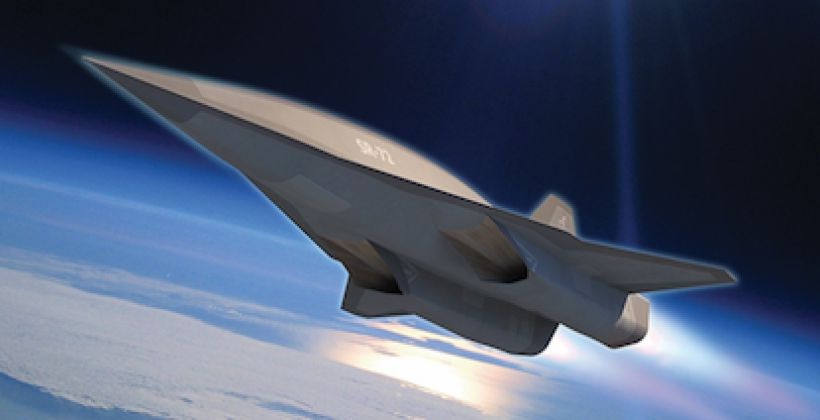
Iran has shown a strong interest in Soviet and Russian aerial warfare systems since the end of the Iran-Iraq war in 1988, today fielding the most advanced variants of the S-200 long range system as well as a heavily customised variant of the S-300PMU-2 platform. The country is considered a leading potential client for the S-400 system to counter the growing presence of Western and allied stealth aircraft in the Middle East, but could in the long term show greater interest in the S-500 to counter an upcoming generation of American aircraft. The B-21 bomber and the upcoming bomber variant of the SR-72 hypersonic space plane in particular are considered leading potential threats to Iranian security, with the country long having been in the crosshairs of the United States Military and lacking a strategic deterrent comparable to those of Russia, North Korea or China to prevent such attacks. The low cost of the S-500 as a countermeasure to new generations of stealth bombers and space-based assets, in contrast to acquiring high-end interceptors or its own space assets, provides Iran with a considerable incentive to acquire the system.
