
Could North Korea Soon Field Elite Russian Su-35 Fighters? Pyongyang Wants a Stronger Air Force to Counter American Stealth Jets
Military Watch Magazine Editorial Staff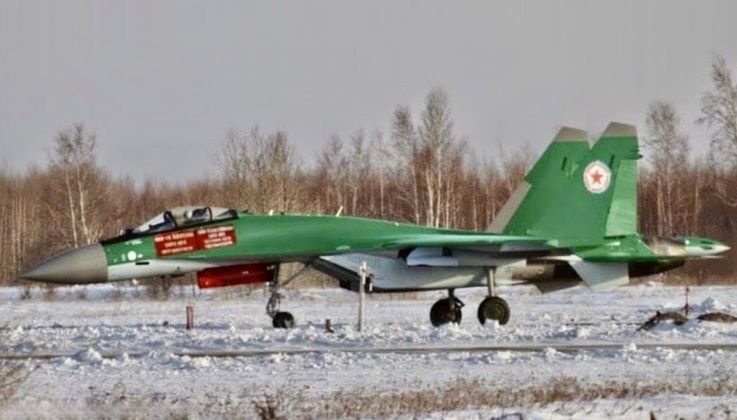
Su-35 in North Korean Colours - artwork
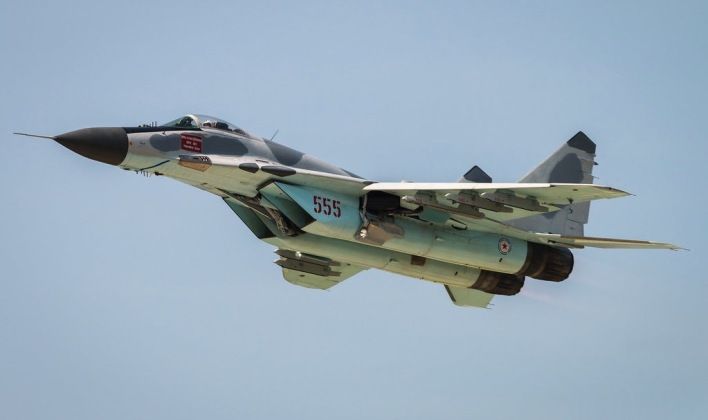
North Korea today fields one of the largest and most fully self reliant defence industries in the world, providing for almost all the needs of the Korean People’s Army (KPA) from new attack submarines with advanced air independent propulsion systems for the Navy to mountain-friendly Pokpung Ho battle tanks with modern explosive-reactive armour for the Army and even hypersonic ballistic missiles with both tactical and strategic applications. Despite considerable successes overall in modernising the KPA over the past 15 years, North Korea’s Air Force remains by far the least advanced of its services and finds itself overwhelmingly outmatched by the capabilities of its potential adversaries such as the United States. The KPA Air Force deploys four primary fighter classes including the fourth generation MiG-29 medium weight platform, the third generation MiG-23 and MiG-21BiS platforms and some much older second generation variants of the MiG-21. Of these only the MiG-29 has remotely modern capabilities, and while the fighters have been enhanced and equipped with new R-27ER missiles with an impressive 130km engagement range, only around 60 of the jets are thought to be in service.
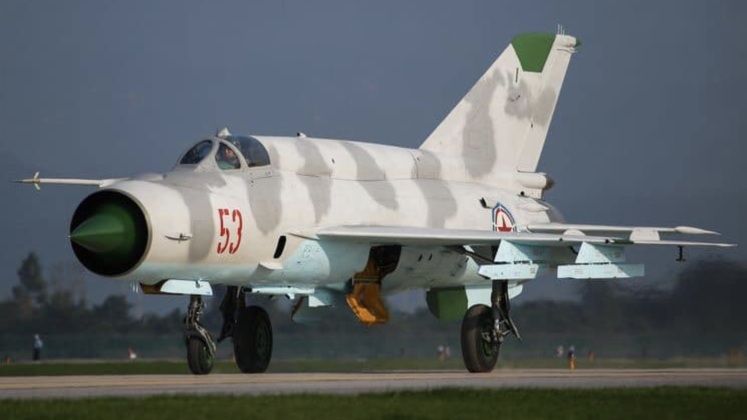
The MiG-29 has been produced in North Korean under license for some years, with a production line purchased from Russia in the early 1990s, although the jets are manufactured at a rate of just five every two years. While the MiG-29 has few rivals in the world in terms of manoeuvrability, it has negligible air to ground capabilities and even in long range air to air combat is outmatched by newer and heavier fighter classes such as South Korea’s F-15K and the American F-22 Raptor. This combined with its vast numerical disadvantages, and the effective obsolescence of North Korea’s other fighter classes, leaves the KPA’s fighter fleet in a weak position to contest air superiority even defensively in the event of a potential war. North Korea has largely compensated for this by modernising its ground based air defence systems, and deploying indigenous surface to air missile systems in large numbers such as the KN-06 long ranged platform which benefits from an advanced cold launch system. Even with formidable air defence capabilities, however, reliance too heavily on ground based systems seriously restricts the KPA’s options in the event of war particularly when dealing with enemy aircraft fielding advanced standoff missile classes such as the American B-52H or South Korean F-15K which can strike targets from well beyond the engagement range of North Korean defences.
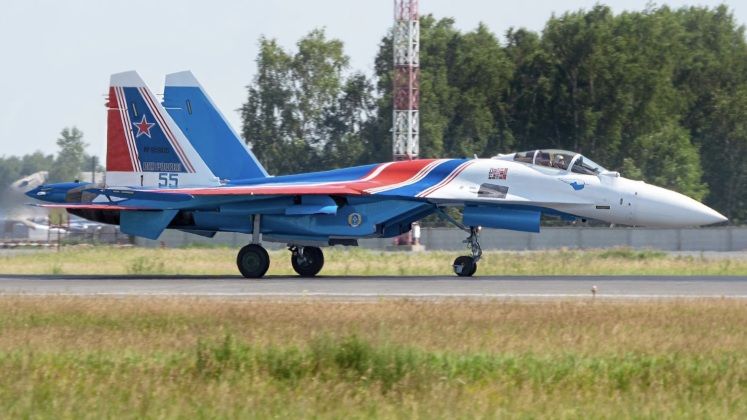
Seeking to modernise its Air Force, North Korea has reportedly showed an interest in purchasing Su-35 ‘4++ generation’ heavyweight fighters from Russia in the mid 2010s - although these reports came from South Korean intelligence and have not been verified. The leadership of the country's ruling Korean Workers' Party has, however, shown interest in modernising the Air Force as recently as mid-2020, and while the country produces a range of air launched weapons domestically options for a more ambitious modernisation program will remain limited unless some acquisitions of foreign fighter aircraft are made. The Su-35 is currently Russia’s most capable fighter class for air to air combat, having entered service in 2014, and was designed to go head to head with advanced American fighter classes such as the F-22 and F-35. Although the aircraft has a high operational cost due primarily to its sheer size, its acquisition cost is relatively affordable with a unit of 12-14 fighters costing approximately $1 billion. This means that even at current defence spending levels North Korea can most likely afford to acquire at least one unit. With the North Korean economy enjoying fast growth rates, which are expected to only further accelerate over the next decade, it is likely that the country’s finances will only be in a better position to manage a Su-35 purchase later in the 2020 or to purchase followup units should an initial order be placed sooner rather than later.
There are currently a number of obstacles to a potential Su-35 acquisition by the Korean People’s Army, most notably an arms embargo imposed by the United Nations Security Council on the country since 2006 which prevents acquisitions of modern weaponry. While Russia will most likely be willing to provide the country with weapons technologies, aircraft parts and even new air-launched weapons and MiG-29 production components, it is unlikely that it will be willing to conduct a more overt and conspicuous violation of the arms embargo by providing an entirely new class of fighter aircraft. Despite this, the possibility that the embargo could be lifted, or that the council’s authority will be eroded due to worsening tensions between the Western and non-Western permanent council members, means that an opportunity could arise in the coming years for the KPA to acquire new fighters. Even if this opportunity should arise, however, there is also likely to be considerable opposition to a multi-billion dollar purchase from within the KPA itself - with many expected to argue with good reason that it would be more cost effective and better for the Korean economy to invest funds in the domestic defence sector to further develop indigenous systems such as surface to air missiles and ballistic missiles.
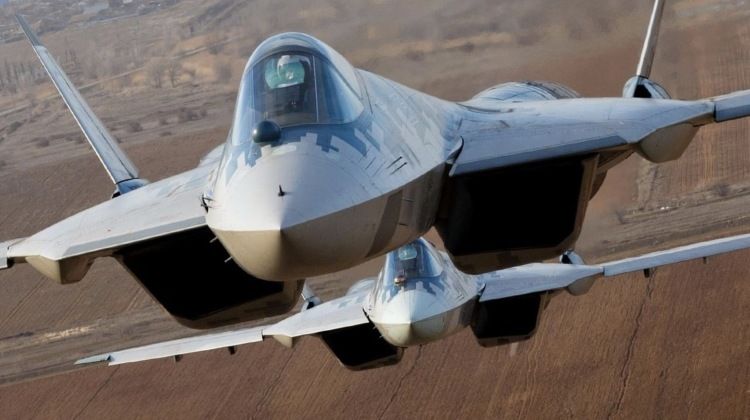
Another major obstacle to a Korean purchase is that the Su-35 has a number of newer competitors which could be considered more suitable to meet North Korea’s defence needs - most notably the lighter and cheaper MiG-35 platform and the heavier and more capable Su-57 platform. The MiG-35 has a much lower operational cost and fuel consumption, uses much of the same maintenance infrastructure as the MiG-29, and is in many ways more advanced than the Su-35 with newer sensor and avionics technologies. The Su-57, meanwhile, could be very attractive if North Korea seeks to acquire new aircraft in small numbers to emphasise qualitative parity with its potential adversaries - even if acquired in fewer numbers than the Su-35 - particularly if the purchase is made later in the 2020s when the country’s defence budget will be larger and neighbouring countries will be deploying more advanced fighter classes. Competition from neighbouring China, which is offering its advanced J-10C fighter for export, is also a significant factor.
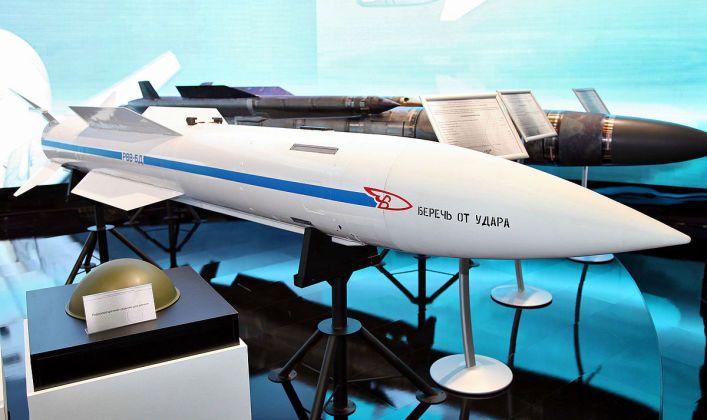
Should North Korea go ahead with a Su-35 purchase, even if in small numbers of between 12 and 36 aircraft, the acquisition will revolutionise the country’s air defence capabilities. The fighters' very high endurance and access to modern standoff weapons will complement the Korean ballistic missile arsenal and allow it to threaten enemy airbases and surface warships well beyond the Korean Peninsula. The Su-35’s very large and modern Irbis-E radar will provide an unprecedented degree of situational awareness and provide an effective counter to enemy stealth aircraft, while its access to new R-37M air to air missiles with a very long 400km range and high Mach 6 speed will allow it to chase down enemy bombers far beyond Korean airspace. The Su-35 is currently considered capable of going head to head with anything in the American, Japanese or South Korean inventories, although this could change when the American F-X sixth generation fighter enters service in the early 2030s, and this alone makes the Su-35's deployment a major potential game changer for North Korea's defences.
