
Japan Gets Serious About Sixth Generation Fighter Program - Prototype to Be Built By 2024
Military Watch Magazine Editorial Staff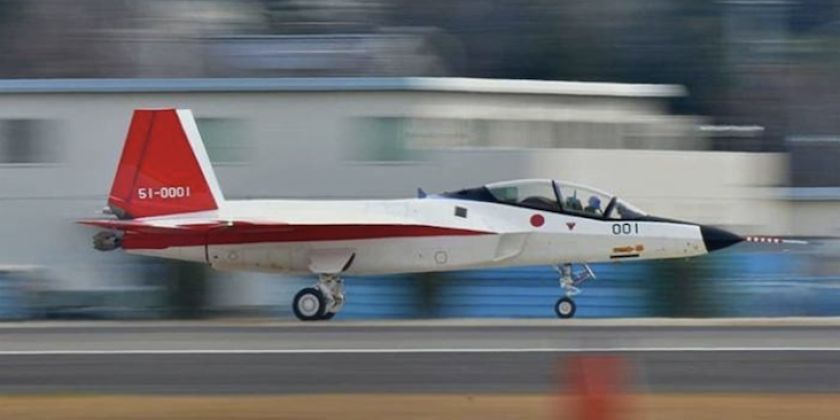
Shinshin X2 Next Generation Technology Demonstrator
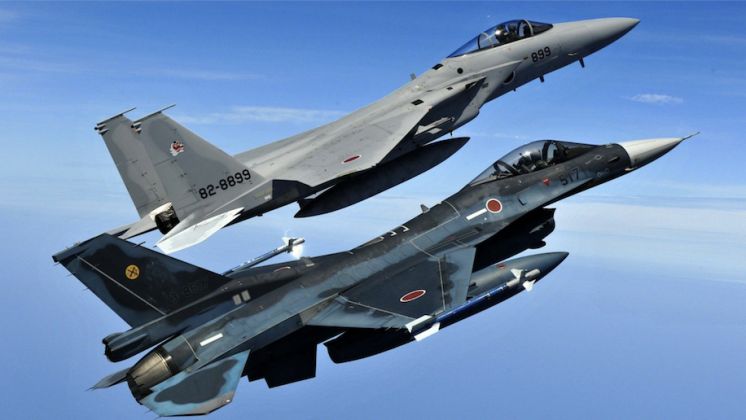
On July 7th Japan’s Defence Ministry presented a draft schedule for the development of a sixth next-generation fighter aircraft to a meeting of lawmakers from the Liberal Democratic Party - the ruling party which has held power almost uninterrupted since the country gained independence from American military rule in 1952. While Japan initially intended to invest in a joint fighter program with either Britain or the United States, a change in plans was announced in April with the country now set to develop the fighter more independently. Japan has produced a number of American fighters under licence domestically, notably including the F-4E Phantom, the F-15 Eagle, the F-16 Fighting Falcon in heavily modified form as the Mitsubishi F-2 and the F-35A Lightning II. All of these aircraft are currently in service in the country’s Air Force, officially called the Air Self Defence Force, and all except the F-35 have significant modifications which distinguish them from the American originals. Despite its formidable technological base, Japan notably has not put an indigenous fighter designed for air to air combat into production since the Second World War - meaning the upcoming sixth generation jet will be its first.
A major incentive for Japan to pursue a sixth generation fighter independently is that it will own rights to its constituent technologies, opening the door for exports which could make the project very profitable. Another reason is to reduced reliance on Western technologies, as particularly under the Donald Trump administration the U.S. commitment to preserving its hegemonic position in Northeast Asia has been seriously questioned. The emergence of China as the region’s dominant power and a decline in Western power mean Tokyo will likely be required to show greater flexibility in its foreign policy - for which a very heavily reliance on American aircraft is far from ideal. Japan is hardly the only country developing a sixth generation fighter today, although given its technological base its aircraft is expected to surpass most competition and compete on a similar level to those from the United States, China and Russia.
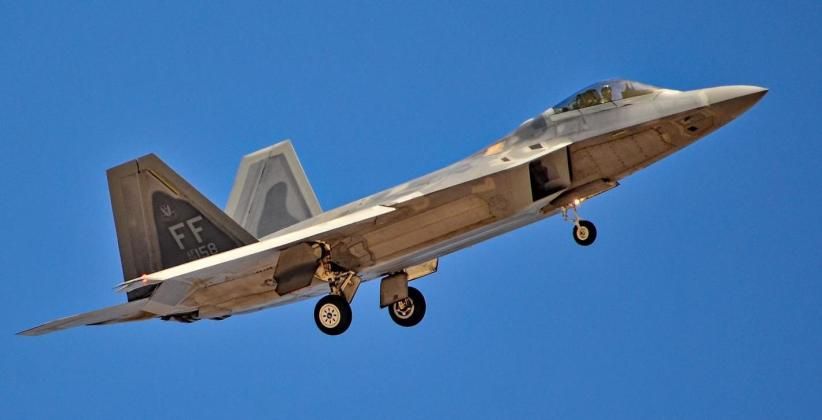
Japan has notably sought a high end next generation fighter with capabilities for air to air combat exceeding those of the F-35 for decades to succeed its F-15 Eagle, one which could go head to head with Chinese and Russian Su-27 and Su-30 fighters that began to be deployed in large numbers in the 1990s. It initially sought the American F-22 Raptor for such a role, but an export ban followed by termination of production in the first term of the Obama administration effectively ended hopes for a meaningful upgrade. It has been speculated that Japan’s new fighter could be loosely based on the Raptor, although it will be far more sophisticated considering that the American jet was designed from the 1970s and first flew in the 1990s. The first prototype for Japan’s next generation fighter will start to be built in 2024, with flight tests beginning shortly afterwards before the aircraft is placed in serial production in 2031. It remains uncertain on what scale Japan intends to build its new fighter, but given its reported design as a heavyweight air superiority aircraft it could have a relatively small production run of around 150 aircraft for domestic use. Japan has already demonstrated very advanced capabilities in a number of relevant fields of research and development, including world leading composite material and radar technologies. The country was the first to deploy a fighter with an AESA radar, the F-2, and the first to deploy an air to air missile guided by such radars - something the United States and Russia both have yet to achieve.
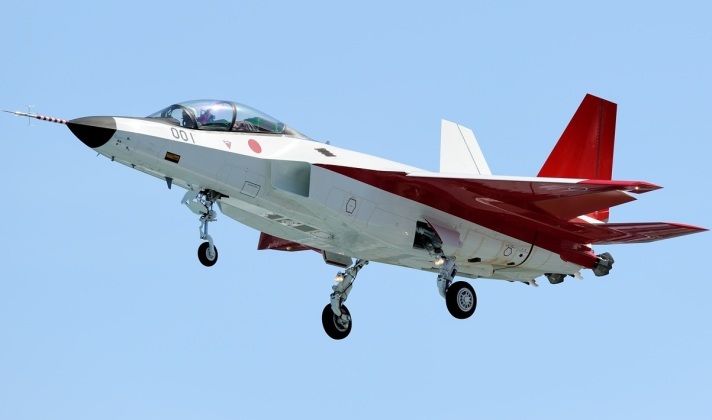
Japan notably unveiled a flight prototype for a next generation fighter which was not related to the current project, the Shinshin X2, which had several advanced features not found on any Western fighters including three dimensional thrust vectoring engines and a highly sophisticated self repair system. The fighter notably used an indigenous engine, the XF9-1, which highlighted that research and development was ongoing in the field which is one of the most challenging for developing a next generation aircraft. What is known about the new aircraft’s capabilities comes from Defense Minister Taro Kono, who emphasised that the new aircraft would be stealthy, stress network centric operations and would carry more missiles than the F-35. With the F-35 fifth generation single engine fighter designed primarily designed for an air to ground role, but increasingly being relied on for air to air operations due to deficiencies in U.S. and allied air superiority fleets, a sixth generation aircraft optimised for air to air combat will be a welcome addition for Japan. Its cost, however, is expected to be considerably higher than the F-35A and possibly over twice as high.
