
New Chinese J-20 Deployment on India’s Border Highlights Urgent Need for Su-57 Stealth Fighter Procurements
Military Watch Magazine Editorial Staff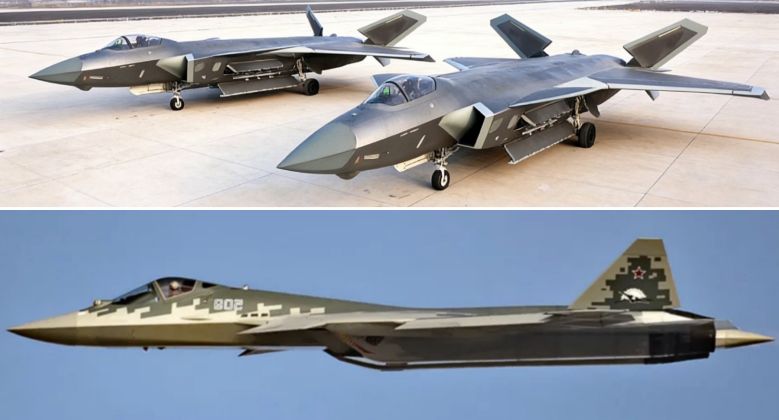
Chinese J-20 Fighters (top) and Russian Su-57
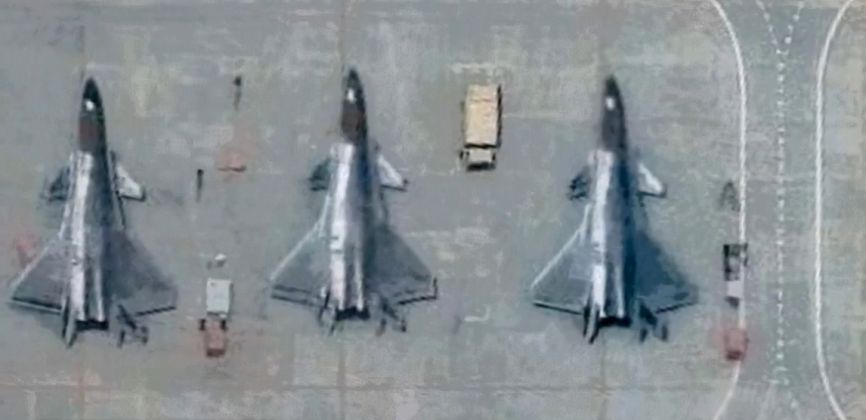
The Chinese People’s Liberation Army Air Force’s deployment of J-20 fighters to Hotan Air Base has significantly shifted the balance of power in the air across the Line of Actual Control between Chinese and Indian forces, and for the first time left Indian forces with the imminent possibility of facing advanced fifth generation combat jets in the event of a conflict. The base is located just 400 kilometres away from Indian forces, while the J-20 has a combat radius of approximately 2,000 kilometres and advanced penetration strike capabilities rivalled only by those of the American F-35. Although China has strongly prioritised J-20 deployments in its central and eastern regions, apparently in part to avoid escalating hostilities with India, the J-20 fleet in the region is expected to gradually expand. This had drawn renewed attention to India’s own plans to procure fifth generation fighters.
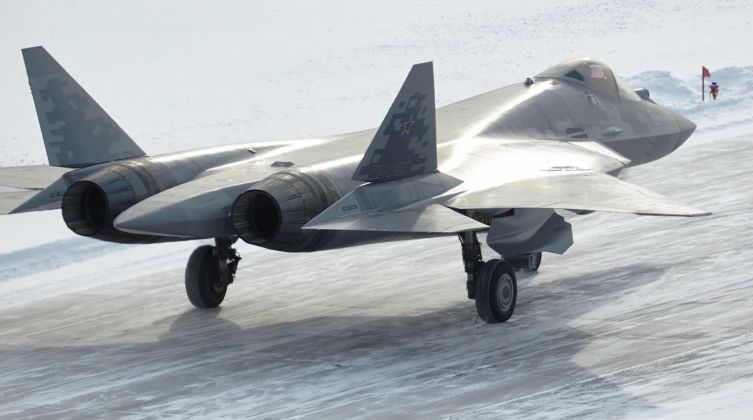
The Indian Defence Ministry in January 2026 confirmed that talks for the licence production of the Su-57 had reached an advanced technical stage, after the Russian Defence Ministry was in June 2025 reported to have made an unprecedented offer to provide full access to the aircraft’s source code as part of a license production deal. The Russian Federal Service for Military-Technical Cooperation (FSMTC) on May 30, 2026, confirmed that consultations remain underway for the production of Su-57 fifth generation fighter aircraft in India. The Su-57 is the sole operational fighter type of its generation developed outside China and the United States and first entered service in the Russian Aerospace Forces in 2020. It has been intensively combat tested in the Ukrainian theatre in a wide range of roles including for precision strikes, air-to-air combat, and air defence suppression.
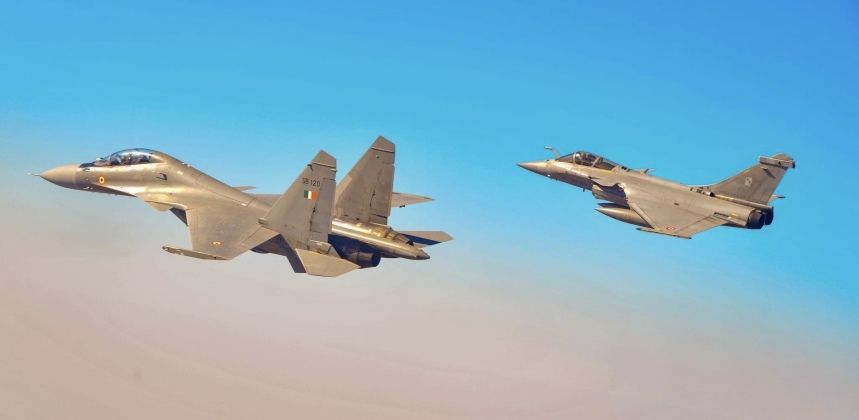
The Indian Air Force currently lacks not only a fifth generation fighter capability, but even a more advanced ‘4+ generation’ fighter type. While the Su-30MKI that forms the backbone of its fleet was widely considered the world’s most capable fighter type when it first entered service in 2002, its capabilities are today far from cutting edge, with no more capable aircraft having been operationalised. Although the small fleet of 36 Rafale ‘4+ generating fighters’ procured from France are more advanced than the Su-30MKI, the type is much smaller with a weaker radar, much more limited flight performance, and lower weapons carrying capacity. The air engagements during Indo-Pakistani clashes in May 2025 reinforced concerns regarding the viability of the Indian fleet, as between one and four Rafales were shot down by Chinese-supplied J-10C fighters while shooting down none.
With the American F-35 confirmed to be excluded from consideration, primarily for political reasons including the extensive restrictions which the U.S. places on the use of its aircraft, procurement of the Su-57 and a license production deal for the fighters appears highly likely. While China has avoided deploying J-20s near India’s borders, as the fighter type increasingly forms the backbone of the Chinese fleet with production of close to 120 per year, an increased presence near India will become increasingly unavoidable. This will likely come to include much more advanced variants than the early production models currently at Hotan Air Base, including the J-20A with new WS-15 engines and the J-20S that is optimised for airborne command post roles.
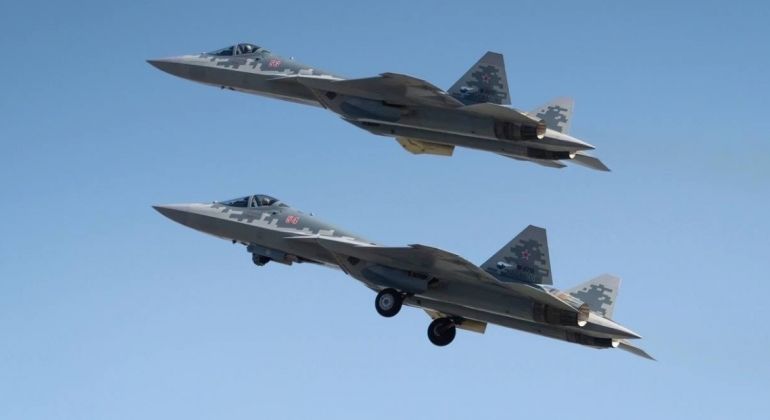
In December 2025 Director of the Russian Federal Service for Military-Technical Cooperation Dmitry Shugayev alluded to the possibility of a fully joint program to develop a new Su-57 variant being pursued, providing India with ownership of key technologies. Indian sources have commented highly favourably on the possibility of a deeply customised Su-57 variant being jointly developed under such a program with co-ownership of technologies. While Indian industry is currently working on the Advanced Medium Combat Aircraft (AMCA) fifth generation fighter program, this is not expected to enter service until the 2040s. The extent of the difficulties India’s defence sector has faced with the Tejas fourth generation lightweight fighter program, which despite being relatively unambitious has still been one of the most problematic programs of the past half century, has raised serious questions regarding the country’s ability to develop a fifth generation fighter independently. The Su-57 thus appears to be the only option India has to provide an advanced fifth generation capability in the near term.
