
China’s Growing Helicopter Dominance Sparks Concern in the West
Military Watch Magazine Editorial Staff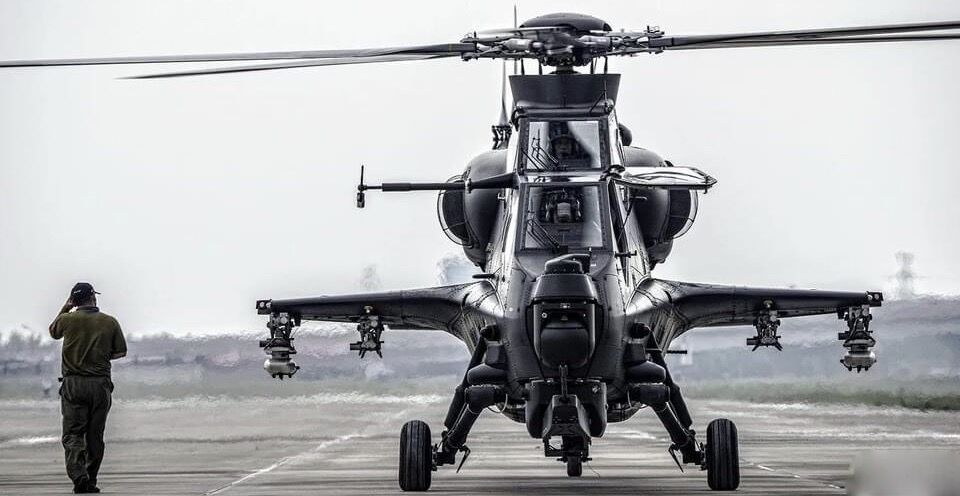
Chinese Z-10 Attack Helicopter
The fast growing capabilities of the Chinese People’s Liberation Army’s helicopters has caused growing concerns in the Western world, with the country’s industry increasingly positions itself as the global leader in the field. Although overshadowed by growing primacy in areas such as sixth generation fighter aviation, quantum communications, and destroyers, the development of dedicated attack helicopters, modern medium-lift transports and specialised naval variants equipped for anti-submarine warfare and amphibious operations has had no parallels abroad. The development of China’s military helicopter fleet appears to have been less strongly prioritised than other areas of development, but reflects a broader effort to establish a more self-sufficient defence-industrial base while improving forces’ ability to conduct complex operations.
China’s dedicated attack helicopter fleet is centred on the Z-10, which entered service in 2010 after making its first flight in 2003. The tandem-seat aircraft can carry anti-tank guided missiles, air-to-air missiles and rockets, supported by electro-optical targeting equipment and defensive countermeasures. Subsequent upgrades have introduced improved armour, warning sensors and longer-range guided weapons, while the export-oriented Z-10ME incorporates additional improvements, including a millimetre-wave radar mounted above the main rotor. The smaller Z-19 complements the Z-10 by combining reconnaissance and attack capabilities, while the larger Z-21, first observed in 2024, appears set to provide China with its first heavyweight attack helicopter. The Z-21 features heavier protection, a more extensive sensor suite and a greater weapons-carrying capacity than the Z-10, and has been widely projected to provide distinct superiority over leading foreign rivals such as the Russian Mi-28 and Ka-52 and U.S. AH-64.
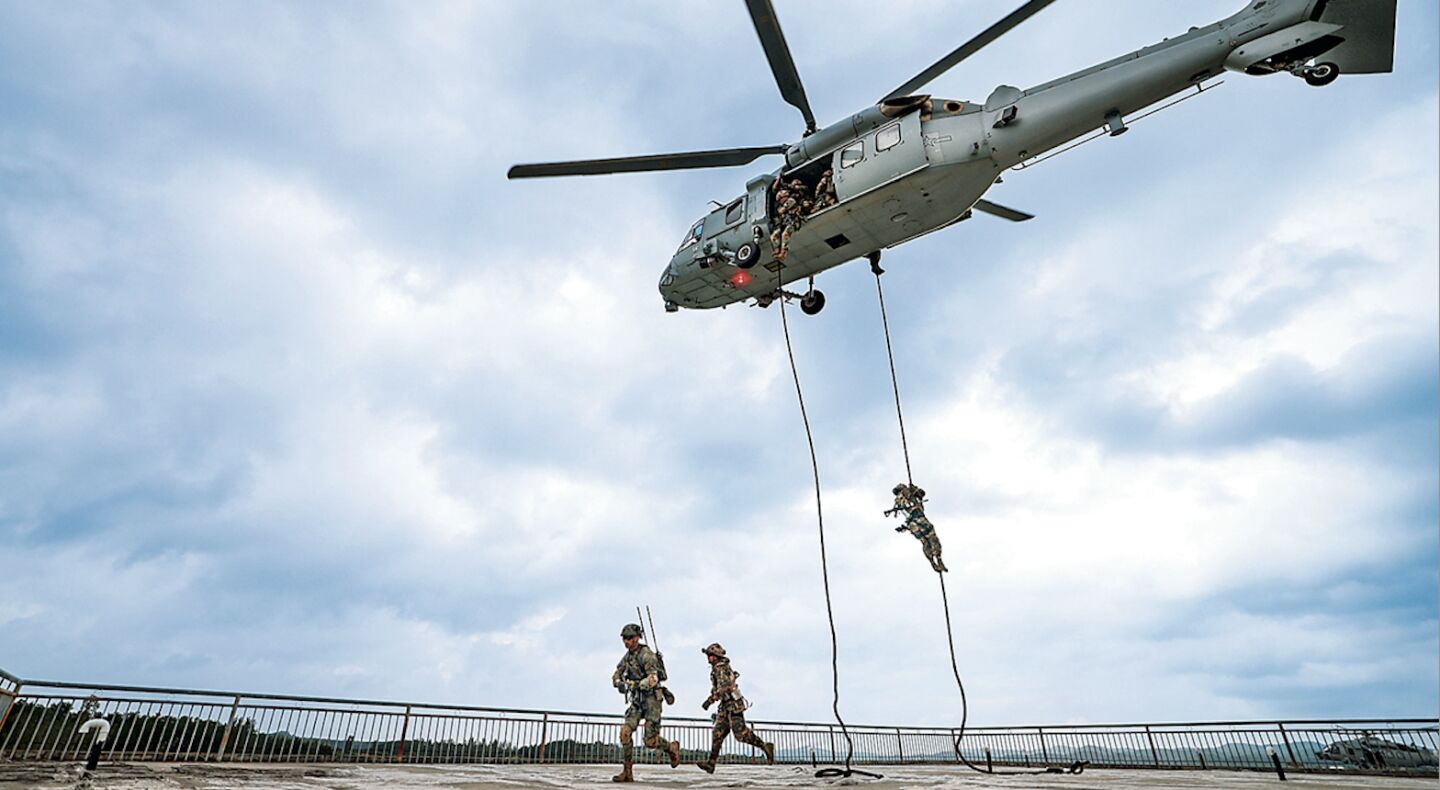
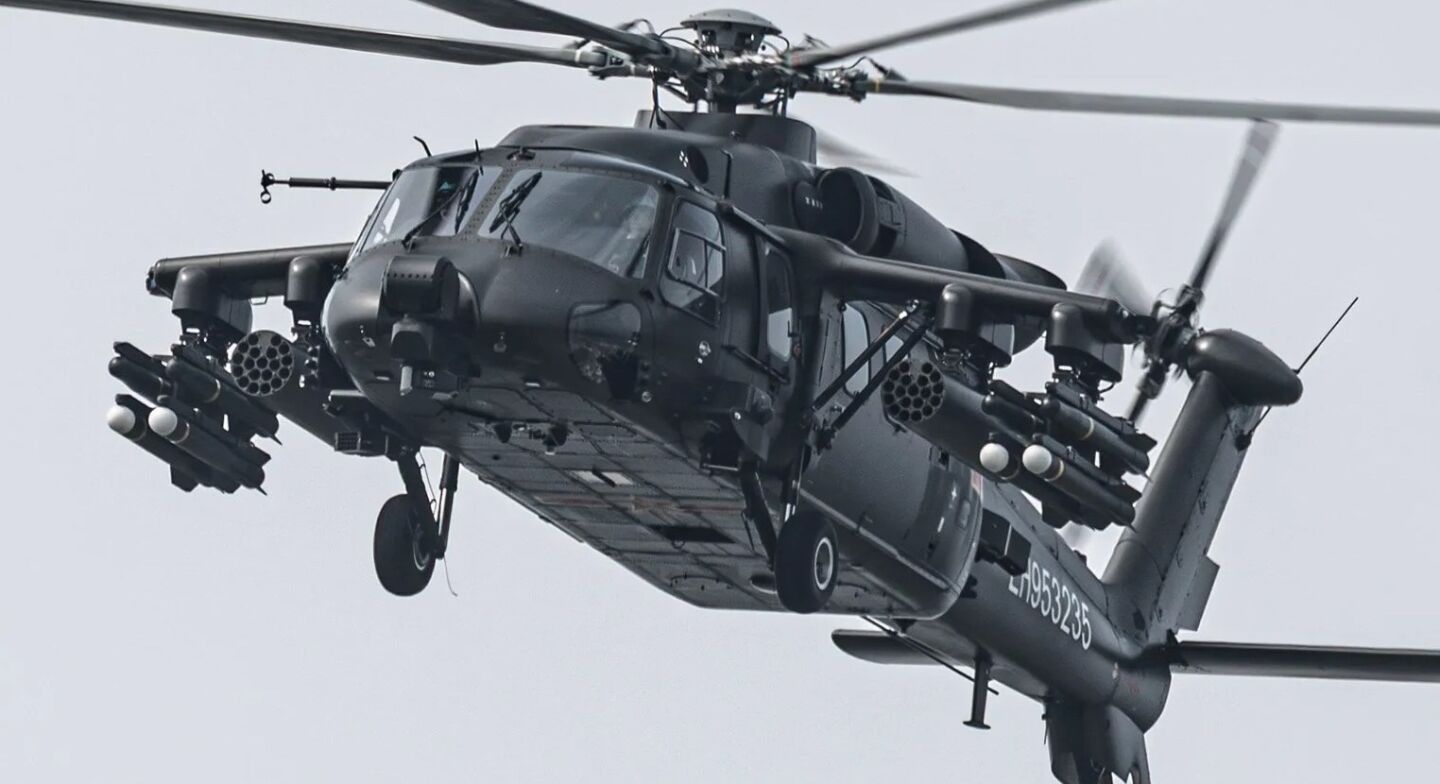
The Z-20 family represents another major element of China’s helicopter modernisation program, and after its first flight in 2013 was confirmed to have entered service in 2019. Powered by two WZ-10 turboshaft engines, it can transport up to 13 fully equipped personnel and perform a broad range of general-purpose missions. Its modern avionics, defensive systems and adaptability have also provided a foundation for specialised variants intended to support the increasingly complex operational requirements. The Z-20K family includes transport and assault configurations, while the Z-20T is designed for armed assault missions and can carry guided missiles, rockets and external fuel tanks. The naval Z-20F is configured for anti-submarine warfare, incorporating a dipping sonar, sonobuoy deployment equipment and the ability to carry lightweight torpedoes. A separate Z-20J variant is intended for shipborne transport and assault missions, expanding the range of tasks that can be conducted from Chinese surface combatants and amphibious vessels. The development of so many derivatives has made the Z-20 the most versatile single helicopter design in the world.
China’s older helicopter families have also undergone extensive development. The Z-8 has evolved into a platform supporting transport, search and rescue, electronic warfare and airborne command functions. Meanwhile, Russian-built Mi-17 and Mi-171 helicopters continue to provide substantial transport capacity, including specialised support for operations in demanding environments. The Navy also fields Russian Ka-28 anti-submarine warfare helicopters and Ka-31 airborne radar platforms, which provide capabilities that domestic designs are increasingly being developed to supplement or replace.
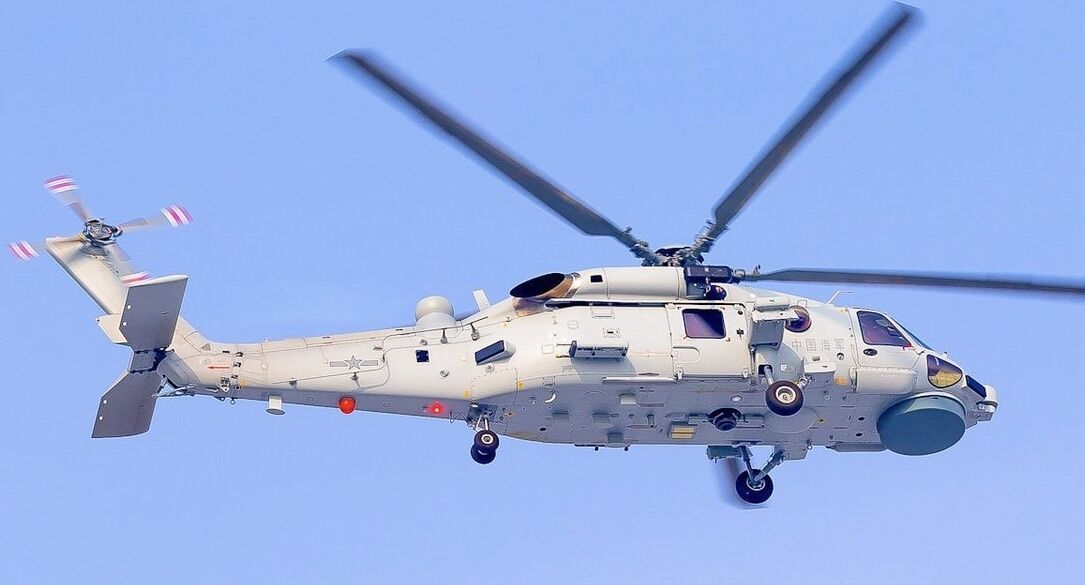
The development of shipborne Z-20 variants is expected to continue to expand the Navy’s anti-submarine warfare and amphibious assault capabilities, phasing out these older Russian aircraft. The development of a much heavier lift aircraft is also expected, potentially to rival the Russian Mi-26 which currently leads the world by a significant margin in its lift capabilities. China has not established distinct dominance in its helicopter capabilities in ways the country’s defence sector has in many other fields, but appears poised to do so more gradually, which is expected to translate into advances in a wide range of areas from logistics to amphibious assault and anti-submarine warfare capabilities.
