
China’s First Heavyweight Attack Helicopter Seen in New Footage: How Will the Z-21 Transform PLA Air Assault Capabilities?
Military Watch Magazine Editorial Staff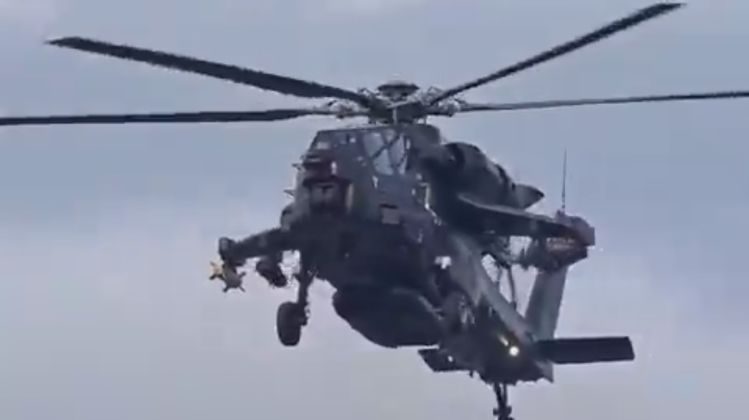
Chinese Z-21 Heavyweight Attack Helicopter
Footage released on Chinese social media has provided a first clear look at the new heavyweight attack helicopter developed for the Chinese People’s Liberation Army Ground Forces, which is reported to be designated the Z-21. Although Chinese authorities have not formally acknowledged the program or released official specifications, the aircraft first came to public attention in early 2024 after photographs of a prototype first appeared on social media. The program represents the first by China to develop a heavyweight attack helicopter, which will occupy a comparable weight range to the U.S. AH-64 Apache and the Russian Mi-24, Mi-28 and Ka-52, with no other countries having developed similarly large rotary wing aircraft for attack roles. China currently serially produces only the Z-10 medium weight attack helicopter, which although widely considered the most capable helicopter type in its weight range, is still constrained in its weapons carrying capacity, its armour, and its range compared to heavyweight designs.
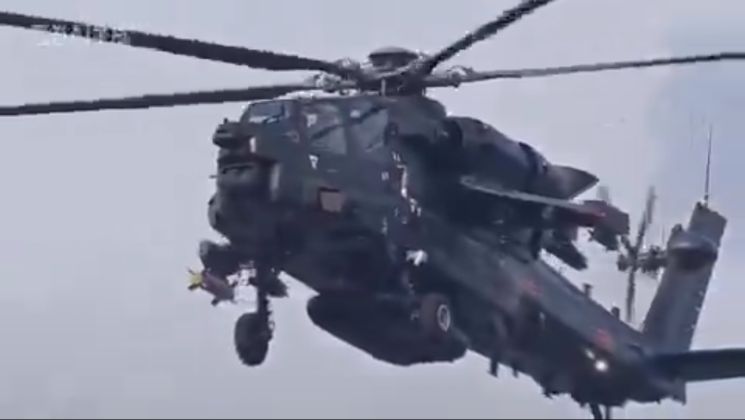
Much of the Z-21’s development philosophy appears to revolve around reducing technical risk by leveraging major dynamic components proven on the Z-20 heavyweight utility helicopter, including a common rotor system, engines, and portions of the tail assembly. This is expected to also increase maintenance and training commonality between the two helicopter types. In line with its radically different, role the Z-21 adopts an entirely new much narrower fuselage optimised for tandem seating and combat missions, which gives the crew excellent forward visibility while minimising frontal area. . The aircraft’s design features indicate a focus on survivability and heavy firepower, as is common for heavyweight attack helicopter designs.
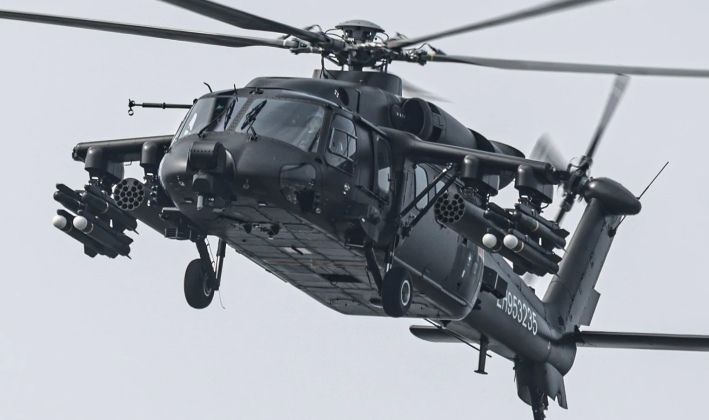
The Z-21’s nose appears to house a large electro-optical sensor installation for day/night target acquisition, while multiple fairings around the airframe likely accommodate communications, electronic warfare, and defensive systems, indicating an emphasis on advanced sensors and networked warfare. In line with broader trends in the Chinese aviation sector, the Z-21 is expected to incorporate cutting edge digital avionics, helmet-mounted sights, and data links to exchange targeting information with drones and ground forces. These features will likely allow the aircraft to conduct long-range precision strikes while remaining outside air defence envelopes. The appearance of the Z-21 has highlighted a significant shift in the Chinese military aviation sector, with improvements in domestic turboshaft engine technology achieved under the Z-20 program allowing larger more ambitious airframes with greater lifting capacities to be developed. Unconfirmed reports indicate that a heavier utility helicopter with a lift capacity comparable to or exceeding that of the Russian Mi-26, the current global industry leader, is under development.
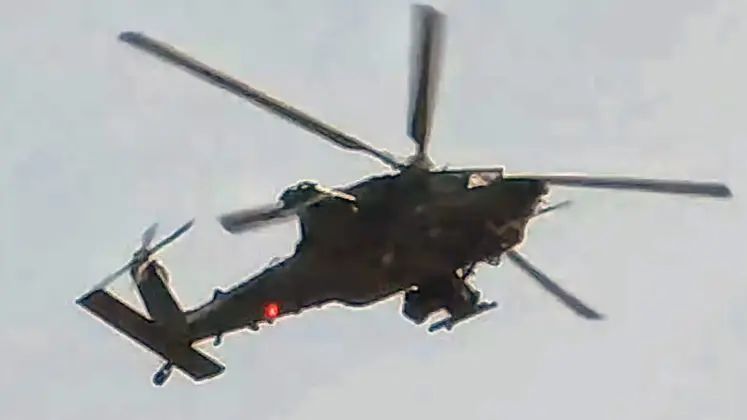
The Z-21 is expected to enter service before 2030, and may serve in the Navy onboard its fast expanding fleet of amphibious assault ships such as the Type 075 class to bolster power projection capabilities. While attack helicopters have remained one of the few fields where China’s defence sector and its frontline capabilities have remained behind those of the United States and Russia, the Z-21 program has a significant chance of propelling China to primacy in the field, with its much newer design appearing to be more refined and better optimised for mid-21st century battlefields than the Apache or Mi-28, which were designed during the Cold War. Attack helicopters could play a particularly central role in potential hostilities in the Taiwan Strait, the East China Sea, the South China Sea, or the disputed Ladakh region, while their capacities to provide an effective defence against drone attacks have been highly prized across multiple theatres.
