
World’s First Sixth Generation Fighter Design Evolving Rapidly in Chinese Flight Testing
Military Watch Magazine Editorial Staff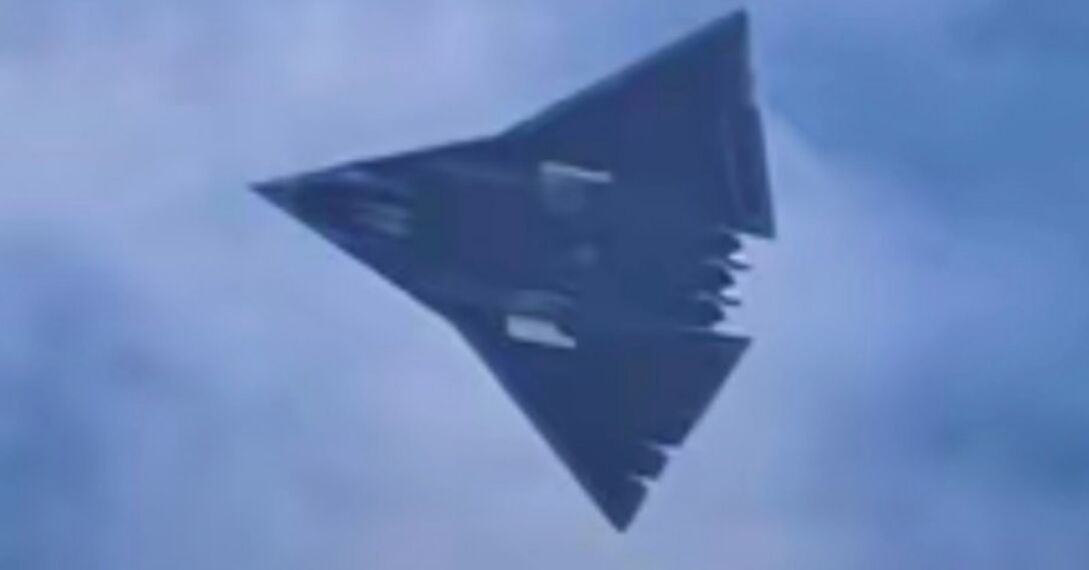
Chengdu Sixth Generation Fighter in Flight Testing in China in Late September
China’s Chengdu Aircraft Corporation is continuing intensive flight testing for the world’s first sixth generation fighter program, with newly released footage providing some of the clearest views yet of the rapidly evolving design. The latest imagery highlights changes to the aircraft’s engines, intakes, sensors and external configuration. Five prototypes are now believed to have participated in flight testing, with substantial differences already visible between individual airframes. The continuing modifications suggest that Chengdu is using successive prototypes to refine the aircraft rather than moving directly towards a fixed production configuration.

Recent footage circulating online shows one of the new fighter prototypes making a landing approach, providing an unusually clear view of the aircraft’s rear fuselage and propulsion arrangement. The aircraft retains its unique three-engine configuration and exceptionally broad tailless airframe, as well as a two-seat cockpit in which the crew sit side-by-side. One of the most significant changes visible is a change to the engine exhaust arrangement, with prior aircraft having had a trough-like configuration, while later ones aircraft have adopted two-dimensional thrust-vectoring exhausts. The change is accompanied by other major aerodynamic modifications that have appeared during the program’s development.
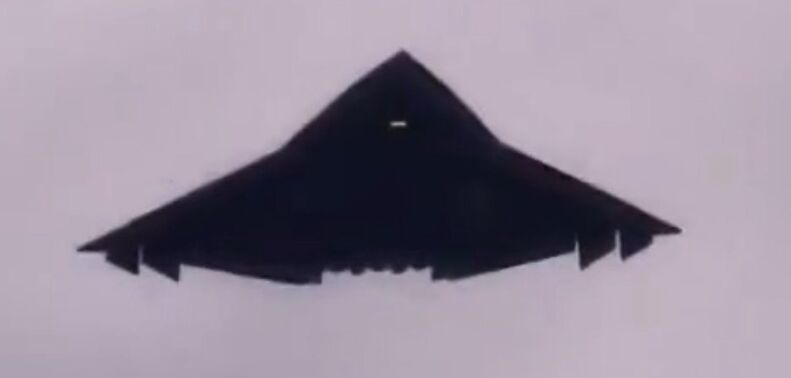
The new fighter has also progressively adopted divertless supersonic intakes, where the first prototype had a different intake arrangement, which significantly improves stealth capabilities. A lighter-coloured radome is visible on one of the recent test aircraft also indicates that an operational radar has been installed for flight testing. The latest test aircraft also appears to have adopted a two-tone paint scheme broadly resembling that used on operational Chinese J-20 fifth generation fighters. Lighter-coloured leading and trailing edges are particularly notable because these areas can contain antennas and other systems on low-observable aircraft. Earlier prototypes had a more distinctive splinter-style camouflage pattern.

Chengdu’s fighter is not only the first of its generation, but also by far the largest in the world, optimising it for very long range operations, and for integration of an outstandingly powerful radar and heavy weapons payload. Cost restrictions mean that no other country is expected to field a similarly large fighter type, as while sustaining such an aircraft is affordable in China, in the Untied States the costs would be very considerably greater. Despite its heavy weight, Chengdu’s fighter has repeatedly demonstrated extreme levels of manoeuvrability, undermining early Western assessments that the aircraft was a bomber or strike fighter rather than an aircraft optimised for air superiority missions.
