
World’s First Sixth Generation Fighter Demonstrates Unprecedented New Manoeuvres in China
Military Watch Magazine Editorial Staff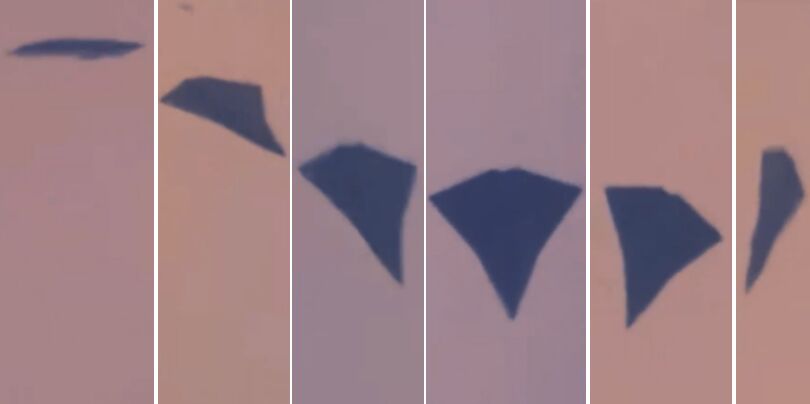
Chinese Sixth Generation Fighter Demonstrates Extraordinary High-Alpha Manoeuvrability
New footage of China’s first sixth generation fighter has provided a new demonstration of the type’s high manoeuvrability, highlighting its ability to conduct previously unseen new manoeuvres. As the first sixth generation fighter type developed worldwide, which is expected to enter active service around 2030, around a decade before rival programs abroad, the new aircraft developed by the Chengdu Aircraft Corporation is currently at the forefront of pioneering new combat aviation capabilities. The fighter was observed performing a complex high-alpha, high-energy manoeuvre, rapidly pitching over before diving almost vertically, then recovering sharply and climbing back upwards.
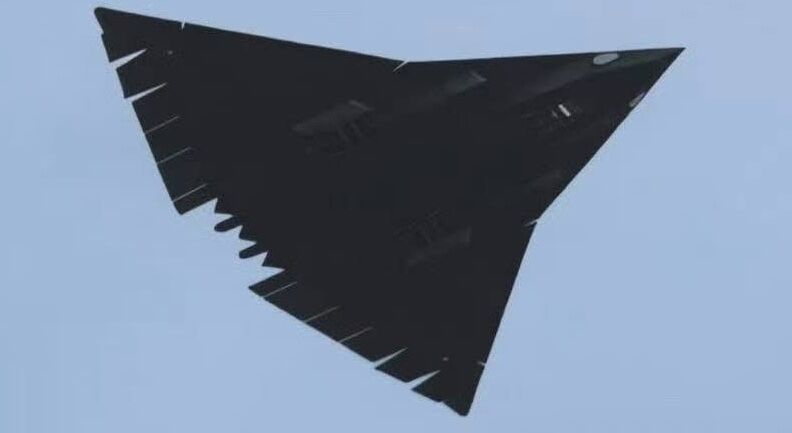
The manoeuvre seen was particularly demanding because it combined a high angle of attack with rapid changes in flight path and energy state. At high alpha, airflow over the wings and control surfaces can become increasingly separated, reducing aerodynamic predictability and potentially limiting conventional control authority. Maintaining precise control while pitching over therefore places substantial demands on the aircraft’s flight-control system. The rapid transition into a near-vertical dive also creates significant energy-management challenges. A high-alpha manoeuvre can rapidly reduce airspeed, while the subsequent dive can cause velocity to increase very quickly.

The recovery is arguably the most demanding portion of the manoeuvre. Arresting a steep descent requires the aircraft to generate sufficient lift and pitch authority to rapidly change its flight path, potentially imposing high G-loads on both the aircraft and pilot. The fighter must accomplish this while remaining within its aerodynamic and structural limits and retaining sufficient energy to continue climbing after the recovery. It is highly challenging to maintain controlled flight through a sequence of rapidly changing aerodynamic conditions while managing airspeed, angle of attack, G-loads and energy. Advanced flight-control systems can substantially assist with this, but executing the manoeuvre safely and repeatably still requires considerable aerodynamic performance and control authority.
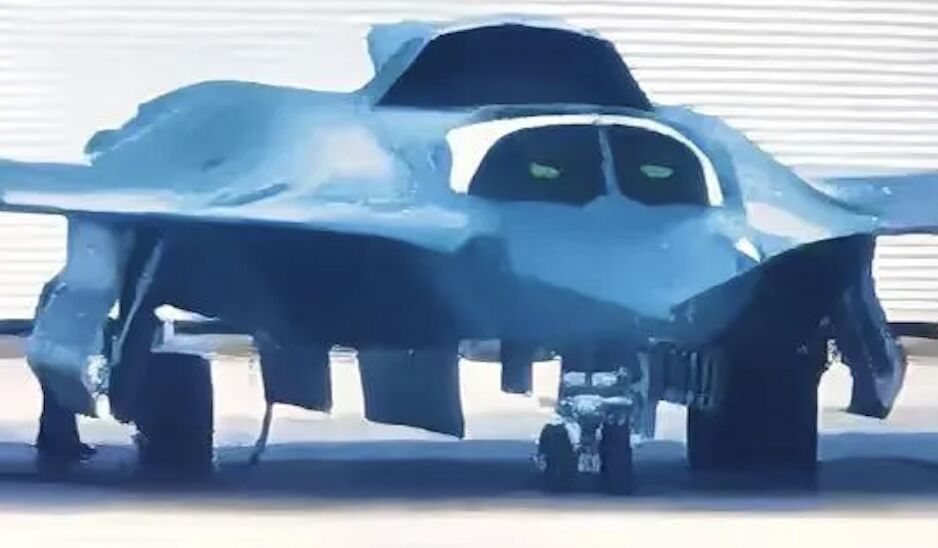
The manoeuvres performed were particularly outstanding as the fighter is both by far the largest and heaviest in the world, and the first with a tailless design. Major advances in Chinese engine technologies, and the unique integration of three separate engines, remain a primary factor allowing the fighter to maintain a high thrust-to-weight ratio despite its extreme size. A tailless fighter must achieve sufficient pitch, yaw and roll control using its wings, elevons, split drag rudders, thrust vectoring or other control surfaces, which is particularly difficult at high angles of attack, where airflow can separate from the wing and control surfaces, potentially reducing or changing their effectiveness. This indicates the integration of highly sophisticated flight-controls capable of continuously compensating for changing aerodynamic conditions.
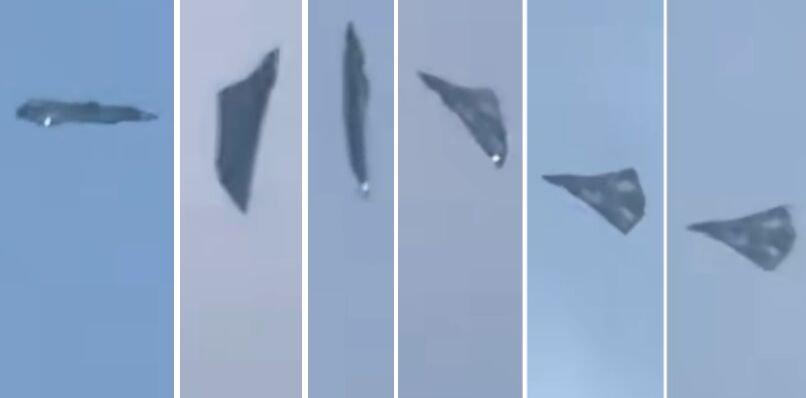
The development of a fighter with control surfaces that can provide sufficient manoeuvrability to compensate for the lack of horizontal tailplanes is outstandingly challenging, and was only confirmed to have ever been achieved with the release of footage of the new Chinese sixth generation fighter in June, which first demonstrated its manoeuvrability. The greatest challenge for tailless fighters is pitch control. Conventional fifth-generation fighters use horizontal stabilisers to generate large pitching moments, with their position well behind the centre of gravity giving them considerable leverage to rapidly raise or lower the nose. A tailless aircraft loses this mechanical advantage, leaving elevons and other wing-mounted control surfaces to provide pitch authority. This can limit instantaneous turn performance, complicate stability, and reduce control authority at low speeds and high angles of attack.
