
U.S. Will Fly its Sixth Generation Fighter in 2028, Four Years Behind China
Military Watch Magazine Editorial Staff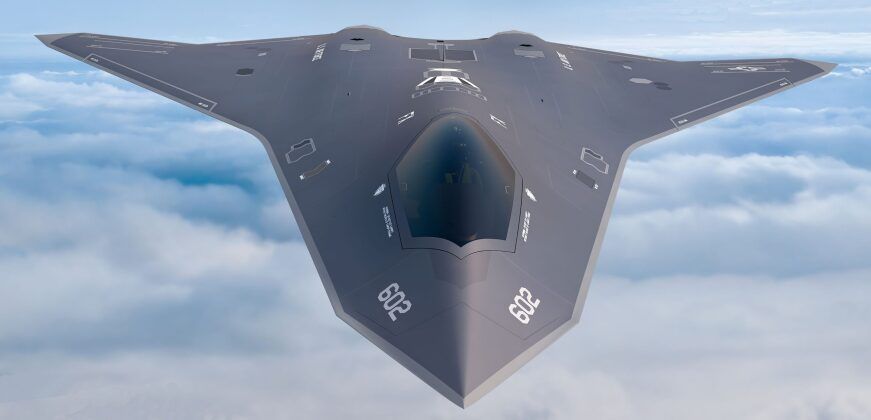
U.S. Air Force Sixth Generation Air Superiority Fighter - Concept Art
The first prototype of the U.S. Air Force's sixth generation fighter the F-47 remains on course to make its first flight in 2028, placing it four years behind rival Chinese programs developed by the Chengdu and Shenyang aircraft corporations which both made their first flights in 2024. The schedule, confirmed by General Dale R. White, Director of Critical Major Weapon Systems Programs, during the Life Cycle Industry Days conference in Dayton, Ohio, on July 27, 2026, means the first F-47 will almost certainly fly with an interim engine, as its adaptive-cycle engine is not expected to be ready for integration until the early 2030s. This has fuelled speculation that the F135 engine powering the F-35 fifth generation fighter could be adapted to serve as a stopgap for flight testing.
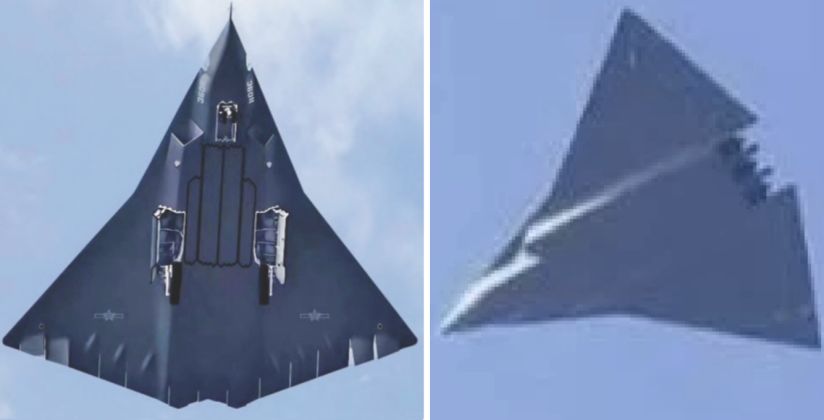
China and the United States are currently considered in a league of their own in sixth generation fighter development, with China expected to bring its first flights into service around 2030, while the U.S. F-47 is expected to enter service in the early 2040s. The F-47 formally entered Engineering and Manufacturing Development in early 2025, three years after entry into this development phase was first announced, marking the transition from technology demonstration to full-scale aircraft development. A principal challenge facing the programme is propulsion. The F-47 has been designed around the NGAP adaptive-cycle engine, which is expected to produce between 35,000 and 40,000 pounds (156-178 kN) of thrust, while providing substantially greater fuel efficiency, electrical power generation and thermal management than existing fifth generation fighter engines.
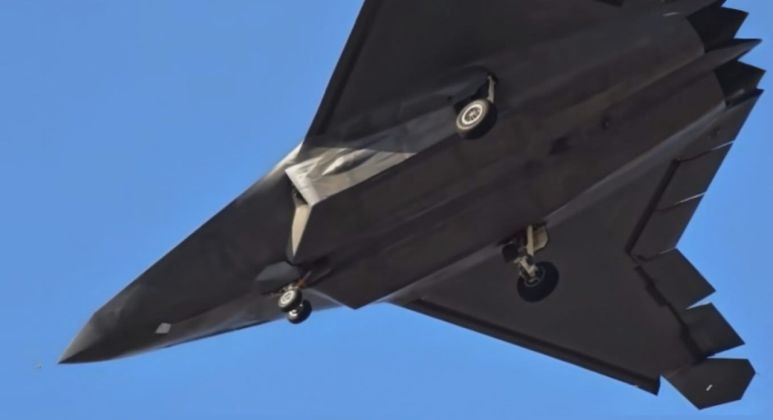
Boeing has committed the highest level of internal investment in its history to developing the F-47, which is the only fighter of its generation that the U.S. Air Force intends to procure. The Air Force commissioned two separate fifth generation fighters under the F-22 and F-35 programs, and initially intended to field them under a complementary high-low combination before major issues with the F-22 led to an early termination of production, and eventually to efforts by the service to retire the aircraft decades ahead of schedule. Reliance on a single fighter is thus unprecedented, with the possibility that the Navy could eventually procure a derivative of the F-47, rather than developing an entirely separate fighter under the F/A-XX program, potentially further contributing to the Air Force program’s scale.
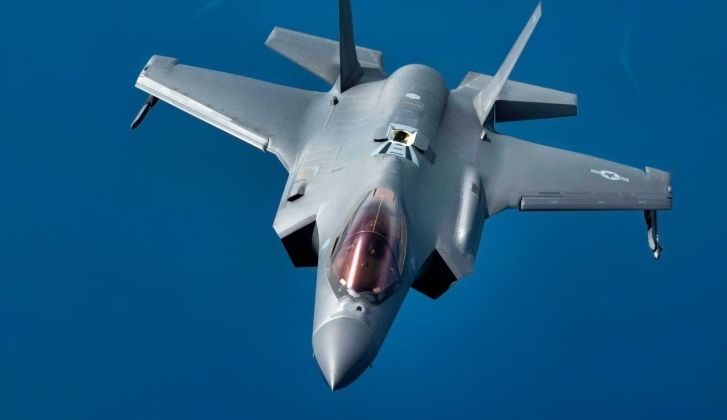
With delays to the F-47’s development expected, the Department of Defense has held “very active” talks with the F-35’s producer Lockheed Martin regarding the possibility of enhancing the F-35 to a ‘5+ generation’ standard through the integration of sixth generation technologies. The firm’s chief executive Jim Taiclet observed in September 2025: “There’s significant interest in the government about discussing aircraft modernisation writ large, all the way up to the administration level, the White House level, and we’re in the middle of that with them, and we’re getting heard. We’re hearing back, and it’s pretty active.” Taiclet previously stated that such upgrades would provide the F-35 with “80 percent of six-gen capability at half the price.” While this is not expected to be sufficient to bridge the gap with new Chinese fighters, it may prevent an overwhelming U.S. disadvantage in the air until the F-47 provides greater parity with next generation Chinese designs.
