
Russia’s Top Attack Helicopters Enhanced For Anti-Drone Warfare Duties
Military Watch Magazine Editorial Staff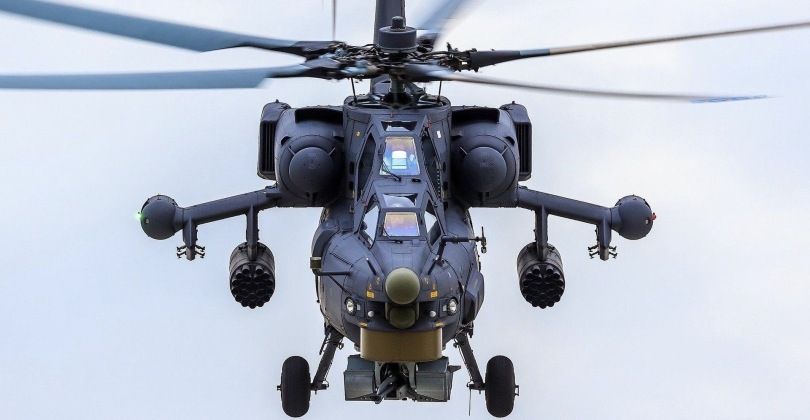
Mi-28 Attack Helicopter
New footage has shown that the Russian Army’s most capable type of attack helicopter, the Mi-28NM, has been modified to enhance its performance in counter-drone roles. The sighting of new antenna housings in multiple locations across the airframe indicated that a significant upgrade has been implemented to the Mi-28’s electronic warfare capabilities, following the similar appearance of such antenna on Su-34M strike fighters which were first observed earlier in the month. The antenna housings were seen on the sides of the helicopter’s nose, atop its stub-wing pods, and on its tail boom. Electronic countermeasures system appear positioned to provide wide-angle coverage around the helicopter, rather than focusing directional jamming in a single sector, allowing the system to detect and jam signals from multiple directions simultaneously. This is particularly important to provide a defence against drone attacks, which have proven capable of destroying high value attack helicopters on multiple occasions in the Ukrainian theatre.
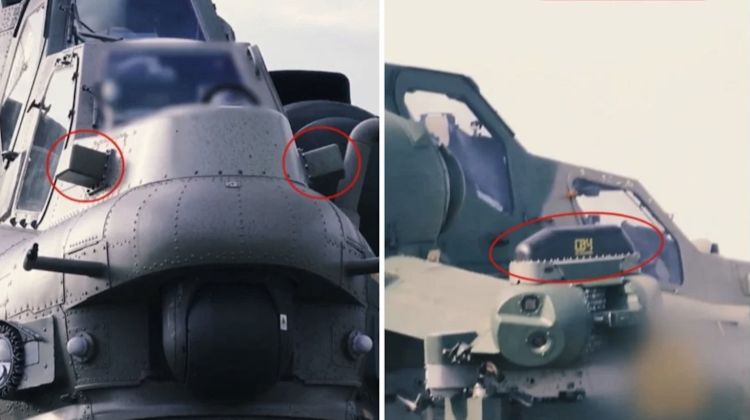
Jamming equipment disrupts the radio frequency controlling hostile drones, which complements the benefits of integrating of detection equipment, which uses radar, radio frequency scanning, acoustic sensors, or optical systems to identify and track incoming drones before they reach engagement range. It is highly possible that the modifications to the Mi-28 provide for both functions. The utility of attack helicopters serving as air defence platforms against drones and subsonic cruise missiles has recently been demonstrated in the Middle East, with the U.S. Army’s training for its own Apache attack helicopter units also increasingly emphasising counter-drone operations. Attack helicopters have a superior capability to loiter, and have far lower sustainment costs and maintenance needs than manned fighter aircraft, integrate precision guided rockets, and in the Mi-28’s case also an 30mm automatic cannon, that are well suited to counter-drone duties.
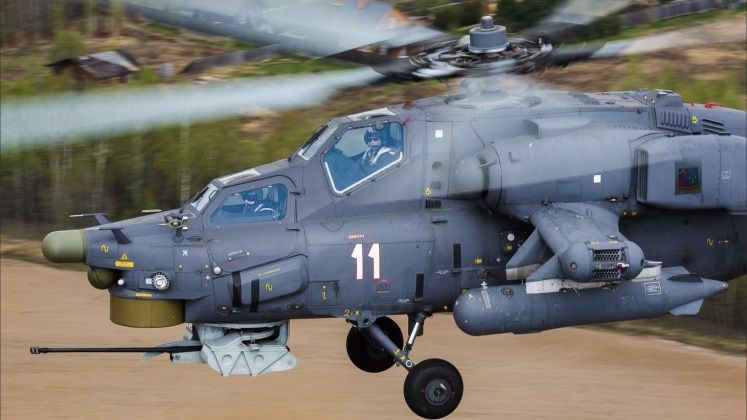
The Mi-28NM was first combat tested in Syria from 2016, with its performance having led the Russian Defence Ministry to sign contracts for the supply of 98 more aircraft by 2027. Improvements over prior Mi-28 variants include the integration of VK-2500P engines, a 13 percent speed increase, and integration of new sensors providing all-round visibility, as well as upgrades to fire controls and air-to-air capabilities. The aircraft can each carry up to 16 anti-tank missiles or 80 80mm rockets. The Mi-28 is well optimised to serve as an elevated sensor platform to strengthen the situational awareness of ground-based air defence networks. Beyond low value unmanned aircraft, it is also capable of engaging higher value aircraft using R-74 air-to-air missiles.
