
The World’s Largest Combat Ship Has its Own ‘Flying Radar’ Air Wing to Support its S-400 Long Range Air Defences
Military Watch Magazine Editorial Staff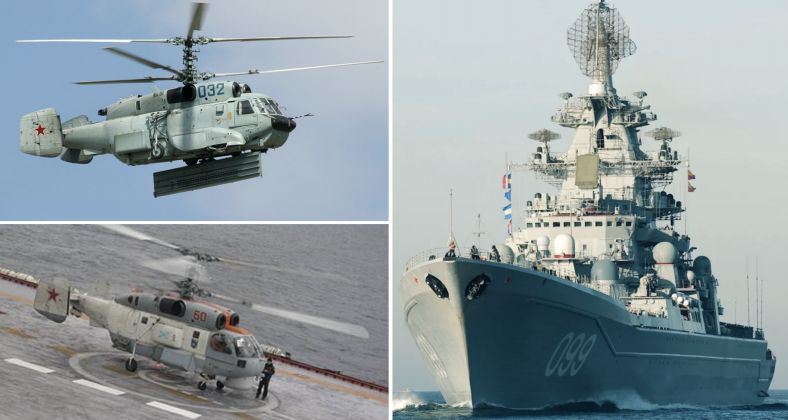
Ka-31 Helicopters and Kirov Class Cruiser
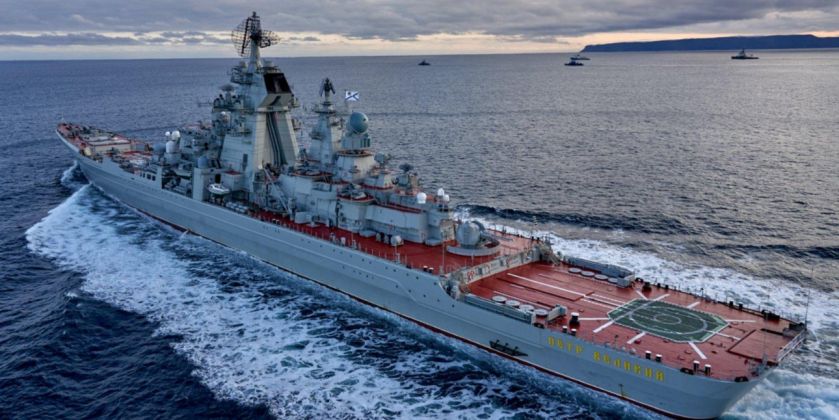
Following confirmation that the world’s largest and most heavily armed combat ship the Admiral Nakhimov will re-enter service in the Russian Navy later in 2026, the nuclear powered warship’s advanced capabilities have gained considerable attention. The vessel stands out not only for being the longest ranged and fastest major surface combatant in the world, but also the most heavily armed, with 96 vertical launch cells for long range surface-to-air missiles from the S-400 system, and 80 more for cruise missiles including the hypersonic Zircon missile. Complementing its considerable firepower and sensors, the Admiral Nakhimov will also integrate by far the largest air wing of any surface combat ship, including its own ‘flying radar’ capability provided by Ka-31 airborne early warning and control (AEW&C) systems.
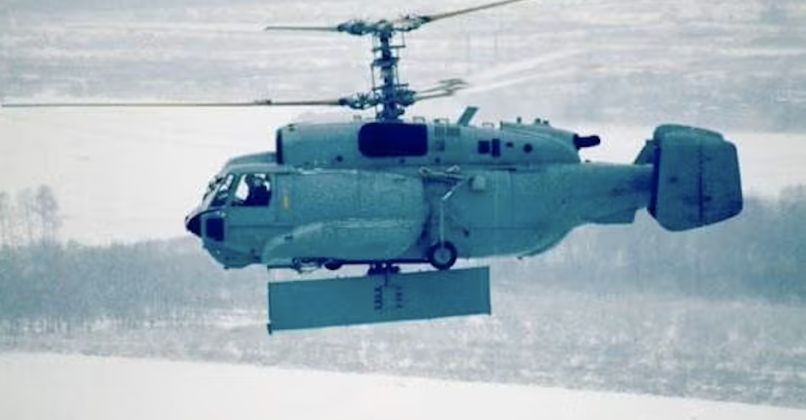
The Ka-31 is one of the world's few dedicated AEW&C helicopters, and was designed to provide naval task groups with long-range radar coverage far beyond the horizon. It is capable of detecting hostile aircraft, cruise missiles, helicopters and surface vessels before they can threaten a fleet, significantly extending the situational awareness of naval commanders. The Ka-31's defining feature is its carriage of a long flat radar antenna from the large E-801M Oko airborne surveillance radar beneath its fuselage. During flight the antenna folds down into a horizontal position beneath the aircraft, while the landing gear retracts upwards to prevent interference with radar coverage. This unusual arrangement gives the helicopter its distinctive appearance.
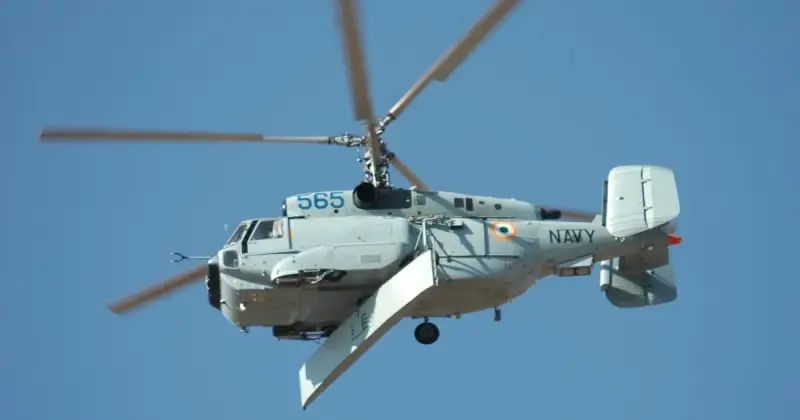
The ability to embark three Ka-31s simultaneously provides the Admiral Nakhimov with likely the greatest level of situational awareness in of any combat ship in the world. Existing variants of the E-801M electronically scanned radar has a detection range of approximately 150 kilometres against fighter-sized aircraft and considerably greater distances against larger aircraft such as airborne early warning platforms or transport aircraft. Newer variants expected to be integrated with the Admiral Nakhimov are expected to have longer detection ranges, although this remains unconfirmed. The aircraft can share data with one another, with the Admiral Nakhimov, and with other assets operating in the region such as MiG-31BM interceptors, potentially supporting engagements over much longer ranges.
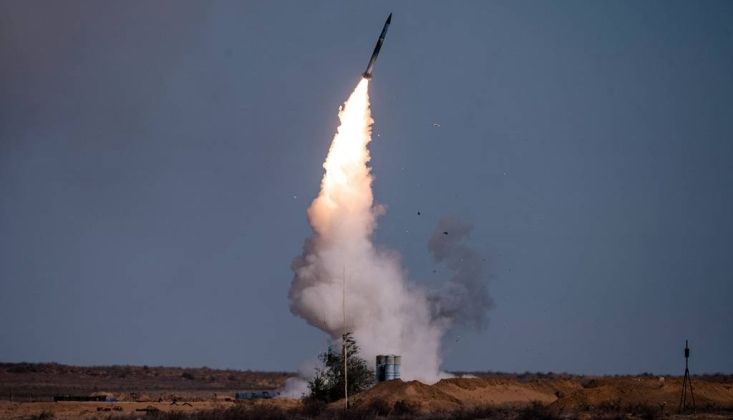
Alongside detecting and tracking aircraft, the Ka-31 can also track surface vessels over long ranges, providing valuable targeting information to naval forces. The helicopter can transmit target information directly to command ships and surface combatants, supporting the operations of long-range air defence systems such as the S-400. Each Ka-31 has an endurance of approximately 3 hours, allowing for continuous AEW&C support over long periods, or for a surged capability as two or three aircraft operate together during combat engagements. The helicopter's relevance has grown further as anti-ship cruise missiles have become faster, stealthier and capable of sea-skimming flight profiles, which makes early detection particularly important.
By providing continuous target tracking, the Ka-31 allows long-range missiles to be launched much earlier than would otherwise be possible. This creates additional engagement opportunities against incoming threats and significantly improves the survivability of the battle group. Russia is expected eventually to replace the Ka-31 with more advanced airborne surveillance platforms as its naval aviation modernises, with the type’s popularity on export markets, and the requirements of the Navy’s planned destroyer fleet for similar support, likely to make such investments cost effective. The only outstanding shortcoming of the Admiral Nakhimov’s air wing is that accommodating Ka-31 AEW&C systems limits room available for Ka-27 anti-submarine warfare helicopters, forcing the ship to compromise between its anti-submarine warfare and air defence capabilities.
