
Russia Equips the World’s Largest Combat Ship Air Wing with New Submarine Hunting Helicopters
Military Watch Magazine Editorial Staff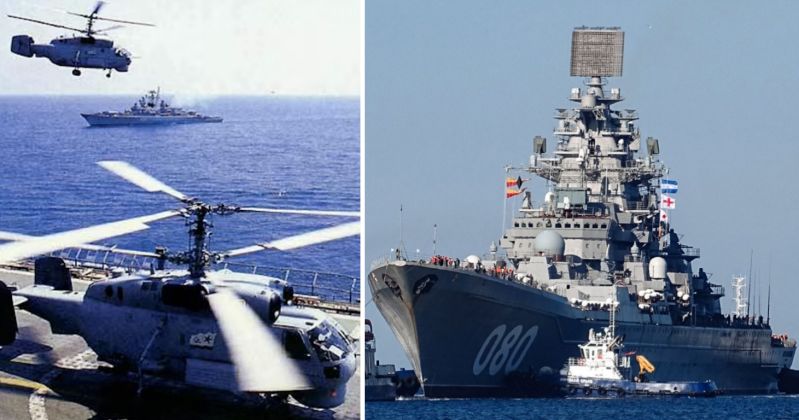
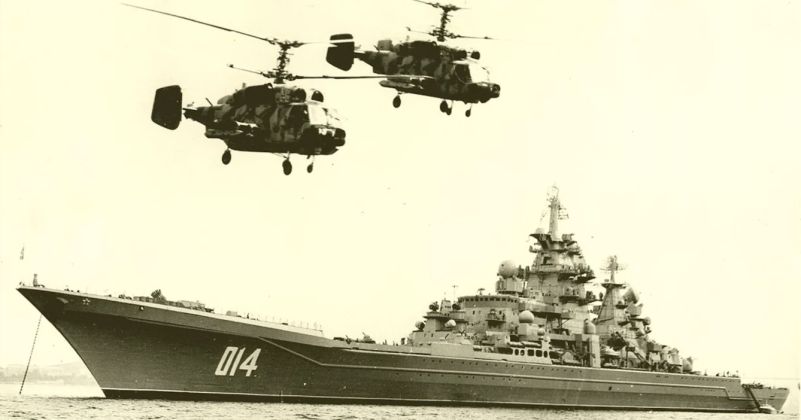
Ka-27s on a Kirov Class Cruiser and Kirov Cruiser
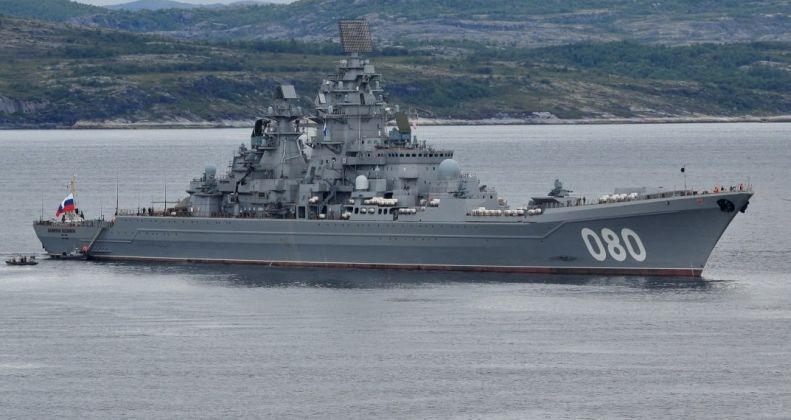
Following the return of the Russian Navy’s most capable surface combat ship to its home port in Severomorsk in late June, the Kirov class nuclear powered cruiser Admiral Nakhimov has been confirmed to have integrated a new air wing comprised with modern Ka-27M anti-submarine warfare helicopters. This is particularly significant not only due to the considerable requirements for anti-submarine capabilities under the Navy’s Northern Fleet, but also because Kirov class cruisers were built to accommodate he largest embarked aviation component of any non-carrier surface combatant. While most modern destroyers and cruisers operate a single helicopter, the Kirov class is the only one that was designed from the outset to embark up to three Ka-27M or Ka-31 heavyweight helicopters in a dedicated below-deck hangar. This reflects the Kirov class’ standing as by far the largest surface combat ship in the world, at 28,000 tons, which makes it around triple the size of most destroyers and larger than many aircraft carriers.
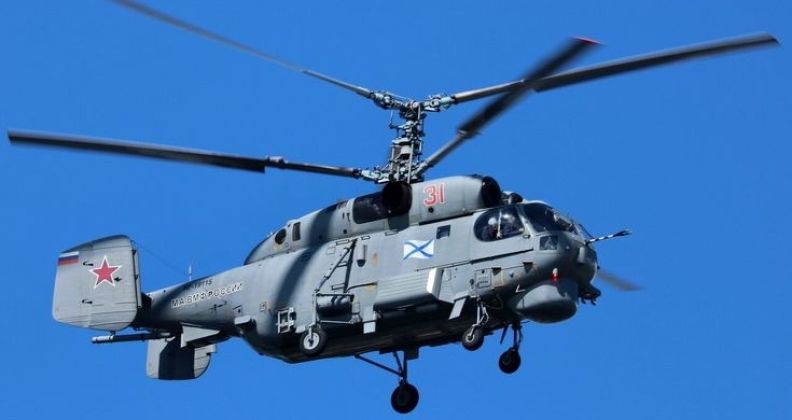
Anti-submarine warfare helicopters are highly valued for their ability to tremendously expand the detection, tracking, and targeting capabilities of modern surface combat ships against submarines, with the Admiral Nakhimov’s unrivalled air wing of three such aircraft, combined with its own formidable anti-submarine capabilities, making it in many respects the most capable combat ship for such roles. With hull-mounted sonars constrained by ships’ positions and by underwater conditions, the ability to deploy helicopters to rapidly investigate contacts hundreds of kilometres away provides a far greater reach. Helicopters’ high mobility allows them to rapidly deploy dipping sonars to multiple distant locations to build an accurate picture of hostile submarines’ positions, and can also deploy sonobuoys to establish wide-area acoustic search fields far beyond the range of a ship’s sensors. By deploying dozens of passive and active sonobuoys over a large area, a helicopter can monitor submarine movements, triangulate contacts, and relay targeting information back to the ship or to other naval forces.
The Ka-27M is an extensively modernised variant of the Soviet Ka-27 that replaces nearly all of the original’s mission systems to achieve far superior sensor integration and network-centric capabilities. Its new digital mission system that integrates all onboard sensors into a single tactical picture, allowing sensor data to be fused in real time and enabling crews to detect, classify, and track submarine contacts more quickly and accurately. Its new Kopye-A radar provides a substantially greater detection range, improved resolution, and better reliability, and can simultaneously track multiple surface contacts while also detecting low-flying aircraft and helicopters for maritime surveillance. Its sonobuoy processing system can analyse far larger quantities of acoustic data simultaneously, distinguish submarine signatures more effectively from background noise, and automatically classify contacts, allowing cruisers’ air wings to keep up with advances in developing newer, quieter submarines. Sensor and data sharing capabilities allow the aircraft to relay precise targeting data back to the cruiser, allowing it to employ long-range anti-submarine weapons such as the Otvet missile system against contacts well beyond the ship's own sonar horizon.
Once a submarine is located, Ka-27M helicopters can attack it directly using lightweight anti-submarine torpedoes, or alternatively can signal the cruiser to move into weapons range. A helicopter can also fly directly to the contact, release a torpedo, and begin another search while the destroyer continues its primary mission. This rapid response significantly shortens the time between detection and engagement, reducing the submarine’s opportunity to escape. Helicopters also provide a destroyer with the ability to pursue submarines independently of the ship’s own movements, which could be particularly valuable of engaging multiple dispersed hostile submarines simultaneously. The importance of anti-submarine warfare helicopters has increased as submarines have become quieter, with the very low acoustic signatures of modern vessels making them challenging for ships alone to detect, even for vessels as large and well equipped for such operation as the Admiral Nakhimov.
Anti-submarine warfare capabilities are particularly critical for the Admiral Nakhimov due to the expectation that the the Arctic, the North Atlantic and the Norwegian Sea where the ship is assigned to operate will become one of the world's most submarine-intensive theatres in the event of a major conflict. This is because the region is central to Russia's strategic nuclear deterrent, with a primary objective of hostile Western submarines expected to be the monitoring, tracking and destruction of the Russian submarine-based ballistic missile deterrent. While the Kirov class’ air defence and anti-ship missile capabilities are in many respects world leading, in the Arctic its anti-submarine warfare capabilities may well play the most significant role.
