
Twin Russian Nuclear Reactors Give the World’s Heaviest Surface Combat Ship Major Advantages
Military Watch Magazine Editorial Staff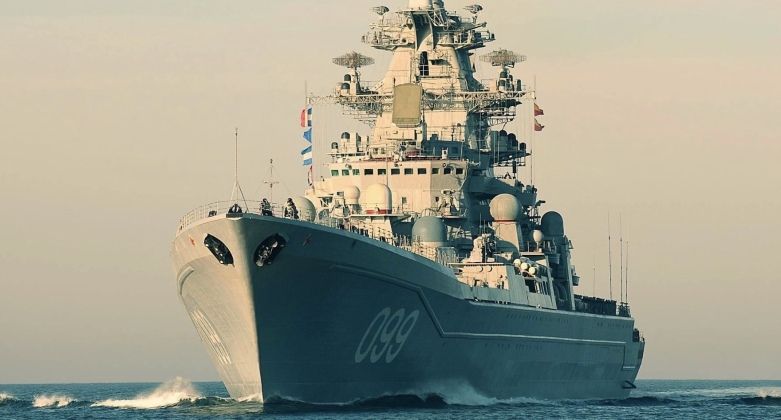
Russian Navy Kirov Class Nuclear Powered Cruiser
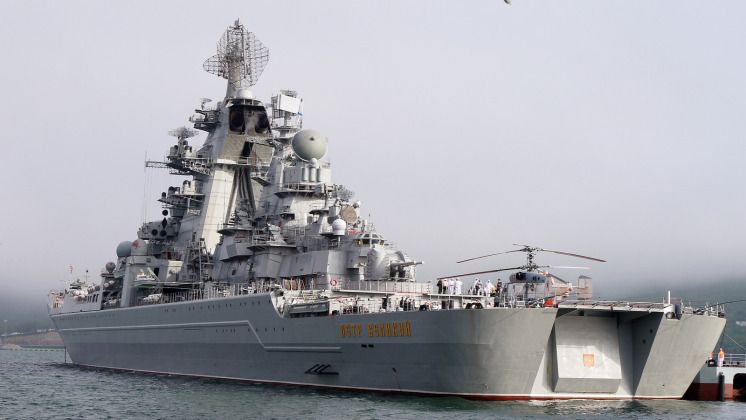
The Russian Navy’s heavily furbished Kirov class missile cruiser the Admiral Nakhimov has gained considerable attention for its outstanding firepower and for its displacement, which at 28,000 tons is larger than many aircraft carriers and approximately triple the size of a large destroyer. After a much delayed refurbishment program, and the cruiser’s re-floating on July 25, 2025, its recent return to its home port in Severomorsk has marked a major landmark in the Northern Fleet’s modernisation, with the combat ship currently being by far the is the most capable in the Navy by a considerable margin. Beyond its size, however, a further particularly unique feature is its status as the only surface combat ship in the world with a nuclear propulsion system - a design choice which the U.S. Navy has recently also made for its BBG(X) capital ship program with the intention of bringing them into service in the early 2040s.
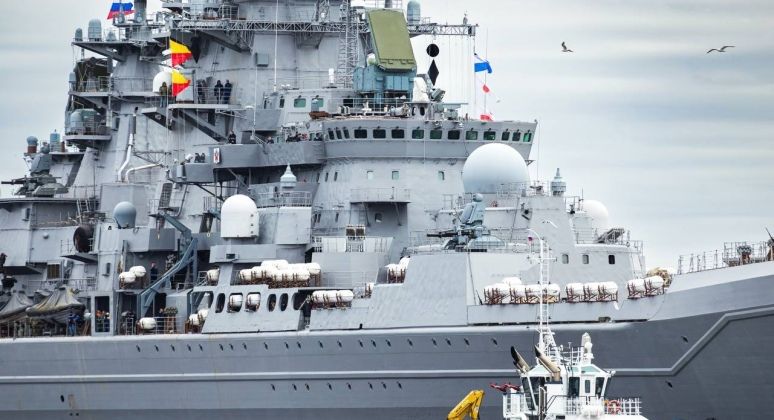
One of the greatest benefits of a nuclear propulsion system is that it facilitates a virtually unlimited range, as unlike conventionally powered warships which must regularly refuel, the Kirov's twin nuclear reactors allow it to operate for years without replenishing fuel. In practice, the ship's endurance is limited primarily by food, spare parts, and crew fatigue rather than propulsion fuel. With the ship having been designed to accommodate exceptionally large supplies, and with a significant degree of crew comfort including entertainment facilities, it is well optimised to remain at sea for considerable periods. Hangar facilities able to accommodate three large helicopters are also optimal to allow resupply by air.
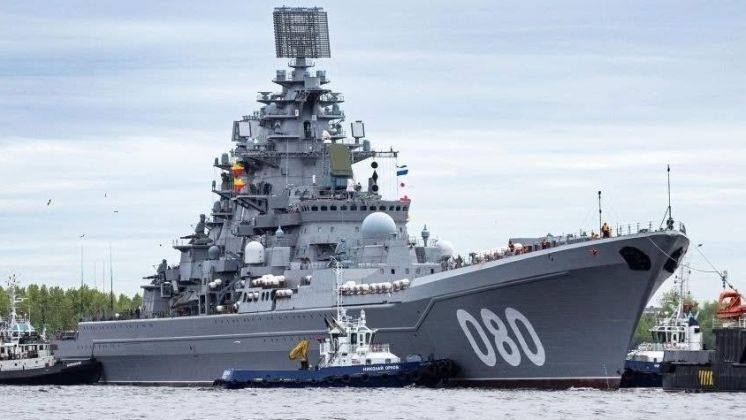
Nuclear propulsion also provides exceptional endurance at high speed, as while conventional gas turbine or diesel-powered warships consume fuel rapidly when operating at maximum speed, forcing commanders to balance speed against endurance, Kirov class cruisers can sustain speeds above 30 knots for very extended periods. This is invaluable for the Admiral Nakhimov based in Severomorsk, as it allows the ship to quickly sail through the Greenland-Iceland-United Kingdom Gap, which is a key maritime choke point, to enter the North Atlantic from the Arctic in wartime. Speed is vital to deploy across the Atlantic to intercept NATO carrier strike groups, which the warship’s arsenal of Zircon hypersonic cruise missiles and multi-layered air defences make it well optimised for.
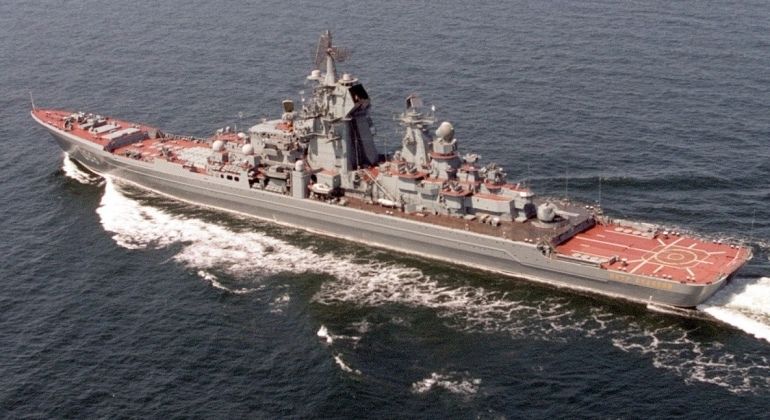
A further major advantage advantage of the Admiral Nakhimov’s propulsion system is the outstandingly large amount of electrical power generated by its reactors, providing the power needed to operate large radars, electronic warfare equipment, communications systems, and other combat systems. Following its modernisation, This also provides capacity for future upgrades, including more powerful radars or directed-energy weapons, with the ships having been designed with considerable surplus power generating capacity to integrate future onboard systems with much higher power requirements. Powering a large onboard sensor suite is particularly important since unlike hostile carrier groups, which can rely on multiple radars and sonars deployed by multiple types of ships and carrier-based aircraft, Kirov class cruisers were designed to be able to operate alone.
The absence of a need to carry vast quantities of fuel improves to Kirov class’ operational flexibility, and although the ships still carry some fuel for their auxiliary boilers and embarked helicopters, they are not constrained by the fuel reserves which dominates the logistics planning of conventional surface combatants. This is particularly valuable during extended Arctic or North Atlantic deployments, where replenishment opportunities are expected to be more limited. Despite its benefits, however, nuclear propulsion systems are significant more expensive to construct, sustain, and overhaul, with reactor refuelling and maintenance requiring specialised shipyards, and highly trained specialist personnel. The complexity of the ship’s propulsion systems was a leading contributor to the difficulties modernising the Admiral Nakhimov, with the high sustainment costs of the Kirov class’ nuclear power systems having been a primary factor in the decision to retire the majority of the fleet when Russia suffered an economic crisis in the immediate post-Soviet years.
