
Russia Brings the World’s Largest Most Heavily Armed Combat Ship to Home Base for the First Time in 29 Years
Military Watch Magazine Editorial Staff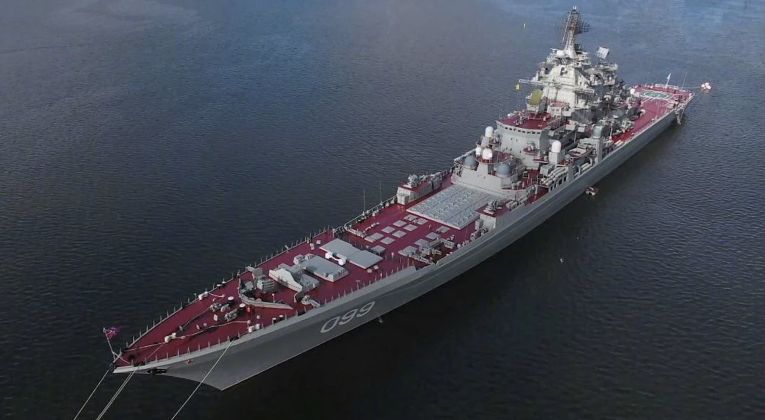
Russian Navy Kirov Class Nuclear Powered Cruiser
The Russian Navy’s Kirov class nuclear-powered missile cruiser Admiral Nakhimov was on June 26 confirmed to have returned to its home port of Severomorsk after 29 years out of service for refurbishment work, with the vessel reported to be near the end of its sea trials. The Nakhimov was re-floated on July 25, 2025, before setting sail under its own power for the first time in 28 years in August 2025, and beginning the final phase of its sea trials on June 1. The return of the cruiser to Severomorsk marks one of the most significant milestones in Russian naval modernisation in decades, and follows what is widely considered the most complex warship refit in the country’s history.
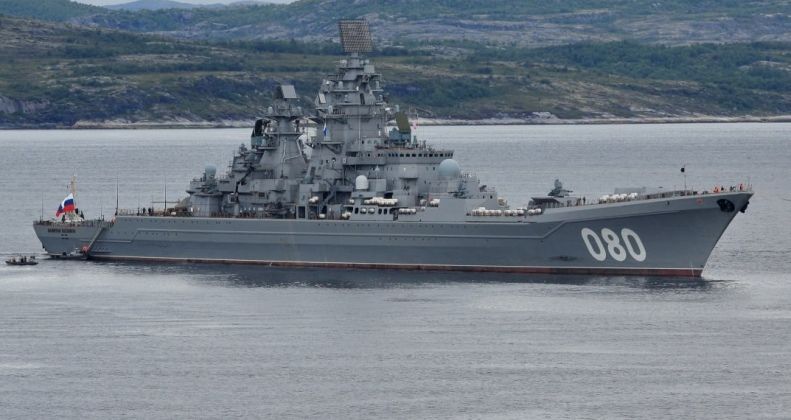
The outstandingly extensive scope of the Admiral Nakhimov’s modernisation has led many analysts to regard it as effectively an entirely new combatant internally, with its missile systems having been fully replaced to provide the world’s largest arsenal of long range surface-to-air and cruise missiles, which are accommodated in 176 vertical launch cells. To place this in perspective, the most heavily armed modern Western surface combatants, the U.S. Navy Arleigh Burke Flight III class destroyers, integrate 96 cells, while China’s most heavily armed destroyer class, the Type 055, integrates 112 cells. The Admiral Nakhimov’’s anti-submarine warfare capabilities have likewise been significantly enhanced, with the cruiser having integrated the new Paket-NK anti-torpedo and anti-submarine defence system and the Otvet anti-submarine missile system. Combined with its ability to embark up to three Ka-27 anti-submarine warfare helicopters, the ship can search for, track, and engage submarines over considerable distances. This is particularly valued in the Northern Fleet’s area of operations where NATO submarine operations are expected to be concentrated.
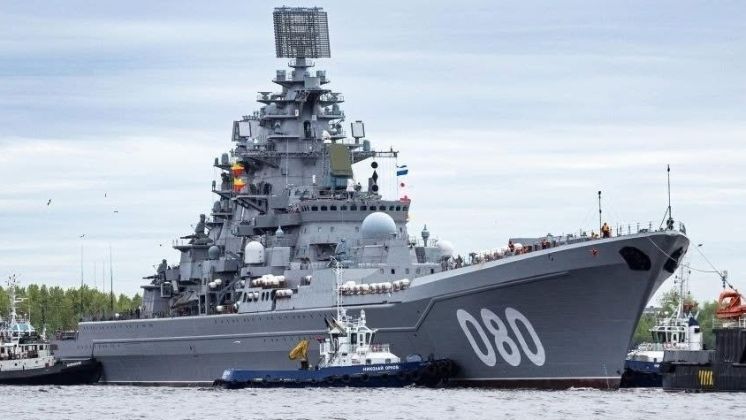
The Admiral Nakhimov is considered the only Russian warship capable of operating at a near peer level to top performing U.S. and Northeast Asian surface combat ships like the Type 055 class or South Korean Sejong the Great class, with the Soviet-designed ships having been built with very considerable modernisation potential which has allowed them to remain highly competitive when properly refurbished. While Russian cruise missile technologies are considered world leading, however, questions have been raised regarding the sophistication of the radars and data links onboard, which are likely to be less advanced than those seen on modern Chinese and U.S. warships. The warship also lacks the radar cross section reducing measures seen on modern Chinese warships like the Type 055 class or U.S. Zumwalt class, which makes it relatively easy to detect and track at range - an issue shared with the U.S. Arleigh Burke class and all other Russian destroyer or cruiser sized surface combat ships.
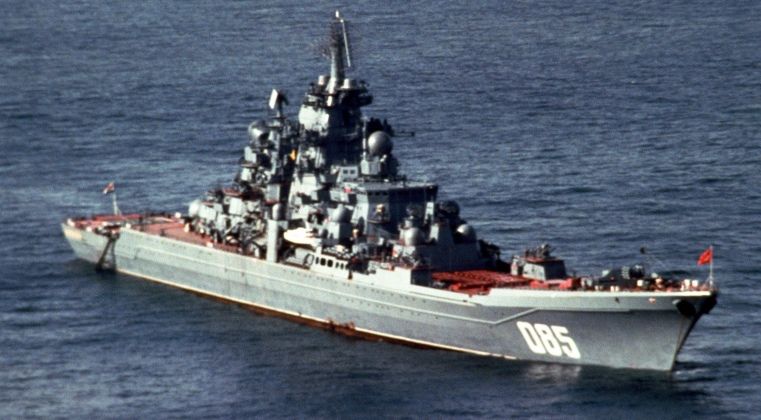
The final phase of the Admiral Nakhimov’s sea trials is intended to verify every aspect of the deeply refurbished vessel before formal acceptance by the Russian Navy. These trials include propulsion performance, navigation, combat-system integration, radar operation, communications, weapons interfaces, and endurance testing in the White and Barents Seas. The cruiser’s return to Severomorsk indicates that it is progressing toward operational fleet integration following successful early trials. Severomorsk is the headquarters and principal surface fleet base of the Navy’s Northern Fleet, located on the eastern shore of Kola Bay, and is prized for its year-round ice-free access to the sea. Alongside the Admiral Nakhimov, it also hosts the bulk of the country’s nuclear powered submarine fleet, including both attack submarines and ballistic missile submarines, with the newly refurbished cruiser expected to be tasked with protecting the latter of these two submarine types.
