
U.S. Navy Brings First Arleigh Burke Flight III Next Generation Destroyer Into Service: How Capable Is It?
Military Watch Magazine Editorial Staff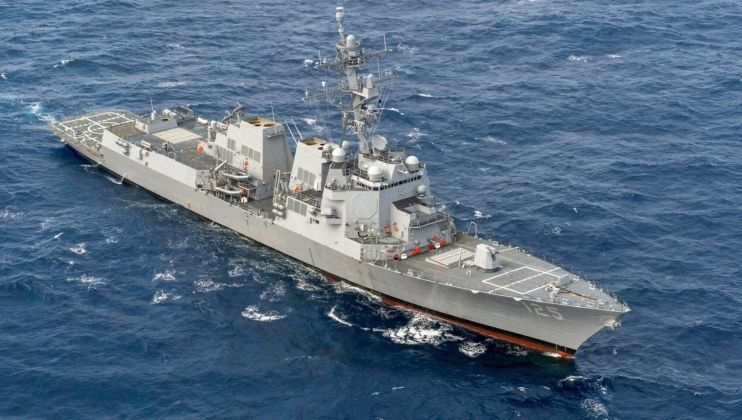
U.S. Navy Arleigh Burke Flight III Destroyer USS Jack H. Lucas
The U.S. Navy has brought its first Flight III Arleigh Burke class guided-missile destroyer, the USS Jack H. Lucas, into service marking the beginning of the latest phase in by far the world’s oldest destroyer program. Commissioned on October 7, 2023, the Jack H. Lucas has been designated as the initial operational test and evaluation campaign ship for the Flight III class, an update of the late Cold War era design intended to significantly improve its capabilities. At the centre of upgrades to the design is the integration of the new AN/SPY-6(V)1 Air and Missile Defense Radar, replacing the SPY-1D(V) radar used on earlier Arleigh Burke class variants, which has a significantly greater tracking capacity, and can detect, track, and discriminate smaller, faster, and more complex threats at longer ranges, including cruise missiles, ballistic, and even new hypersonic missiles.
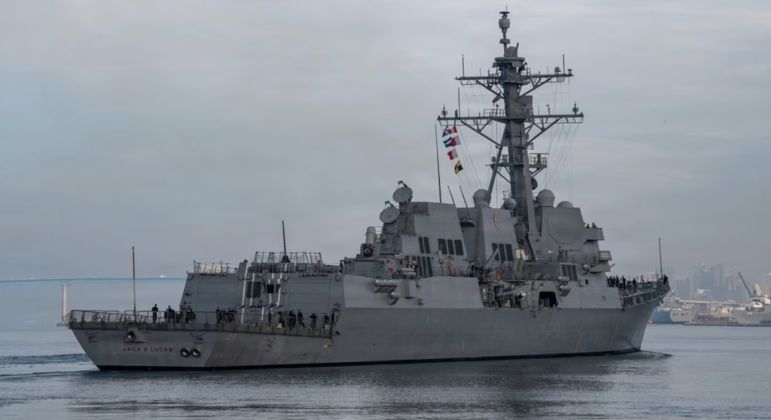
The Arleigh Burke class destroyer fleet has placed a growing emphasis on missile defence capabilities since the end of the Cold War, as challenges from adversary navies diminished, while missile arsenals fielded by a number of potential adversaries such as North Korea and Iran continued to be built up to potentially asymmetrically engage U.S. and allied forces. Elaborating on the capabilities o the new radar system, and in particular its greater degree of automation, Chief Sonar Technician Nicholas Cederblom observed: “It’s like going from a flip phone to an iPhone… It does the calling, it does the texting, but it does so much more. And moving from that system into the advanced capabilities build, what we have right now, definitely is a lot more. No one else has done this.” “USS Jack H. Lucas looks like every other destroyer… We have the same weapon systems outside, but it’s the internal component, and it’s the people itself that make it different. We are training the next generation to go forward with our new SPY-6, with our Baseline 10, with our engineering plants having to supply everybody on board the ship to get where we need to go,” he added.
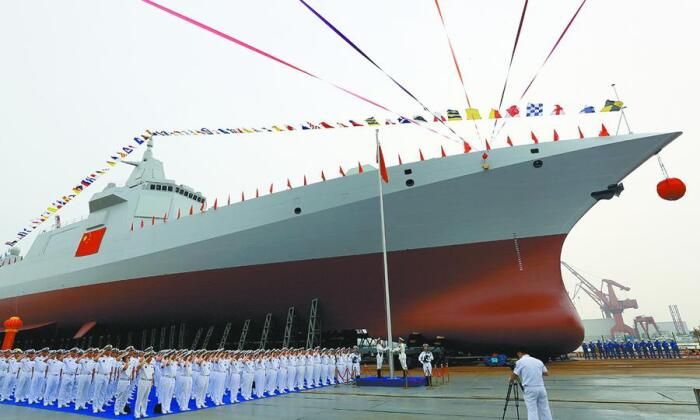
The USS Jack H. Lucas is the 71st Arleigh Burke class destroyer to be brought into service, with the class making up the entire American destroyer fleet alongside three problematic Zumwalt class stealth destroyers. The first ship of the class, the USS Arleigh Burke, was laid down in 1988 and commissioned into service in July 1991. Significant questions have increasingly been raised regarding the ships’ viability against peer level adversaries, and particularly the significantly newer Type 052D and Type 055 class destroyers that form the backbone of the Chinese People’s Liberation Army Navy’s surface combat fleet. The Type 055 class is currently widely considered the most capable destroyer type in service in the world, and in the early 2020s began to integrate the YJ-21 hypersonic anti-ship ballistic missile. This missile and the preceding YJ-18 have significantly surpassed the capabilities of existing anti-ship missiles integrated onto the Arleigh Burke class. The lack of features such as a reduced radar cross section and dual band radar system have been among the factors leaving the Arleigh Burke class at a disadvantage.
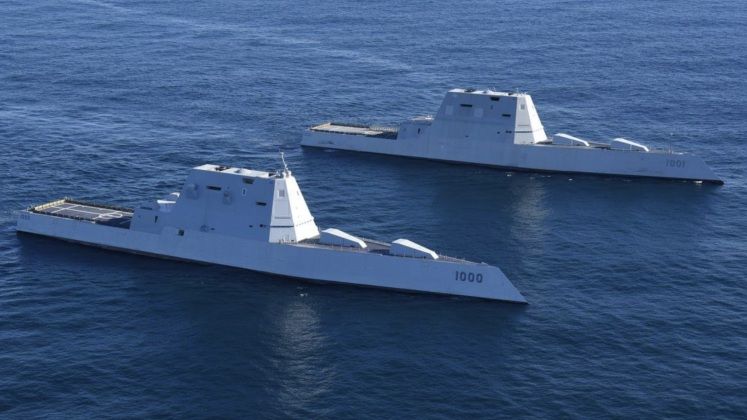
The Type 055 program in particular is considered a significant factor that has raised the U.S. Navy’s interest in the development of a next generation destroyer class to succeed the Arleigh Burke class. The failure of the Zumwalt Class destroyer program, however, which resulted in serious performance shortcomings and a cost of $9 billion per ship, have raised questions regarding the ability of the American defence sector to again develop a world leading destroyer design following the significant post-Cold War decline of the industrial base. The similar failures of the Freedom class and Independence class Littoral Combat Ship programs have cemented this consensus. The successor to the Arleigh Burke class currently under development under the DDG (X) program is expected to have a less revolutionary design than the Zumwalt class, with prevailing trends in the American military shipbuilding sector indicating that the program could face serious delays and be ready for service only in the 2040s. This will have significant implications for the balance of power across multiple theatres, most significantly in the Pacific.
