
World’s Largest Combat Ship Begins Final Sea Trials: How Powerful is Russia’s Nuclear-Powered Cruiser Admiral Nakhimov?
Military Watch Magazine Editorial Staff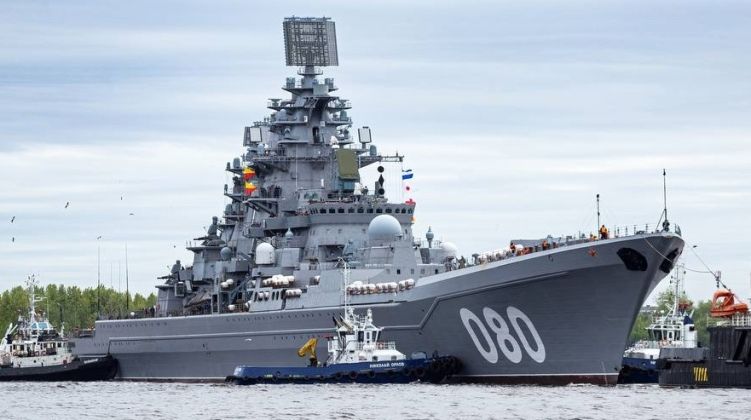
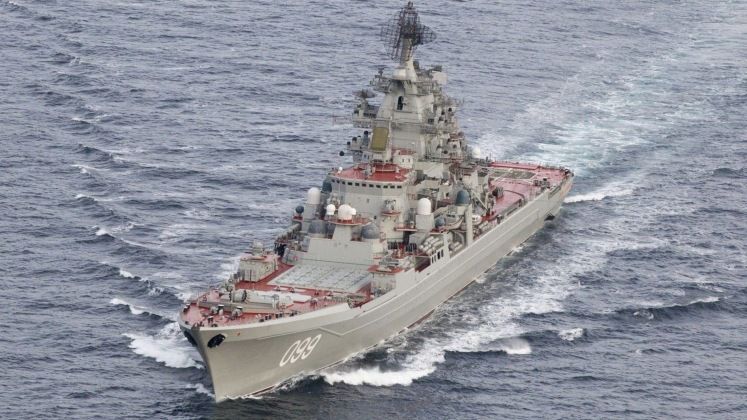
Russian Kirov Class Nuclear Powered Cruise Admiral Nakhimov After Refurbishment
The Russian Navy on June 1 deployed the heavy nuclear-powered battlecruiser Admiral Nakhimov for the final phase of its sea trials, bringing a much stalled program that has lasted for close to 30 years to its final stage before the warship reenters frontline service. The Admiral Nakhimov is one of two Kirov class cruisers in service, and for the first time in 28 years began to set sail under its own power in August 2025. This followed the warship’s re-floating on July 25 that year. The Kirov class ships are the only nuclear powered surface combatants in service anywhere in the world, although the United States Navy is investing heavily in procuring a new generation of vessels with a similar propulsion system. The vessels are also by far the largest and most heavily armed surface combatants in the world, with each displacing 28,000 tons, making them larger than a Japanese Izumo class aircraft carrier or three U.S. Arleigh Burke class destroyers.
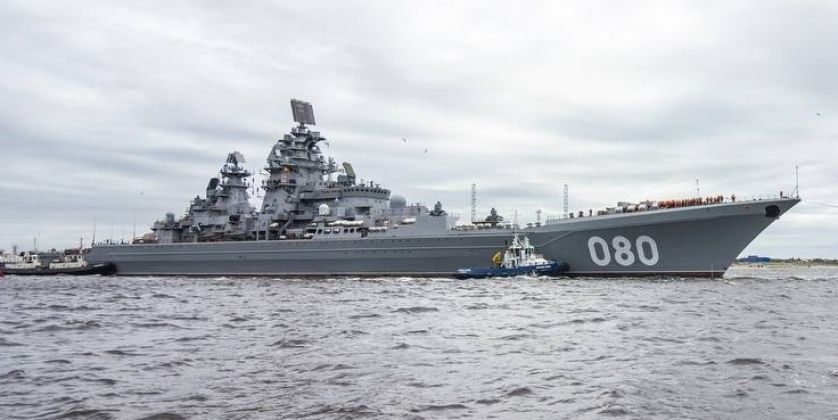
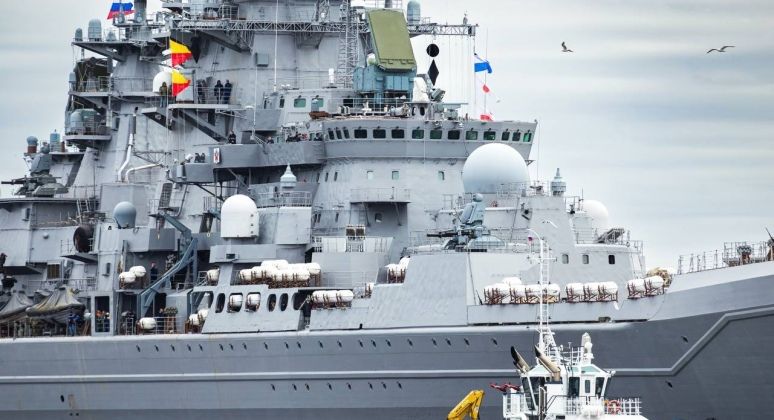
The Admiral Nakhimov integrates a total of 176 launch cells for high diameter missiles, including 96 cells for surface-to-air missiles from a navalised variant of the S-400 air defence system, which is equivalent to three fully battalions of ground based variants of the systems. A further 80 launch cells are allocated to cruise missiles, and can accommodate the new Zircon hypersonic cruise missile which combines a Mach 9 speed, 1,000 kilometre range, and high manoeuvrability to penetration advanced multi-layered air defences. The Zircon’s capabilities have been highlighted by Russian sources as giving surface ships a distinct advantage over their foreign rivals in their long range anti-ship capabilities, with only the Chinese YJ-20 anti-ship ballistic missile having a comparable or superior performance among ship-launched anti-ship missile types.
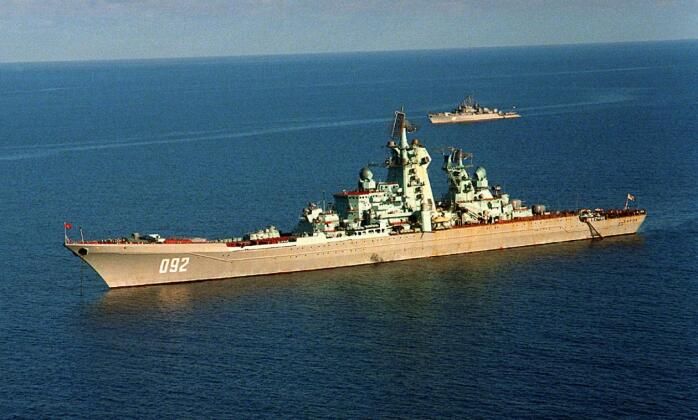
Although it has been confirmed that the Admiral Nakhimov will serve under the Arctic fleet, the future of the Kirov class cruiser program otherwise remains uncertain. On April 22, 2021, the CEO of the Severnoye Design Bureau Andrei Dyachkov projected regarding improvements to the Nakhimov: “The high modernisation potential integrated in these ships upon their designing helped carry out certain works and outfit the Admiral Nakhimov with the most advanced weapons, which makes it the world’s strongest surface combat ship.” Nevertheless, while the Russian Defence Ministry previously planned to finance the deep refurbishment of both the Admiral Nakhimov and its sister ship the Pyotr Veliky, it was confirmed in July 2023 that the latter ship would not be modernised, and would instead be relegated to an early retirement from service. A combination of the design’s high operational costs, the high costs of refurbishment, and budgetary strains due to the outbreak of full scale hostilities in Ukraine, are all thought to have influenced this decision.
The Russian shipbuilding industry has not laid down a destroyer sized vessel for the country’s navy since the disintegration of the Soviet Union, let alone a medium or heavy cruiser sized vessel, which makes Kirov class ships particularly outstanding within the country’s otherwise modest ocean-going surface fleet. The Russian destroyer fleet is set to be overtaken by that of North Korea in size in the early 2030s, while relying on much older and less capable vessels with no sign of plans to replace them or to revive the industry for large surface combat ships. The vulnerability of unrefurbished and questionably maintained Soviet-era surface ships was recently highlighted by the sinking of the Slava class cruiser Moskva in early 2022 by limited Ukrainian cruise missile attacks. While the Russian Navy has sustained a robust ocean-going combat capability, investment has almost entirely been focused on submarines, most notably the Yasen-M class nuclear powered attack submarines which are considered among the most capable in the world, with very little investment made in the destroyer of cruiser fleets.
The concentration of investment in nuclear powered submarines is largely due to the fact that they are perceived as asymmetric assets, with their stealth capabilities allowing them to select the time and place of engagement, and thus pose a threat to larger more powerful navies to counter NATO’s collective fleets cost effectively. Kirov class ships, by contrast, were built in an era where the Soviet Navy was seriously challenging the U.S. symmetrically by building larger more heavily armed surface ships. The capabilities of Kirov class ships have only a limited place in current Russian doctrine, although the growing perception of a threat from U.S.-led NATO forces in the Arctic makes an ocean-going very high endurance heavily armed surface combatants potentially highly valuable for a wide range of roles under the Northern Fleet. This includes the defence of the Northern Sea Route as Russian commercial shipping is increasingly targeted.
