
North Korea to Field World’s Fifth Largest Destroyer Fleet By 2032, Overtaking Russia, France and UK
Military Watch Magazine Editorial Staff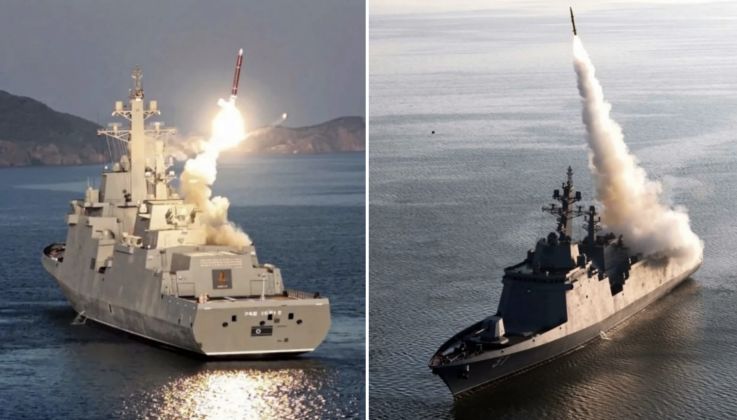
North Korean Choe Hyon Class Destroyer
Chairman of the ruling Korean Worker’s Party Kim Jong Un has announced a highly ambitious schedule for destroyer production to revolutionise the Korean People’s Army Navy’s blue water capabilities, which places the service on track to field the world’s fifth largest destroyer fleet in the early 2030s. The Navy’s first destroyer, the Choe Hyon, was launched in April 2025, and from March 3-4, 2026, conducted pre-commissioning trials that saw it carry out manoeuvrability and warship-control tests and validate its combat systems. These trials included live fire launches of at least four missiles from its large array of vertical launch cells. While the Choe Hyon’s launch and first live fire testing in April 2025 had itself been a highly significant landmark in the evolution of the Navy’s previously very limited surface warfare capabilities, Chairman Kim’s announcement not only that further ships of the class are currently under construction, but also that the Navy is on schedule to field 12 destroyers by the early 2030s, marks a major turning point for the service.
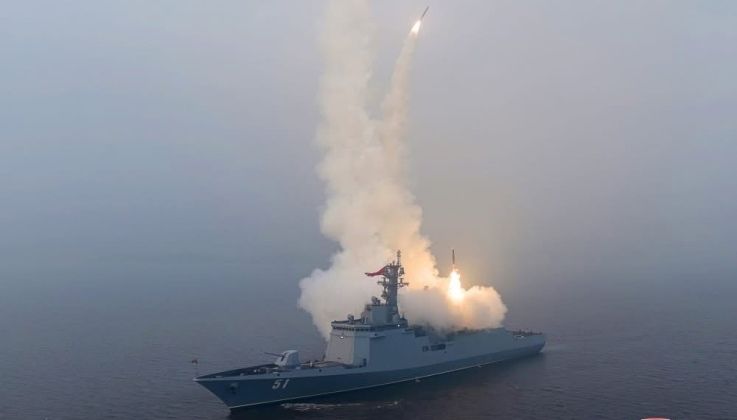
Chairman Kim announced that the launch of two surface combatants of the Choe Hyon class, or of larger more capable ships, are planned for every year during the new five-year plan. With two Choe Hyon class ships already in the water, this will bring the fleet up to 12 destroyers, which assuming a year of sea trials for each ship places the Navy on schedule to operate all 12 by 2032. To place this in perspective, only four countries in the world field 12 or more destroyers, with the United States fielding approximately 73, China 57, Japan 40, and South Korea 13. A fleet of 12 destroyers would place the Korean People’s Army Navy ahead of India, which fields 11 destroyers, France which fields ten, Russia which fields nine, and the United Kingdom which fields six. For a country which fielded no ocean going surface combat ships before 2025, this represents one of the most significant buildups in naval history.
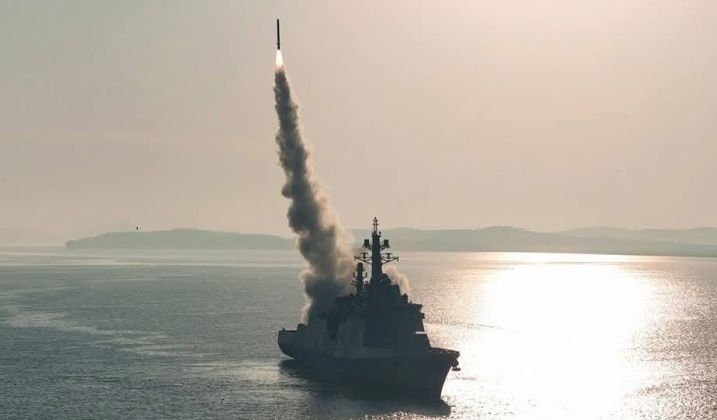
North Korea’s fielding of a fleet of twelve destroyers is particularly significant when considering the advanced capabilities of the Choe Hyon class, and the very limited capabilities of the destroyers in many rival fleets. Russia, for example, has laid down no surface combat ships larger than a frigate for its own navy since the disintegration of the Soviet Union, and although its destroyer fleet has been extensively modernised, the ships carry less firepower and have significantly older designs that are less stealthy and efficient than more modern vessels fielded abroad. France and the United Kingdom, meanwhile, field ships with very limited capabilities, integrating just 48 vertical launch cells each, and lacking the versatile multirole capabilities seen on destroyers built in the U.S., China, Japan and the Koreas. British ships in particular suffer from very significant reliability issues not seen in the destroyer fleets of other countries, other than the U.S. Navy’s three Zumwalt class ships.
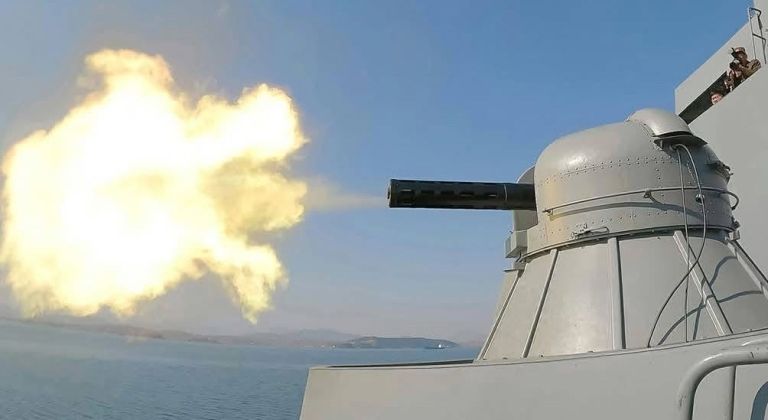
Choe Hyon class destroyers each integrate 74 vertical launch cells, compared to 96 on the U.S. Navy Alreigh Burke class, 80 on the Zumwalt class, 64 on the Chinese Type 052D class, and 64 on the Russian Udaloy class. The North Korean ships’ firepower is greater than the number of missile cells alone would indicate, however, with 20 much of their 74 cells being much larger and accommodating high diameter ballistic missiles. The ships deploy a wide range of missile types including Hwasong-11 ballistic missiles, Hwasal-2 cruise missiles, possibly Kumsong-3 anti-ship cruise missiles, and long range surface-to-air missiles thought to be derived from those of the Pyongae 6 air defence system. The ships are reported to also integrate a hypersonic cruise missile type, possibly of similar design to the Russian Zircon. Each Choe Hyon class destroyer also integrates two dual torpedo tubes integrated into the superstructure and a bow sonar system. Their firepower and carriage of nuclear weapons makes them a potentially highly potent force in the Pacific, posing new challenges to the U.S. Armed Forces with which North Korea remains in a state of war.
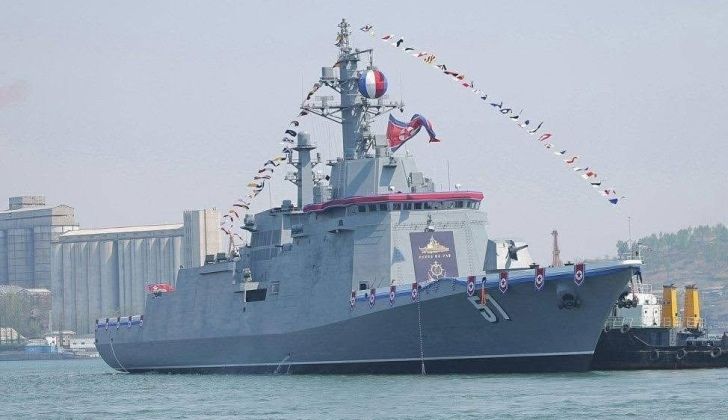
While several countries have announced ambitious naval programs in the past, only to consistently failed to live up to them, with Russia and the United Kingdom being leading examples, North Korea, much like neighbouring China and South Korea, has consistently lived up to its officials’ projections for its military modernisation. When the country launched its second Choe Hyon class destroyer, the Kang Kon, during a ceremony at Rason port on May 22, 2025, an accident resulted in the ship falling on its side, leading Western analysts to near unanimously predict that the vessel could not be relaunched on the highly ambitious schedule set by the Korean Workers’ Party. Concerted efforts, however, allowed it to be relaunched just 22 days later on June 13, which was a particularly outstanding feat. With Chairman Kim having framed the country’s destroyer program as part of efforts to “correctly implement the gigantic plan of increasing the fighting strength of surface warships,” the Korean People’s Army Navy’s emergence as one of the world’s leading ocean going forces will align with broader trends towards a rise in North Korea’s status as a world power. This trend been observed with considerable concern by the U.S. Department of War.
